Malton History: From Roman Forts to Market Town
The story of Malton is a rich tapestry of human habitation, stretching from the prehistoric era through the Roman occupation and the medieval period, eventually evolving into a bustling commercial hub. Situated along the River Derwent in North Yorkshire, the town's strategic location has made it a center of military and trade significance for centuries.
Prehistoric and British Origins
Long before the arrival of the Romans, the area around Malton was inhabited by early British peoples. Archaeological finds highlight a connection to the land and water; in 1869, a seven-foot-long British oak canoe was discovered on the farm of Mr. Hebden Flowers in South Holme. Other significant finds include a flint axe discovered in 1868 near the old entrenchments and skeletons found in a coffer dam. These remains were buried in the traditional British fashion, with knees drawn up to the chin, mirroring discoveries made at Kirkby Misperton Hall in 1866.
The Roman Era
The first established buildings in Malton appeared in the late first century AD. Around 71 AD, under governor Petilius Cerialis, a Roman auxiliary fort was constructed on the north bank of the River Derwent. This development occurred roughly concurrently with the founding of Eboracum (modern-day York).
While the fort served military purposes, a large civilian settlement grew opposite it on the south bank at Norton. Records indicate the presence of the Ala Gallorum Picentiana, a Roman cavalry unit. The site flourished for four centuries, particularly during the Trajanic, Severan, Constantian, and Theodosian periods. Notably, the Romans established a jet jewellery industry here, and a unique inscription has identified the location of a goldsmith shop. The Roman presence ended in 429 AD following the collapse of the empire.
Medieval Development and the Rise of the Castle
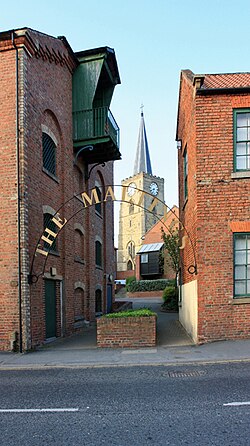
The name Malton is believed to originate from either the Old English mæðeltūn (a settlement for council meetings) or a blend of Old Norse meðal and Old English tūn, meaning "middle settlement." By the 12th century, both New Malton and Old Malton were established. A Gilbertine monastery was constructed in Old Malton between 1147 and 1154, with its church likely following around 1180.
Military power centered on Malton Castle, a wooden Norman structure built in the 11th century on the site of the former Roman fort. Later rebuilt in stone by Eustace Fitz John, the castle saw various historical figures pass through its gates, including Richard I in 1189, Edward II in 1307, and Robert the Bruce in 1322. However, after Eustace de Vesci rebelled against King John in 1212, the king ordered the castle to be "slighted" (intentionally damaged to prevent military use), leading to its eventual ruin.
In the 16th and 17th centuries, the site transitioned from a fortress to a residence. Ralph Eure built a house there in 1569, which was expanded in 1602 into a grand "prodigy house" that rivaled estates like Audley End. This house was demolished in 1674 due to an inheritance dispute between two sisters, Mary and Margaret Eure. Today, the Old Lodge Hotel remains as the only fragment of this Jacobean structure.
Commercial Growth in the 18th and 19th Centuries
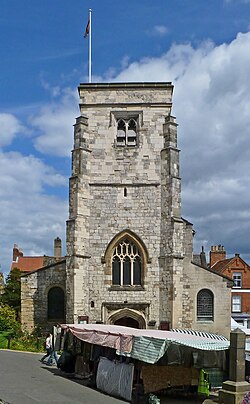
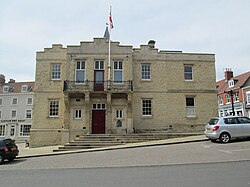
By the 18th century, Malton had evolved into a vital trading center. The town focused heavily on improving facilities for traders, particularly butchers. The Malton Town Hall originally served as a butter market, reflecting the primary product sold by local farmers.
The town's infrastructure grew steadily. The Talbot Hotel, dating back to the early 17th century, transitioned from a hunting lodge to a coach stop and inn by 1740. As the town prospered, it attracted "polite society" with the opening of the Assembly Rooms in 1814. Trade in coal, corn, and butter flourished, and the town expanded its educational offerings through various fee-based academies and schools.
Modernization and Industry
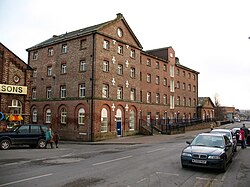
The 19th century brought rapid technological advancement. Gas works were constructed in 1832, lighting the streets for the first time on November 12 of that year. Electric light arrived in 1893, and the Malton Waterworks began supplying residents in 1867. Medical care evolved from the Saville Street Dispensary to the opening of the Malton Cottage Hospital in August 1905.
The arrival of the railway was a catalyst for growth, with the York to Scarborough line opening in 1845 and the Malton and Driffield Junction Railway opening in 1853. New industries, including iron and brass foundries, emerged in New Malton, contributing to a population increase from 3,788 in 1801 to approximately 8,750 by 1881.
Key Facts
- Roman Origins: An auxiliary fort was established c. 71 AD on the north bank of the River Derwent.
- Industrial Heritage: The Romans manufactured jet jewellery at the site.
- Castle History: Malton Castle was a Norman stronghold later slighted by King John in 1212.
- Infrastructure: Gas lighting was introduced in 1832; electricity arrived in 1893.
- Railways: Key lines opened in 1845 (York to Scarborough) and 1853 (Malton and Driffield).
- Population Growth: The population grew from 3,788 in 1801 to roughly 8,750 by 1881.
Summary of Malton's Historical Timeline
| Period | Key Feature/Event | Significant Landmark |
|---|---|---|
| Pre-Roman | Early British settlement | Oak canoe and flint axe finds |
| Roman (c. 71 AD - 429 AD) | Military fort and civilian settlement | River Derwent Fort / Norton settlement |
| Medieval (1100s - 1500s) | Monastic and military growth | Malton Castle / Gilbertine monastery |
| Early Modern (1600s - 1700s) | Grand residences and trade | The Eure "prodigy house" / Talbot Hotel |
| Industrial (1800s - 1900s) | Railway and utility expansion | Malton Town Hall / Railway Station |
Frequently Asked Questions
What does the name Malton mean?
The name likely comes from the Old English mæðeltūn, meaning a settlement where council meetings were held, or a combination of Old Norse meðal and Old English tūn, meaning "middle settlement."
When was the Roman fort in Malton established?
The Roman auxiliary fort was established in the late first century AD, likely around 71 AD under the governor Petilius Cerialis.
What happened to the grand house built by Ralph Eure?
The house was demolished in 1674. The demolition was ordered by Sheriff Henry Marwood to settle an inheritance quarrel between two sisters, Mary and Margaret Eure, who divided the stones between them.
How did the railway impact Malton?
The railway network flourished in the mid-1800s with the opening of the York to Scarborough line (1845) and the Malton and Driffield Junction Railway (1853), facilitating trade and growth.
What was the original use of Malton Town Hall?
Malton Town Hall was first used as a butter market, as butter was the primary marketable product for many local farmers at the time.