Discovering Makgeolli: The History and Flavor of Korea's Traditional Rice Wine
If you are looking for a beverage that is as much a cultural icon as it is a delicious drink, look no further than makgeolli. This milky, off-white rice wine is a staple of Korean tradition, offering a unique profile that is simultaneously sweet, tangy, bitter, and slightly astringent. Often described as a "communal beverage" due to its low alcohol content, makgeolli provides a refreshing, lightly sparkling experience that has been enjoyed on the Korean Peninsula for millennia.
Key Facts
- Type: Traditional Korean rice wine.
- Alcohol Content: Typically between 6% and 9% ABV.
- Primary Ingredients: Rice and nuruk (a traditional fermentation starter).
- Appearance: Milky, off-white, and cloudy due to natural sediment.
- Historical Age: One of Korea's oldest alcoholic beverages, dating back to at least the 1st century BCE.
What is Makgeolli?
The name makgeolli (막걸리) literally translates to "raw rice wine." The term is a compound of mak (meaning "just now") and a derivative of the verb georeu-, which means "to strain" or "to filter." Because of its cloudy, unfiltered nature, it is also known by other names:
- Takju (탁주): Meaning "opaque wine."
- Nongju (농주): Meaning "farmer's wine," reflecting its historical popularity among agricultural workers.
Unlike cheongju, which is a refined and transparent rice wine, makgeolli retains its sediment, giving it a slight viscosity and a characteristic chalky appearance. While many modern versions are pasteurized to extend shelf life for export, traditional "draft" makgeolli is often unpasteurized, allowing it to continue maturing in the bottle.
The Ancient Roots of Rice Wine
Makgeolli is deeply embedded in Korean history. Records suggest rice wine has been brewed since the Three Kingdoms era (1st century BCE to 7th century CE). Historical texts such as the 13th-century Jewang ungi mention rice wine consumption during the reign of King Dongmyeong, while the Samguk yusa notes the brewing of cloudy rice wine in the kingdom of Silla.
During the Goryeo dynasty, the drink was sometimes called ihwa-ju (pear blossom alcohol), as it was traditionally brewed when pear trees were in bloom. This period was often associated with community celebrations involving all-night drinking and dancing.
A Turbulent History
The production of makgeolli faced significant challenges during the 20th century. Under Japanese rule (1910–1945), home brewing was eventually banned. Later, in 1965, the Park Chung Hee administration banned rice-based brewing due to national rice shortages, forcing producers to use wheat and corn. This era saw a decline in quality as mass production replaced traditional methods. However, the ban on brewing with rice was lifted in 1990, and by the early 21st century, home brewing became legal once again, sparking a modern resurgence.
The Art of Brewing
The soul of makgeolli lies in its fermentation process. The primary ingredients are steamed rice and nuruk. Nuruk is a dry cereal cake that acts as a fermentation starter; it contains molds that produce enzymes to break down rice starches into sugars, which yeast then converts into alcohol.
The brewing process typically follows two stages:
- Seed Mash: Obtaining actively growing yeasts and enzymes from the nuruk and rice mixture.
- Main Fermentation: The transformation of rice-derived nutrients and amino acids into the final flavors, a process that lasts about a week.
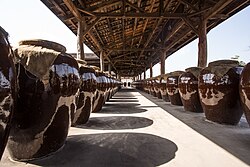
Traditionally, these ingredients are fermented in onggi, which are permeable clay crocks used for various Korean fermented foods like kimchi and soy sauce. While modern commercial versions may use additives like aspartame for sweetness or fruit flavors like strawberry and banana, high-end artisanal makgeolli is made using traditional, additive-free methods.
How to Enjoy Makgeolli
Because makgeolli is unfiltered, the sediment naturally settles at the bottom of the bottle or bowl. Before drinking, it is essential to stir the liquid with a ladle or gently invert the bottle to reintegrate the cloudy fraction with the clear liquid on top.
Traditional Pairings
Makgeolli is most commonly served chilled. A popular tradition is to consume it alongside buchimgae (Korean pancakes) on rainy days. This pairing is thought to stem from the similarity between the sound of falling rain and the sizzling of a pancake on a griddle, or from the historical practice of farmers eating pancakes to soothe hunger during rainy agricultural breaks.
Common pairings include:
- Pajeon: Scallion pancakes.
- Haemul-panjeon: Seafood and scallion pancakes.
- Bindae-tteok: Mung bean and pork pancakes.
Modern Variations
Today, drinkers experiment with various cocktails. You might find maksa (makgeolli mixed with a lemon-lime soda) or kkul-makgeolli (mixed with honey). Some even mix it with ice and tropical fruits like mango or pineapple.
Nutritional Profile and Production Trends
Beyond its flavor, makgeolli is considered a probiotic beverage. Due to the fermentation process, it contains high levels of Lactobacillus (lactic acid bacteria), vitamins, amino acids, and fiber. It is noted for containing vitamin B, inositol, and choline, which are associated with metabolism and fatigue relief.
| Year | Production Volume (kL) |
|---|---|
| 2005 | 166,319 |
| 2007 | 172,342 |
| 2009 | 260,694 |
| 2011 | 458,198 |
| 2013 | 426,216 |
| 2015 | 416,046 |
Frequently Asked Questions
What does the name "makgeolli" actually mean?
The name is a compound of mak (meaning "just now") and a derivative of the verb georeu- (to strain or filter). It literally translates to "raw rice wine."
Why is makgeolli cloudy?
The cloudy, milky appearance is caused by the natural sediment of the rice and the fermentation byproducts that remain because the wine is unfiltered.
Is makgeolli healthy?
As a probiotic product, it contains lactic acid bacteria, vitamins, amino acids, and fiber. It also contains protein and various B vitamins.
Why should I stir makgeolli before drinking?
Because it is unfiltered, the liquid tends to separate into a clear liquid at the top and a thick, white sediment at the bottom. Stirring ensures a consistent flavor and texture.
What is the difference between makgeolli and cheongju?
Makgeolli is an opaque, unfiltered rice wine, whereas cheongju is a refined, transparent, and clear rice wine.
What is nuruk?
Nuruk is a traditional Korean fermentation starter made from a dry cereal cake. It provides the molds and enzymes necessary to convert rice starch into sugar and eventually alcohol.