Major League Soccer Expansion: The Growth of North American Professional Soccer
Major League Soccer (MLS) stands as the premier level of professional soccer in the United States. Since its inception in 1996 with just 10 teams, the league has undergone a strategic transformation, evolving from a nascent experiment into a sprawling sports empire. By expanding its national footprint, MLS aims to secure the high-value television rights fees necessary to achieve its long-term ambition: becoming one of the top soccer leagues in the world.
As of the 2025 season, the league has grown to 30 teams, marked by the debut of San Diego FC. This growth has been characterized by a rapid acceleration between 2005 and 2025, during which the league added an average of one new team per season.
Key Facts
- Current Size: 30 teams as of the 2025 season.
- Starting Point: Launched in 1996 with 10 founding teams.
- Expansion Trend: Averaged one new team per year from 2005 to 2025.
- Financial Escalation: Expansion fees have risen from $5 million in 1998 to a record $325 million for the 30th team.
- International Reach: Includes three Canadian teams, starting with Toronto FC in 2007.
The Evolution of MLS Growth
Early Years and Initial Expansion (1993–2004)
The league's first foray into expansion occurred in 1998, increasing the count from 10 to 12 teams with the addition of the Chicago Fire SC (now Chicago Fire FC) and Miami Fusion. This era highlighted a massive disparity in entry costs; while the Chicago team paid a $5 million expansion fee, the Miami Fusion paid $20 million.
The First Growth Phase (2005–2014)
Starting in 2005, MLS entered a period of aggressive scaling, nearly doubling its size to 19 teams by 2014. This era saw the entry of teams in Los Angeles and Salt Lake City, as well as the relocation of a franchise to Houston in 2006.
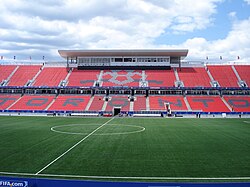
A milestone occurred in 2007 when Toronto FC joined, becoming the first of three Canadian teams in the league. Notably, Toronto was the first expansion club to play its inaugural season in a soccer-specific stadium—a venue designed exclusively for soccer rather than shared with other sports.

Other key additions during this phase included the reactivation of the San Jose Earthquakes in 2008 (with a $20 million fee), the Seattle Sounders FC in 2009, the Philadelphia Union in 2010, and the addition of Portland and Vancouver in 2011, followed by Montreal in 2012.
The Second Growth Phase (2015–2025)
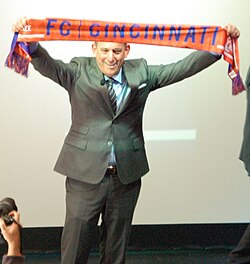
The most recent era of expansion has been defined by skyrocketing entry costs and high-profile ownership. In 2013, New York City FC set a then-record expansion fee of $100 million. This was later eclipsed by FC Cincinnati and Nashville SC, who each paid $150 million to join in 2019 and 2020, respectively.
The financial stakes continued to climb, with the league announcing that the 28th and 29th teams would pay $200 million each, while the 30th team was required to pay $325 million. This period also saw the arrival of Inter Miami CF, approved in 2018, and other clubs in Atlanta, Minnesota, Los Angeles, Austin, Charlotte, and St. Louis.
Expansion Criteria and Logistics
MLS does not award franchises arbitrarily. The league evaluates several critical criteria when determining where to place new teams:
- Ownership Quality: Owners must demonstrate a strong commitment to the league and possess the financial capacity to invest heavily in the team.
- Market Size: The league analyzes the size and potential of the metropolitan area's market.
To populate these new teams, the league utilizes expansion and dispersal drafts. These drafts allow new franchises to select players from existing league rosters to build a competitive squad from scratch.
While some cities like Las Vegas and Phoenix remain candidates for future growth, others have seen efforts stall. Cities such as Sacramento, Detroit, and Louisville had expansion bids that were either withdrawn or failed to materialize.

MLS Growth Summary
| Seasons | Number of Teams |
|---|---|
| 1996 – 1997 | 10 |
| 1998 – 2001 | 12 |
| 2002 – 2004 | 10 |
| 2005 – 2006 | 12 |
| 2007 – 2010 | 13 to 16 |
| 2011 – 2014 | 18 to 19 |
| 2015 – 2020 | 20 to 26 |
| 2021 – 2024 | 27 to 29 |
| 2025 – Present | 30 |
Frequently Asked Questions
How many teams are currently in Major League Soccer?
As of the 2025 season, Major League Soccer consists of 30 teams, following the addition of San Diego FC.
What is the most expensive expansion fee paid to join MLS?
The 30th team in the league was required to pay a record expansion fee of $325 million.
Which was the first Canadian team to join the league?
Toronto FC became the first Canadian team to join MLS in 2007.
What is a soccer-specific stadium?
A soccer-specific stadium is a venue designed specifically for soccer matches rather than being a multi-purpose stadium shared with other sports. Toronto FC was the first expansion club to start its inaugural season in one in 2007.
Will MLS expand beyond 30 teams?
While there are no pending expansion teams as of December 2024, the league has indicated it may expand to 32 teams at a later date.