Magellanic Penguin: Life, Ecology, and Conservation of South America's Banded Penguin
The Magellanic penguin (Spheniscus magellanicus) is a medium-sized South American penguin renowned for its striking appearance and wide migratory range. Named after the Portuguese explorer Ferdinand Magellan, who first encountered them in 1520, these birds are the most numerous of the banded penguins in the Spheniscus genus. While they primarily breed in coastal Patagonia—spanning Argentina, Chile, and the Falkland Islands—their journeys often take them as far north as Brazil and Uruguay.
Though they are generally classified as a species of Least Concern by the IUCN, they face a complex array of environmental challenges that threaten their long-term stability.
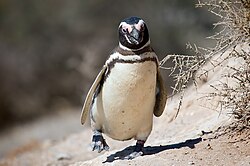
Key Facts
- Scientific Name: Spheniscus magellanicus
- Habitat: Coastal Patagonia (Argentina, Chile, Falkland Islands) with migrations to Brazil and Uruguay.
- Lifespan: Up to 25 years in the wild; up to 30 years in captivity.
- Diet: Primarily small pelagic fish, squid, and krill.
- Conservation Status: Least Concern (though populations are decreasing).
- Distinctive Feature: Two black bands on the chest, with the lower one shaped like an inverted horseshoe.
Physical Characteristics and Identification
Adult Magellanic penguins typically stand between 61 and 76 cm (24–30 in) tall and weigh between 2.7 and 6.5 kg (6.0 and 14.3 lb). Males are generally larger than females. Their plumage consists of a black back and a white abdomen, separated by two distinct black bands. A broad white border frames the head, extending from behind the eye, around the chin, and meeting at the throat.
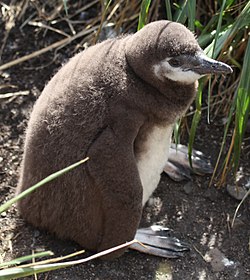
Younger penguins and chicks differ significantly, sporting grey-blue backs and chests. A notable developmental trait is the blotched pattern on their feet, which gradually fades and becomes entirely black by the time the bird reaches approximately ten years of age.
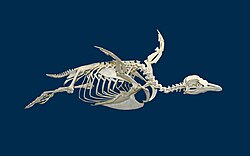
Diet and Foraging Behavior
These penguins are opportunistic hunters that feed in the ocean, primarily targeting small pelagic fish (fish that live in the open ocean), such as the Argentine anchoita, silversides, and Southern blue whiting. Their diet also includes squid, cuttlefish, krill, squat lobsters, and hagfish. Interestingly, recent findings indicate that they actively seek out jellyfish from the Chrysaora and Cyanea genera.
To survive in saltwater, they possess a specialized salt-excreting gland that removes excess salt from their bodies. Adults are capable of diving to depths of 20 to 50 meters (66 to 164 ft) to forage. Because they inhabit the Atlantic coast of South America, they benefit from a large continental shelf, providing a consistent food supply and allowing them to forage far from their breeding colonies.
Breeding and Life Cycle
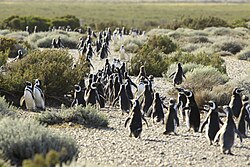
The breeding season begins in September and lasts through February or March. Magellanic penguins are highly social and gather in dense colonies, such as the one at Punta Tombo, where nest density can reach 20 nests per 100 square meters. They are monogamous, mating with the same partner year after year; females can identify their mates by their unique calls.
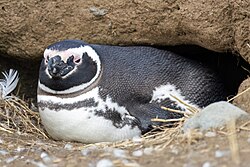
Nests are typically constructed in burrows or under bushes to maintain temperatures above 20 °C (68 °F). The breeding process involves several key stages:
- Egg Laying: Two eggs are laid. The first egg usually has a higher survival rate.
- Incubation: Parents share incubation duties in shifts of 10 to 15 days, lasting a total of 39–42 days.
- Chick Rearing: Both parents care for the chicks for about 29 days, feeding them every two to three days.
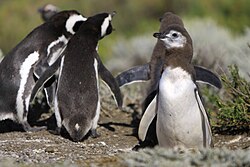
Once the chicks are mature, the adults migrate north for the winter, feeding in the offshore waters of Brazil and Peru.
Threats and Conservation Challenges
Despite their current status, Magellanic penguins face significant pressures. Natural predators include sea lions, leopard seals, and giant petrels (which target chicks), as well as pumas, which are major predators of adults in certain national parks.
Oil Pollution
Oil spills are a critical threat, particularly in the Strait of Magellan. Chronic pollution from international shipping is a persistent issue. In Argentina alone, oil spills are reported to kill roughly 20,000 adults and 22,000 juveniles annually. Oil exposure weakens the birds' immunity, making them susceptible to bacterial and fungal infections.
Climate Change
Climate change is shifting fish populations, forcing some penguins to swim an additional 80 km (50 miles) round-trip to find food. This distance leaves mates unattended at the nest. Furthermore, an increase in rainstorms can be fatal for chicks; because they lack waterproof feathers, they are highly susceptible to hypothermia when wet.
Human Impact and Mass Mortalities
Tourism can cause physiological stress in chicks, leading to elevated levels of corticosterone, which hinders muscle growth and immune function. Additionally, the species has suffered mass mortality events, such as the 2023 event in Uruguay where over 2,000 penguins washed ashore, many of them juveniles with empty stomachs.
Summary Table: Magellanic Penguin Overview
| Feature | Details |
|---|---|
| Height | 61–76 cm (24–30 in) |
| Weight | 2.7–6.5 kg (6.0–14.3 lb) |
| Primary Diet | Pelagic fish, squid, krill, jellyfish |
| Breeding Range | Argentina, Chile, Falkland Islands |
| Clutch Size | 2 eggs |
| Major Threats | Oil spills, climate change, pumas |
Frequently Asked Questions
How long do Magellanic penguins live?
In the wild, they typically live up to 25 years, though they can reach 30 years in captivity. The oldest recorded individual, Captain Eo at the San Francisco Zoo, lived to be 40.
What makes the Magellanic penguin different from other banded penguins?
It is the most numerous of the Spheniscus genus and is distinguished by its specific black band pattern, including an inverted horseshoe-shaped lower band on the breast.
How do Magellanic penguins handle saltwater?
They possess a specialized salt-excreting gland that filters excess salt from their bodies, allowing them to ingest seawater along with their prey.
Why are rainstorms dangerous for penguin chicks?
Chicks have not yet developed waterproof feathers. When they get wet during heavy rainstorms, they are at a high risk of dying from hypothermia.
Do Magellanic penguins stay with the same partner?
Yes, they generally mate with the same partner year after year. Males reclaim their previous burrows and wait for their partners, whom they recognize by their calls.