Mâcon Districts and Associated Communes
Mâcon is a city of diverse landscapes, ranging from a historic town center and bustling shopping districts to industrial hubs and quiet residential villages. Situated along the banks of the Saône river, the city is organized into several distinct quarters and associated communes, each contributing to the unique character of this Saône-et-Loire destination.
The Town Centre
The heart of Mâcon extends from Place Gardon in the north to the Roundabout of Europe in the south, and from Place de la Barre in the west to the Saône riverbanks in the east. This central area is divided into several specialized quarters.
Shopping and Landmarks
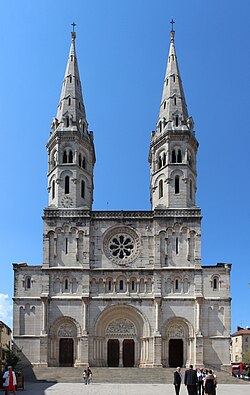
The area surrounding the town hall serves as the primary shopping hub, featuring streets such as rue Carnot, rue Dufour, and rue Sigorgne. This conventional center-ville is home to the city's two museums, the Church of Saint Pierre, and the Cathedral of Saint-Vincent.
The Saint-Antoine District
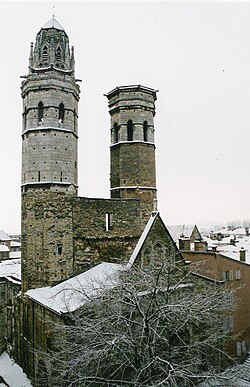
Centered around the Place aux Herbes, the Saint-Antoine district represents the historic heart of the city. Characterized by narrow lanes and crossed by the rue de Strasbourg, this northern section of the center houses the prefecture of Saône-et-Loire and the old Saint-Vincent Cathedral (Vieux Saint-Vincent).
The Western Center and Square de la Paix
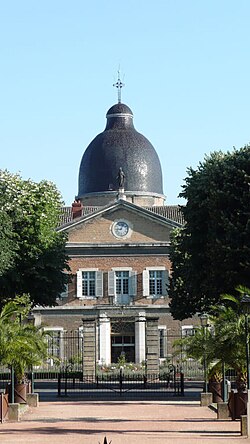
To the west lies the Square de la Paix, an area bordered by the Palais de Justice, Saint-Vincent Cathedral, and the Hôtel-Dieu. This sector also encompasses the Héritan district and the Vallon des Rigollettes.
Esplanade Lamartine
A major redevelopment project between the late 1990s and early 2000s transformed the Esplanade Lamartine. The previous cobblestones and winding car parks were replaced with a three-level underground parking facility, a bright open esplanade, and a waterfront stage for concerts and events. The renovated Statue Lamartine stands as a centerpiece, while silver letters engraved in the ground quote "Le Lac," the famous poem by Alphonse de Lamartine: "Time, halt in your flight..."
Regional Geography of Mâcon
North Mâcon
The Neustadt roundabout divides the north into two distinct sections. The northwest is occupied by Flacé-lès-Mâcon, a former independent commune re-attached to the city in 1965 that maintains a village atmosphere with its own town hall and church. The northeast is dedicated to residential areas and sports facilities, including the Sports Palace, a public swimming pool, and various rowing, sailing, and water skiing clubs. This area also contains several HLM (low-rent council estates) and priority development areas known as ZUP.
South Mâcon
The southern region is split into three primary zones:
- Saint-Clément/Les Blanchettes: Also known as the Percée Sud, Saint-Clément is a key business area featuring the Europe roundabout and a Romanesque church. Les Blanchettes is a wooded residential area with HLM housing and the Parc des Allumettes.
- Industrial Zone: This is the largest metropolitan area in the south, featuring the Port River at Mâcon, ranked 6th in France.
- Chanaye/Fontenailles: Located in the southwest, Fontenailles consists of detached houses, while La Chanaye is an HLM area. Along with other districts, this is classified as a ZUS (sensitive urban zone).
West Mâcon
The western sector is the least populated and serves as the city's educational hub, hosting several lycées (René Cassin, Lamartine, Alexandre Dumaine, and Ozanam) and most of the colleges. It also includes the Hospital of Mâcon, the Bioux working-class area, and residential zones that merge with Charnay-lès-Mâcon.
Associated Communes
Beyond the main city limits, Mâcon is linked to several associated communes through fusion-associations established in 1972:
- Loché: A wine-producing village that hosts the Mâcon Loché-TGV station.
- Saint-Jean-le-Priche: An associated commune since 1972.
- Sennecé-lès-Mâcon: An associated commune since 1972.
| District/Area | Primary Characteristic | Key Landmark/Feature |
|---|---|---|
| Town Centre | Commercial & Historic | Esplanade Lamartine & Cathedral |
| North Mâcon | Residential & Sports | Flacé-lès-Mâcon & Sports Palace |
| South Mâcon | Industrial & Business | Port River at Mâcon |
| West Mâcon | Educational | Lycées and Hospital |
| Loché | Viticulture & Transport | Mâcon Loché-TGV station |
Key Facts
- Esplanade Lamartine features a three-level underground car park and a stage on the Saône river.
- Flacé-lès-Mâcon was integrated into the city in 1965.
- The Port River at Mâcon is the 6th largest of its kind in France.
- Loché, Saint-Jean-le-Priche, and Sennecé-lès-Mâcon became associated communes in 1972.
- The city's educational infrastructure is concentrated in the West.
Frequently Asked Questions
What is the significance of the Esplanade Lamartine?
It is a modernized public space featuring a renovated statue of Alphonse de Lamartine, gardens, and a waterfront stage for events, with silver engravings of the poem "Le Lac" in the ground.
Which area of Mâcon is the primary business hub?
The Saint-Clément area in the south, specifically around the Europe roundabout, serves as the main business district.
Where are the main schools and colleges located?
Most of the city's colleges and lycées, including René Cassin and Lamartine, are located in the western part of Mâcon.
What are the associated communes of Mâcon?
The associated communes are Loché, Saint-Jean-le-Priche, and Sennecé-lès-Mâcon, all of which joined via fusion-association in 1972.
What is the Port River at Mâcon?
It is a major industrial port located in the southern part of the city and is ranked as the 6th largest river port in France.