MacCabe: The Legendary Voice of Ottawa Sports Journalism
In the golden era of local reporting, few figures captured the spirit of the nation's capital quite like MacCabe. A seasoned journalist and storyteller, MacCabe spent decades documenting the intersection of athletics and community, transforming sports reporting from simple score-keeping into a vivid exploration of the human condition.
A Distinguished Career in Print
MacCabe's professional journey began in June 1946 at the Ottawa Journal. While he spent a brief period with the Montreal Star between 1951 and 1952, he soon returned to the Journal, where he ascended to the role of sports editor. He succeeded his mentor, Bill Westwick, a position he held until 1977.
In 1977, MacCabe was recruited by the editor of the Ottawa Citizen, who sought to enhance the publication's journalistic quality with a more competitive salary offer. Throughout his tenure, MacCabe became an essential figure in the local sports scene, particularly through his extensive coverage of the Ottawa Rough Riders. He traveled with the team and served as a vital bridge between the professional athletes and the community they represented.
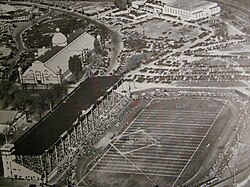
Breadth of Coverage
While professional football was a cornerstone of his work—including annual coverage of the Grey Cup championship starting in 1947—MacCabe's interests were diverse. He frequently reported on:
- Amateur golf and boxing
- Junior ice hockey
- High school athletics
The Art of Storytelling and Provocation
Beyond the statistics, MacCabe was renowned in the newsroom for his colorful anecdotes. One of his favorite tales involved a 1959 visit by U.S. President Dwight D. Eisenhower to the Ottawa Hunt and Golf Club. MacCabe claimed he bribed a caddie to carry the president's bag to secure an exclusive interview, only to be pinned to the ground at gunpoint once discovered.
His adventurous spirit extended to international reporting. During the 1974 Summit Series in Moscow, MacCabe reportedly ignored requests from the Embassy of Canada to focus exclusively on hockey. Instead, he used an oil company credit card to explore and write about Moscow's factories and apartments, providing readers with a broader cultural perspective.
Legacy and Influence
Colleagues and historians remember MacCabe as a writer who could be both a friend to his subjects and ruthless when the story demanded it. Journalist John Besley noted that MacCabe was provocative, well-read, and essentially defined an era of Ottawa's sports history.
His impact extended beyond the playing field. Luiza Chwialkowska highlighted how MacCabe captured the "soul" of the city, bringing to life the bars, street cars, gangs, and characters of "Old Ottawa." According to Dave Brown, MacCabe possessed a unique ability to find the "emotional string" of a reader and give it a "twang," relying on a human touch that mirrored the close connection between sports and the community at the time.
| Period | Organization/Event | Role/Key Activity |
|---|---|---|
| 1946 – 1951 | Ottawa Journal | Staff Writer |
| 1951 – 1952 | Montreal Star | Journalist |
| 1952 – 1977 | Ottawa Journal | Sports Editor |
| 1977 – 1985 | Ottawa Citizen | Sports Editor |
| Post-1985 | Freelance | Occasional Writer |
Key Facts
- Career Span: Active from 1946 until his retirement in 1985.
- Major Publications: The Ottawa Journal and the Ottawa Citizen.
- Specialization: Expert in the Ottawa Rough Riders and annual Grey Cup coverage since 1947.
- Style: Known for a "human touch" and documenting the social history of Old Ottawa.
- Retirement: Stepped down as sports editor of the Ottawa Citizen following a heart attack in 1985.
Frequently Asked Questions
Which teams and events did MacCabe cover most frequently?
MacCabe was most closely associated with the Ottawa Rough Riders and provided annual coverage of the Grey Cup championship beginning in 1947. He also wrote extensively on junior ice hockey, amateur golf, boxing, and high school sports.
Why did MacCabe move from the Ottawa Journal to the Ottawa Citizen?
In 1977, he was lured to the Ottawa Citizen by its editor, who offered higher pay in an effort to recruit superior journalists for the publication.
What was MacCabe's approach to sports journalism?
He focused on the emotional connection between sports and the community. He was described as a writer who used a "human touch" to find the reader's emotional string, blending sports reporting with the broader social characters and atmosphere of the city.
What happened during MacCabe's coverage of the 1974 Summit Series?
Despite instructions from the Canadian Embassy in Moscow to report only on hockey, MacCabe used an oil company credit card to visit and write about Moscow's factories and apartments.
When did MacCabe retire from full-time journalism?
MacCabe retired as the sports editor of the Ottawa Citizen in 1985 after suffering a heart attack, though he continued to work as a freelancer occasionally thereafter.