Luque, Paraguay: A Hub of Culture, Aviation, and Sport
Located within the Central Department of Paraguay, Luque is a vibrant city that serves as a critical gateway to the nation. As part of the Gran Asunción metropolitan area, Luque blends a rich colonial history with modern infrastructure, making it one of the most significant urban centers in the country.
Whether known for its artistic craftsmanship, its role in international sports, or its status as a transportation hub, Luque is a city of diverse identities. From its early days as a colonial land grant to its brief tenure as the national capital, the city has evolved into a bustling center of population and industry.
Key Facts
- Population: 263,604 (as of 2016), making it the third-most populated city in Paraguay.
- Strategic Importance: Home to the Silvio Pettirossi International Airport, the country's primary international gateway.
- Sports Hub: Hosts the CONMEBOL headquarters and the South American Football Museum.
- Artisanal Heritage: Renowned for the production of Paraguayan harps, guitars, and Filigranas (intricate gold and silver filigree jewelry).
- Geography: Spans from Ypacaraí Lake to the western bank of the Paraguay River.
History and Toponymy
The origins of Luque are tied to the early colonial era. The name first appears in 1635 when Governor Martín Ledesma de Valderrama granted land in an area known as las Salinas to Captain Miguel Antón de Luque. For over twenty years, Captain Luque operated an Encomienda (a Spanish colonial labor system) in this region.
By 1743, a descendant of the captain, also named Miguel de Luque, donated a portion of the land to the Franciscans. Between 1750 and 1755, the Franciscans constructed a chapel dedicated to the Virgin of the Rosary, leading the area to be renamed Valle de Luque. The city's administrative status was formalized in 1781 when Governor Pedro Melo de Portugal designated it as the Partido de Luque.
Luque also played a pivotal role during the Paraguayan War; in 1868, it served as the temporary capital of Paraguay before the seat of government was moved to San Estanislao.
Geography and Demographics
Luque is strategically positioned east of Asunción. Its territory is expansive, stretching from the shores of Ypacaraí Lake to the western banks of the Paraguay River. The city shares borders with several other municipalities, including Mariano Roque Alonso, Limpio, Nueva Colombia to the north, and Fernando de la Mora, San Lorenzo, and Capiatá to the south and southeast.
With a population of 263,604 recorded in 2016, Luque is the most populated city in the Central Department and ranks as the third-largest city in all of Paraguay, trailing only the capital, Asunción, and Ciudad del Este.
| Attribute | Detail |
|---|---|
| Department | Central |
| Total Area | 220 km² (85 sq mi) |
| Elevation | 120 m (390 ft) |
| Climate Type | Cfa (Humid Subtropical) |
| Coordinates | 25°16′12″S 57°29′14″W |
Economy, Culture, and Landmarks
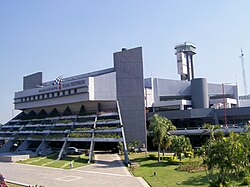
Luque is a center of both high-tech logistics and traditional artistry. The city is most famous for the Silvio Pettirossi International Airport, which serves as the primary point of entry for international travelers.
Beyond aviation, Luque is a cultural bastion for Paraguayan music and jewelry. It is a primary center for the production of guitars and the traditional Paraguayan harp. The city is also celebrated for its Filigranas, specifically the Carretón de Siete Ramales (seven-band ring), a masterpiece of gold and silver filigree work.
Sports and Recreation
The city is a focal point for South American football. CONMEBOL, the continental governing body for association football, is headquartered just minutes from the airport and houses the South American Football Museum. Luque's sporting prestige was further highlighted when it hosted the 2019 FIFA Beach Soccer World Cup.
For nature and athletics, the city offers the Ñu Guasú Park, which serves as the home of the Paraguayan Olympic Committee.
Notable People
Luque has been the birthplace or home to several prominent figures, particularly in the realm of sports. Notable individuals include renowned footballers such as José Luis Chilavert, Julio Cesar Romero, and Pablo César Aguilar, as well as other figures like Egni Eckert, Raúl Vicente Amarilla, Osvaldo Martínez, and Hilarión Osorio.
Frequently Asked Questions
What is the significance of Luque in Paraguayan history?
Luque is historically significant for its colonial roots dating back to 1635 and for serving as the temporary capital of Paraguay in 1868 during the Paraguayan War.
What are the most famous products made in Luque?
The city is renowned for its artisanal production of Paraguayan harps, guitars, and intricate gold and silver filigree jewelry known as Filigranas.
Which major international facilities are located in Luque?
Luque is home to the Silvio Pettirossi International Airport and the headquarters of CONMEBOL, which includes the South American Football Museum.
How large is the population of Luque?
As of 2016, Luque had a population of 263,604, making it the most populated city in the Central Department and the third-largest in Paraguay.
What is the Ñu Guasú Park?
Ñu Guasú Park is a prominent recreational area in Luque that also houses the Paraguayan Olympic Committee.