Ludwigsvorstadt and Isarvorstadt: A Guide to Munich's Vibrant Boroughs
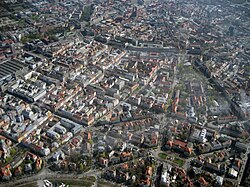
Munich is a city of distinct personalities, and few areas embody this diversity as clearly as the boroughs of Ludwigsvorstadt and Isarvorstadt. From the upscale residential streets near the Oktoberfest grounds to the edgy, artistic hubs of the slaughterhouse district and the pulsing nightlife of the gay village, these areas offer a comprehensive cross-section of urban Munich life.
Ludwigsvorstadt is primarily composed of the St. Paul and Ludwigsvorstadt-Kliniken quarters. Meanwhile, Isarvorstadt is a more fragmented but equally eclectic district, encompassing the Schlachthofviertel, Drei-Mühlen-Viertel, Am alten Südfriedhof, Glockenbachviertel, Gärtnerplatzviertel, and the area surrounding the Deutsches Museum.
Key Facts
- Diverse Quarters: The area spans from the high-end St. Paul neighborhood to the multicultural "Little Istanbul."
- Cultural Hubs: Home to the world-famous Deutsches Museum and the Staatstheater am Gärtnerplatz.
- Nightlife Center: The Glockenbachviertel is the heart of Munich's gay culture and nightlife.
- Major Landmarks: Includes the Theresienwiese (Oktoberfest site) and the Alter Südfriedhof.
- Transit Access: Highly connected via U-Bahn lines U1, U2, U3, U4, U5, and U6.
Ludwigsvorstadt: From Upscale Living to Urban Hubs
St. Paul
Located immediately east of the Theresienwiese—the expansive grounds that host Munich's annual Oktoberfest—the St. Paul quarter is centered around the neogothic Catholic St. Paul's Church. This area, particularly along the orbital Bavariaring and Kaiser-Ludwig-Platz, is recognized as one of the city's more upscale neighborhoods. While historically residential, many buildings have transitioned into professional office spaces. The quarter is well-served by the U4, U5, U3, and U6 subway lines, as well as tram lines 18 and 19.
Ludwigsvorstadt/Kliniken
This area is split into two unofficial sections: the Bahnhofsviertel and the Klinikviertel. The Bahnhofsviertel, situated south of the Munich Hauptbahnhof (main train station), is affectionately known as "Little Istanbul" due to its high density of Turkish shops, eateries, and supermarkets along Landwehrstraße and Goethestraße.
The southern portion is dominated by the Klinikum Innenstadt, a major hospital affiliated with LMU Munich. There are currently plans to relocate the bulk of the hospital to the Großhadern campus in southwest Munich, which would open up prime real estate for new residential and office developments near the Old Town.
Isarvorstadt: Art, History, and Nightlife
Schlachthofviertel and Dreimühlenviertel
The Schlachthofviertel takes its name from the city's slaughterhouse. While no longer the primary focus of the area, it remains a hub for butchers and food emporiums. In recent years, it has evolved into a creative sanctuary for artists and small businesses. This is best seen during the "Open Schlachthof" event, where artists open their ateliers to the public.
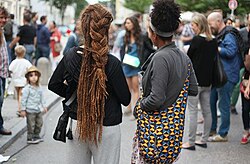
Adjacent to the east is the Dreimühlenviertel. This residential area is bounded by the River Isar and the railway tracks, featuring a lively atmosphere of bars and cafés along Ehrengutstraße and Roecklplatz.
Am alten Südfriedhof
This residential quarter is defined by the Alter Südfriedhof (Old Southern Cemetery), the final resting place of many illustrious Munich citizens. While mostly quiet, the northern end of Thalkirchner Straße offers a selection of bars and restaurants near the Sendlinger Tor subway station.
Glockenbachviertel and Gärtnerplatzviertel
The Glockenbachviertel is widely considered the heart of Isarvorstadt and the city's most vibrant district. It is the focal point of Munich's gay culture, with a high concentration of clubs and bars along Müllerstraße. The energy continues into the Gärtnerplatzviertel, separated by Fraunhoferstraße.
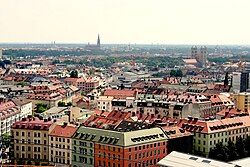
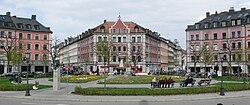
The centerpiece here is Gärtnerplatz, a landscaped urban square and roundabout. This area is a cultural destination, featuring the Staatstheater am Gärtnerplatz and various cafés and bars.
Am Deutschen Museum
Often viewed as an extension of the Gärtnerplatzviertel, this area encompasses the western shore of the River Isar and the Museumsinsel (Museum Island). This island is home to the world-renowned Deutsches Museum and the Blitz Club.
District Summary
| Quarter | Primary Character | Key Landmark/Feature |
|---|---|---|
| St. Paul | Upscale / Professional | St. Paul's Church / Theresienwiese |
| Bahnhofsviertel | Multicultural | "Little Istanbul" |
| Klinikviertel | Medical / Developing | Klinikum Innenstadt |
| Schlachthofviertel | Artistic / Culinary | City Slaughterhouse |
| Glockenbachviertel | Vibrant / LGBTQ+ Hub | Blumenstraße / Müllerstraße |
| Gärtnerplatzviertel | Cultural / Social | Gärtnerplatz / Staatstheater |
| Am Deutschen Museum | Educational / Tourist | Deutsches Museum |
Frequently Asked Questions
What is "Little Istanbul" in Munich?
Little Istanbul is the popular name for the Bahnhofsviertel area in Ludwigsvorstadt, characterized by a high concentration of Turkish supermarkets, shops, and eateries, particularly along Landwehrstraße.
Where is the center of Munich's gay culture located?
Munich's gay culture is centered in the Glockenbachviertel and the adjacent Gärtnerplatzviertel, with many gay bars and clubs located primarily along Müllerstraße.
What is the significance of the Schlachthofviertel?
Originally the site of the city's slaughterhouse, it is now a mix of traditional food emporiums and a growing community of artists and small businesses who host the annual "Open Schlachthof" event.
Which major museum is located in Isarvorstadt?
The world-famous Deutsches Museum is located on the Museumsinsel (Museum Island) within the "Am Deutschen Museum" section of the borough.
What is happening with the Klinikum Innenstadt?
There are plans to move the largest part of the hospital to the university campus in Großhadern, allowing the current buildings to be converted into residential and office spaces.