Luanda: The Dynamic Capital of Angola
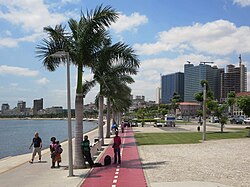
Located on the northern Atlantic coast, Luanda serves as the capital and largest city of Angola. As the nation's primary port and its central industrial, cultural, and urban hub, Luanda is the administrative heart of both the city and the surrounding Luanda Province. It holds the distinction of being the most populous Portuguese-speaking national capital in the world and the largest Lusophone (Portuguese-speaking) city outside of Brazil.
By 2024, the city's population grew to over 8.8 million inhabitants, representing approximately one-third of Angola's total population.
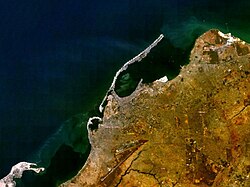
Key Facts
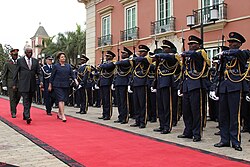
- Founded: January 25, 1576.
- Population: 8,816,297 (City), 11,370,000 (Metro area) as of 2024.
- Status: Most populous Lusophone national capital outside Brazil.
- Economy: Driven by oil and diamond industries, fueling widespread urban renewal.
- Geography: Coastal city with an elevation of 6 meters (20 ft).
Historical Evolution
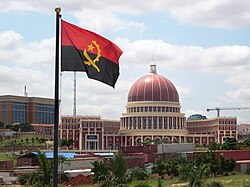
Portuguese Colonization and Early Trade
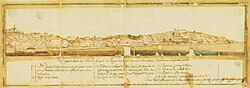
Founded in the 16th century, Luanda became a critical node in the Atlantic trade. By 1751, the city's slave market saw between 5,000 and 10,000 people sold annually, with the Imbangala and Mbundu peoples serving as primary rivals in the supply chain. During this era, Angola functioned almost as a colony of Brazil, leading to a profound Brazilian influence that persisted until Brazil's independence in 1822.
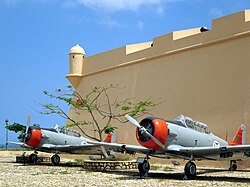
The Estado Novo Era
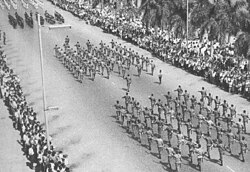
Under the Portuguese dictatorship known as the Estado Novo, Luanda underwent rapid transformation. In 1940, the town had 61,208 residents (14.6% white). By 1970, it had evolved into a wealthy, cosmopolitan city of 475,328 people, including 124,814 Europeans (26.3%) and roughly 50,000 mixed-race inhabitants (10.5%).
Despite the Portuguese Colonial War (1961–1974), the city of Luanda remained largely unaffected, experiencing record economic growth. This prosperity led a 1982 report to describe the city as the "Paris of Africa."
Geography and Urban Structure
Metropolitan Administration
The administrative layout of Luanda has shifted significantly. In 2011, the province expanded to include Icolo e Bengo and Quiçama. Since 2017, new municipalities such as Talatona and Kilamba-Kiaxi were created. As of 2024, the Luanda Province consists of 17 municipalities, while the specific Luanda municipality was dissolved and Icolo e Bengo became a separate province.
Climate
Luanda features a tropical climate with distinct temperature and rainfall patterns. The warmest months typically occur between December and March, with record highs reaching 37.2°C. Rainfall is highly seasonal, with December being the wettest month (averaging 405 mm) and June and July seeing almost no precipitation.
Demographics
The city is a melting pot of ethnicities. While predominantly African, there is a sizable European minority, particularly Portuguese (approximately 260,000) and Brazilians. Recent economic booms have spurred increased immigration from Portugal. Additionally, the city hosts expatriate communities from South Africa, China, and Vietnam.
Culture and Landmarks
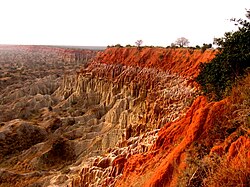
Museums and Monuments
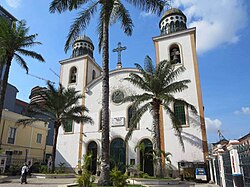
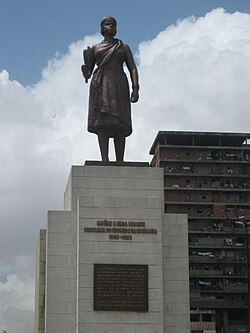
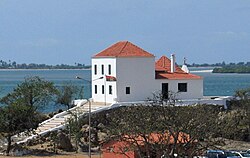
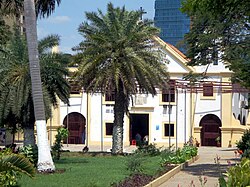
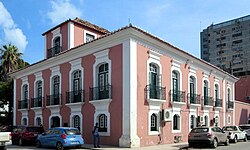
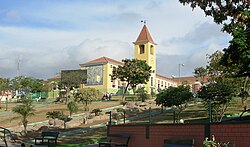
Luanda is rich in historical and cultural sites. Key institutions include the National Museum of Anthropology, the National Museum of Slavery, and the Museum of the Armed Forces. Architectural landmarks include the Luanda Cathedral (built in 1628), the N. Sra. da Nazaré Church (1664), and the statue of Queen Nzinga.
Modern Development
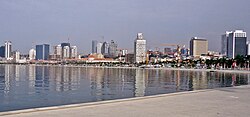
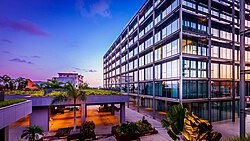
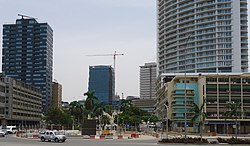
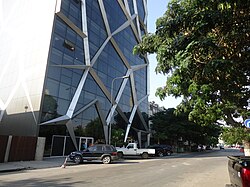
In the 21st century, profits from oil and diamonds have funded massive urban redevelopment. This is evident in the Cidade Financeira de Luanda and the proliferation of high-rise buildings in the downtown district.
Infrastructure and Economy
Transportation
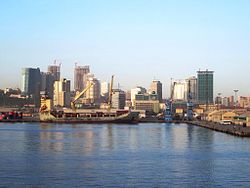
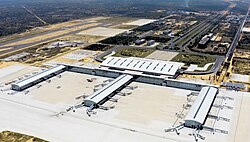
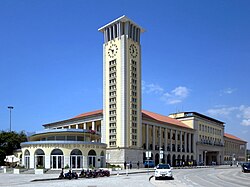
Luanda is served by the Port of Luanda, one of the busiest ports in Africa. Aviation has seen a major upgrade with the opening of the Dr. António Agostinho Neto International Airport in November 2023, which is gradually replacing the older Quatro de Fevereiro Airport.
![The Port of Luanda is one of the busiest ports in Africa.[64]](/images/2a/e9/2ae983e21541f09b2da8b332781991b538e6369418c2d18a15f8cb172b7eebb9.jpg)
Education and Sports
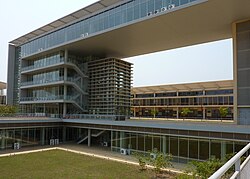
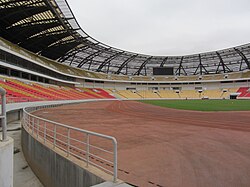
The city is a center for higher learning, hosting institutions such as Agostinho Neto University and the Catholic University of Angola. In sports, the city is home to the Estádio 11 de Novembro.
City Overview Summary
| Category | Detail |
|---|---|
| Coordinates | 8°50′18″S 13°14′04″E |
| Area | 1,645 km² |
| Population (2024) | 8,816,297 |
| HDI (2023) | 0.733 (High) |
| Time Zone | UTC+01:00 (WAT) |
| Primary Industries | Oil, Diamonds, Shipping |
Frequently Asked Questions
What is the population of Luanda in 2024?
The capital city's population reached 8,816,297 in 2024, with the wider metropolitan area totaling approximately 11,370,000 people.
Which airport is the primary gateway to Luanda?
While Quatro de Fevereiro Airport was the main hub, the new Dr. António Agostinho Neto International Airport opened in November 2023 and is gradually replacing it.
Why was Luanda called the "Paris of Africa"?
The city earned this nickname in a 1982 report due to the record economic growth, development, and cosmopolitan atmosphere it experienced during the mid-20th century.
What are the main economic drivers of Luanda's urban renewal?
The widespread redevelopment and construction of high-rises in the 21st century have been largely funded by profits from Angola's oil and diamond industries.
What is the significance of the Port of Luanda?
The Port of Luanda is one of the busiest ports in Africa and serves as the primary seaport for Angola's international trade.