Loyalty Programs: How Rewards Strategies Drive Customer Retention
In the competitive landscape of modern commerce, businesses constantly seek ways to maintain a steady relationship with their clientele. A loyalty program, also known as a rewards program, is a strategic marketing tool designed to encourage customers to continue shopping at or using the services of specific businesses. By offering tangible benefits, companies aim to foster repeat business and build long-term brand affinity.
These programs can be structured in various ways, ranging from single-company schemes to complex coalition programs, where multiple independent businesses join forces to offer a unified rewards ecosystem.
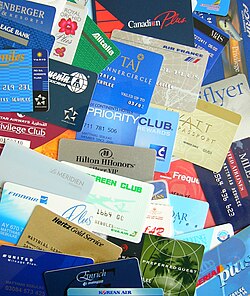
Key Facts
- Loyalty programs can be managed by a single company or a coalition of multiple retailers.
- Common rewards include free merchandise, discounts, gift cards, and cashback.
- Modern trends show a significant shift from physical cards to digital mobile applications and QR codes.
- Advanced programs now integrate AI and data analytics to provide personalized consumer experiences.
- Industries ranging from retail and travel to financial services and entertainment utilize these schemes.
Core Features and Reward Types
The effectiveness of a loyalty program often depends on the variety and value of its offerings. While the structure varies, most programs utilize points as a foundational metric for customer engagement. These points can eventually be redeemed for several types of incentives:
- Merchandise or services: Items or experiences provided free of charge.
- Discounts: Reductions in the price of goods or services.
- Vouchers: Gift cards or credit vouchers specifically for use with the merchant.
- Cashback: This may involve direct money transfers to a customer's account or the mailing of a paper check.
Program Structures and Tiers
Many sophisticated programs implement tiers, where customers unlock increasingly valuable benefits as they reach higher levels of spending or engagement. Some programs also require membership fees to access premium benefits. Beyond simple rewards, loyalty cards are frequently used for identity management, such as dispensing prescriptions at pharmacies or providing access to airport lounges via frequent-flyer cards.
The Evolution from Physical to Digital
The medium through which customers interact with loyalty programs has undergone a massive transformation. Historically, consumers relied on physical membership cards, magnetic strips, or even traditional paper-based stamp and punchcard schemes. Today, there is a clear industry push toward the eradication of traditional cards in favor of electronic equivalents.
Digital loyalty programs are primarily accessed through:
- Mobile Apps: Dedicated applications for the program or the participating merchant.
- Websites: Desktop and mobile-responsive versions of program portals.
- Kiosks: Dedicated hardware found in specific environments, such as casinos.
- QR Codes: A common medium used for quick digital scanning.
Notable technological milestones include Apple's Passbook, which attempted to standardize mobile loyalty formats, and applications like Stamp Me, which utilizes iBeacon technology. While some early mobile players like Punchd were eventually absorbed into larger entities like Google, the move toward mobile-first engagement remains a dominant trend.
Industry Applications and Global Reach
Loyalty programs are ubiquitous across nearly every major economic sector. In retail, they are staples for supermarkets and department stores. The travel and hospitality sector relies heavily on them for airlines and hotels, while the food and beverage industry uses them to drive traffic to coffee shops and restaurants. Other major users include financial services, telecommunications, entertainment, and automotive dealerships.
Global Landscape Examples
Loyalty schemes vary significantly by region and market maturity:
| Region | Notable Program(s) | Type/Context |
|---|---|---|
| India | PAYBACK India | Large coalition program |
| Germany | Payback | Largest program in the country |
| Switzerland | Migros (M-Cumulus) & Coop (Supercard) | Prominent supermarket-led programs |
| United Kingdom | Tesco Clubcard | Major retail program |
| Brazil | Dotz | Coalition program with 50M+ members |
| Canada | Aeroplan | Coalition program centered on Air Canada |
Future Trends: AI and Personalization
As we move through the mid-2020s, the focus of loyalty marketing is shifting from transactional rewards to emotional connections. The integration of Artificial Intelligence (AI) and advanced data analytics allows platforms to move beyond generic offers. Instead, companies are focusing on offering highly personalized rewards that resonate with the specific preferences and behaviors of individual consumers.
Frequently Asked Questions
What is the difference between a single-company and a coalition loyalty program?
A single-company program is run by one specific business for its own customers. A coalition program involves a network of different, often independent, businesses that allow customers to earn and redeem rewards across multiple different brands.
How is cashback typically delivered to customers?
Cashback can be delivered in two primary ways: as a direct electronic transfer into the customer's bank or program account, or via a physical paper check sent through the mail.
Why are companies moving away from physical loyalty cards?
The industry is moving toward digital versions, such as mobile apps and QR codes, to reduce physical waste, lower costs, and leverage the convenience of smartphones for easier customer engagement and data collection.
What industries use loyalty programs most frequently?
While used widely, they are most prominent in retail (supermarkets, clothing), travel (airlines, hotels), food and beverage (restaurants, coffee shops), and financial services (banks, credit cards).
Can loyalty programs be used for things other than discounts?
Yes. Beyond discounts and free items, they can be used for identity management, such as verifying a customer at a pharmacy or providing access to exclusive areas like airport lounges.