Louise Arbour: A Legacy of International Justice and Public Service
Louise Arbour is a distinguished Canadian jurist and diplomat whose career has spanned the highest levels of national and international law. From the benches of the Supreme Court of Canada to the halls of the United Nations, Arbour has dedicated her life to the rule of law—the principle that all people and institutions are accountable to laws that are publicly promulgated and equally enforced.
Her career is marked by historic firsts, including the indictment of a sitting head of state and the pioneering prosecution of sexual assault as a crime against humanity. Today, she continues her service to the Crown and the people of Canada as the 31st Governor General.
Key Facts
- Current Role: 31st Governor General of Canada (assumed office June 8, 2026).
- Historic Achievement: Indicted Yugoslavian President Slobodan Milošević while serving as Chief Prosecutor.
- Judicial Experience: Former Puisne Justice of the Supreme Court of Canada (1999–2004).
- UN Leadership: Served as the UN High Commissioner for Human Rights (2004–2008).
- Education: Earned a Licentiate of Laws (LLL) from the Université de Montréal.
Early Life and Academic Foundation
Born on February 10, 1947, in Montreal, Quebec, Louise Arbour's academic journey began at Collège Regina Assumpta, from which she graduated in 1967. She pursued her legal studies at the Université de Montréal, completing her LL.B. with distinction in 1970. To further her expertise, she undertook graduate studies at the University of Ottawa's Faculty of Law.
Arbour's early career included a prestigious clerkship for Justice Louis-Philippe Pigeon of the Supreme Court of Canada from 1971 to 1972. She has noted that transitioning from a French-language education in Quebec to practicing in Ontario was one of the most significant hurdles of her professional life. She was called to the Bar of Quebec in 1971 and the Law Society of Upper Canada in 1977.
A Distinguished Legal Career in Canada
Before ascending to the highest court in the land, Arbour held various roles in legal research and academia. She served as a research officer for the Law Reform Commission of Canada and spent over a decade at Osgoode Hall Law School, York University, rising to the position of Associate Dean.
Her judicial ascent began with appointments to the Supreme Court of Ontario (High Court of Justice) in 1987 and the Court of Appeal for Ontario in 1990. In 1995, she led a critical Commission of Inquiry into allegations of abuse at the Prison for Women in Kingston, Ontario, which resulted in the influential Arbour Report.
In 1999, Prime Minister Jean Chrétien appointed her as a Puisne Justice of the Supreme Court of Canada. During her tenure until 2004, she authored 68 legal reasons, contributing significantly to Canadian jurisprudence.
Global Impact: The Hague and the United Nations
Arbour is perhaps most recognized globally for her work as the Chief Prosecutor of the International Criminal Tribunals for the former Yugoslavia (ICTY) and Rwanda from 1996 to 1999. In this role, she broke new ground by indicting Slobodan Milošević and establishing the prosecution of sexual assault as a crime against humanity.
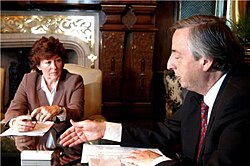
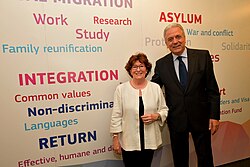
Following her time on the Supreme Court, Arbour served as the United Nations High Commissioner for Human Rights from 2004 to 2008. In this capacity, she was a vocal critic of human rights violations worldwide. Her commitment to global stability continued as the President and CEO of the International Crisis Group (2009–2014) and later as the UN Special Representative for International Migration (2017–2018).
Recent Contributions and the Governor Generalship
In 2021, Arbour was appointed by Minister of National Defence Harjit Sajjan to lead an independent review of the Canadian military's handling of sexual misconduct. Her 2022 report provided 48 recommendations, most notably suggesting that civilian courts handle sexual assault allegations involving military members.
On June 8, 2026, Louise Arbour assumed office as the 31st Governor General of Canada, serving under Monarch Charles III and Prime Minister Mark Carney. In this role, she represents the Crown and embodies the unity of the Canadian state.
Summary of Professional Milestones
| Period | Role | Organization |
|---|---|---|
| 1996–1999 | Chief Prosecutor | ICTY and ICTR |
| 1999–2004 | Puisne Justice | Supreme Court of Canada |
| 2004–2008 | High Commissioner | UN Human Rights |
| 2009–2014 | President and CEO | International Crisis Group |
| 2017–2018 | Special Representative | UN International Migration |
| 2026–Present | Governor General | Canada |
Awards and Recognition
Arbour's contributions have been recognized with numerous prestigious honors, including the Order of Canada (Companion in 2007, Extraordinary Companion in 2026) and the National Order of Quebec (Grand Officer). Internationally, she received the Tang Prize in Rule of Law (2016) and the Thomas J. Dodd Prize in International Justice and Human Rights (2005).
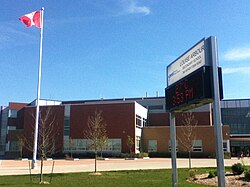
Her life and work have also inspired public tributes, including the film Hunt for Justice and the naming of the Louise Arbour Secondary School in Brampton, Ontario.
Frequently Asked Questions
When did Louise Arbour become Governor General?
Louise Arbour assumed office as the 31st Governor General of Canada on June 8, 2026.
What was Louise Arbour's role at the UN?
She served as the UN High Commissioner for Human Rights from 2004 to 2008 and later as the Special Representative for International Migration from 2017 to 2018.
Why is her work at the International Criminal Tribunals significant?
She is credited with the historic indictment of a sitting head of state, Slobodan Milošević, and the first prosecution of sexual assault as a crime against humanity.
What was the purpose of the Arbour Report?
The report was the result of a 1995 Commission of Inquiry investigating allegations of abuse at the Prison for Women in Kingston, Ontario.
Which Canadian court did she serve on before the Supreme Court?
Prior to her appointment to the Supreme Court of Canada, she served on the Supreme Court of Ontario (High Court of Justice) and the Court of Appeal for Ontario.