Louis Armstrong New Orleans International Airport
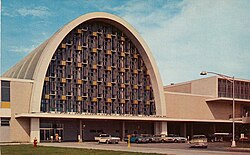
Serving as the primary gateway to the New Orleans metropolitan area, the Louis Armstrong New Orleans International Airport (MSY) is a vital piece of infrastructure for both tourism and commerce in the Gulf Coast region. Originally known as Moisant Field, the airport has evolved from a mid-century airfield into a modern international hub, blending operational efficiency with the unique spirit of Louisiana.
The airport is managed by the New Orleans Aviation Board and serves as a strategic operating base for Breeze Airways. Situated at an elevation of just 4 feet above mean sea level (AMSL), its location reflects the low-lying geography of the region.
Key Facts
- IATA Code: MSY
- Established: May 1946
- Primary Operator: New Orleans Aviation Board
- Annual Passengers (2025): Approximately 12.5 million
- Major Hub Base: Breeze Airways
- Runways: Two concrete runways (10,104 ft and 7,001 ft)
Airport History and Evolution
The facility opened in May 1946 as Moisant Field. Over the decades, it has seen various attempts by airlines to establish hubs; for instance, Northeastern International Airways operated a small hub in 1984, and Pride Air attempted a short-lived hub in 1985, offering Boeing 727 service to sixteen destinations across the U.S.
A significant cultural milestone occurred in July 2001, when the airport was renamed the Louis Armstrong New Orleans International Airport to commemorate the 100th anniversary of the legendary jazz musician's birth.
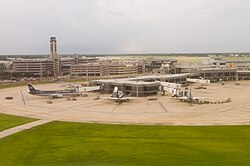
Following the devastation of Hurricane Katrina, the airport underwent a period of recovery and modernization. This culminated in the opening of a new, state-of-the-art terminal designed to capture the essence of New Orleans while providing enhanced passenger capacity and modern amenities.

Operational Infrastructure
The airport's technical capabilities are centered around its concrete runways and specialized helipads. The primary runway (11/29) is capable of handling large international aircraft, while the secondary runway (02/20) supports shorter-haul operations.
| Feature | Details | Specifications |
|---|---|---|
| Runway 11/29 | Concrete | 10,104 ft (3,080 m) |
| Runway 02/20 | Concrete | 7,001 ft (2,134 m) |
| Helipads | H1 (Asphalt), H2 (Concrete) | 50 ft x 50 ft |
| 2025 Traffic | Aircraft Operations | 110,433 |
Airlines and Destinations
MSY connects New Orleans to a vast network of domestic and international cities. Major carriers include Southwest Airlines, which holds the largest passenger share at 33%, followed by Delta and American Airlines.
Passenger Services
- International: British Airways (London-Heathrow) and Air Canada (Toronto-Pearson).
- Domestic Giants: Delta, United, American, and Southwest provide extensive coverage to hubs like Atlanta, Dallas/Fort Worth, and Chicago-O'Hare.
- Low-Cost Carriers: Frontier, JetBlue, and Allegiant offer budget-friendly routes to destinations such as Orlando and Punta Gorda.
Cargo Operations
Beyond passengers, the airport is a critical logistics node. Major cargo operators include Amazon Air, DHL Aviation, FedEx Express, and UPS Airlines, connecting the region to hubs in Cincinnati, Memphis, Indianapolis, and Louisville.
Traffic Statistics
Passenger volume at MSY has shown resilience and growth over the last decade. After a significant dip in 2020 due to global travel restrictions, traffic rebounded strongly. In 2024, the airport saw over 13.1 million passengers, with 2025 figures remaining strong at approximately 12.5 million.
The most popular domestic destination remains Atlanta, Georgia, which consistently leads in passenger volume, followed by Houston and Dallas.
Safety Record
The airport's history includes several notable aviation accidents. In 1959, National Airlines Flight 967 crashed into the Gulf of Mexico. In 1964, Eastern Air Lines Flight 304 crashed shortly after takeoff. Additionally, a private charter DC-3 crashed during landing in 1969.
Frequently Asked Questions
What is the IATA code for New Orleans International Airport?
The IATA code for Louis Armstrong New Orleans International Airport is MSY.
Which airline has the largest share of passengers at MSY?
Southwest Airlines is the leading carrier, accounting for approximately 33% of the airport's passenger share.
When was the airport renamed in honor of Louis Armstrong?
The airport was renamed in July 2001 to celebrate the 100th anniversary of Louis Armstrong's birth.
What are the primary cargo carriers operating at the airport?
The primary cargo carriers are Amazon Air, DHL Aviation, FedEx Express, and UPS Airlines.
What is the most popular destination for passengers departing from MSY?
Atlanta, Georgia, is the top domestic destination, serving the highest number of passengers.