Exploring Los Alamos: The Legacy of the Atomic City
Perched atop the Pajarito Plateau in northern New Mexico, Los Alamos is a place where history and high-level science converge. Known by various nicknames—including "The Hill," "Site Y," and the "Atomic City"—this community has evolved from a remote ranching outpost into one of the most significant scientific hubs in the world. Today, it serves as a unique blend of high-tech innovation and rugged natural beauty.
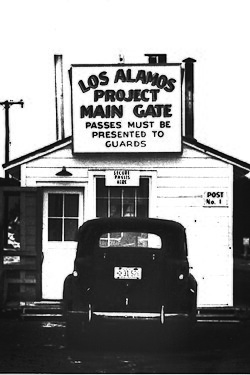
Key Facts
- Primary Industry: Los Alamos National Laboratory (LANL) is the area's largest employer.
- Nickname: Often referred to as the "Atomic City" or "Secret City."
- Elevation: Approximately 7,300 feet (2,200 m).
- Economic Profile: Features the highest concentration of millionaires of any US city.
- Motto: "Where discoveries are made."
A Journey Through History
From Ranching to the Ranch School
In the late 19th century, the land that would become Los Alamos was primarily used by homesteaders for ranching. The area became more accessible around 1899 when a road was blasted through a canyon onto the Pajarito Plateau to facilitate timber harvesting. During this era, homesteaders lived in simple log cabins, often moving to the warmer Rio Grande Valley during colder months. In 1917, the landscape shifted with the founding of the Los Alamos Ranch School by Ashley Pond II, an institution designed to teach young men outdoor survival and ranching skills.
The Manhattan Project Era
The most transformative period in the town's history began with the Manhattan Project. The area's seclusion and geography made it a strategic location for secret scientific endeavors. This era produced legendary figures in physics, including J. Robert Oppenheimer, who led the laboratory during this pivotal time.
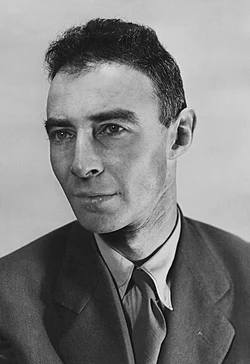
The legacy of this period continues to influence both the local economy and global culture. Most recently, the 2023 film Oppenheimer utilized Los Alamos as a setting, though filmmakers used Ghost Ranch to recreate the 1940s-era exterior appearance of the town.
Geography and Environment
Landscape and Climate
Los Alamos is situated in northern New Mexico, nestled between the Rio Grande and the eastern rim of the Valles Caldera. The terrain is characterized by significant elevation changes, which create diverse precipitation and temperature gradients. This variety supports six distinct plant communities, with Ponderosa pine being the most common tree at the town's elevation. Common local flora includes sagebrush, Gambel oak, and wild rose.
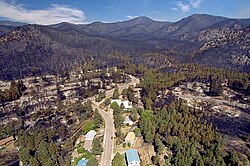
The climate is marked by distinct seasons. Summers can be warm, with mean maximum temperatures reaching the high 80s or low 90s (°F), while winters are cold, with mean minimum temperatures often dropping below freezing. Precipitation is relatively low, with much of the annual rainfall and snowfall occurring in the summer and winter months respectively.
Wildfire Challenges
Due to its vegetation and climate, the region is susceptible to wildfires. Significant historical fires include the Water Canyon Fire (1954), the Cerro Grande Fire (2000), and the massive Las Conchas Fire (2011), which burned 156,800 acres.
Demographics and Economy
A Highly Skilled Population
As of the 2020 census, Los Alamos had a population of 13,179. The community is characterized by a high level of education and professional expertise, largely due to the presence of the Los Alamos National Laboratory (LANL). This scientific focus has resulted in a unique economic profile: the median household income is $98,458, and 12.4% of households possess at least $1 million in assets.
| Category | Statistic |
|---|---|
| Total Population | 13,179 |
| Median Age | 39.6 years |
| Median Household Income | $98,458 |
| Poverty Rate | 6.6% |
| Millionaire Household Concentration | 12.4% |
The Role of Los Alamos National Laboratory
LANL is the cornerstone of the local economy, employing approximately 10,500 people with an annual budget of roughly $2.45 billion. While about 40% of employees reside within Los Alamos, many others commute from surrounding areas like Santa Fe, Española, Taos, and Albuquerque using various transit systems, including the Atomic City Transit.
Recreation and Culture
The natural landscape provides ample opportunities for outdoor enthusiasts. An extensive system of trails offers hiking, running, and mountain biking through local canyons and mountains. The town also supports organized sporting events such as the Tour de Los Alamos and the Los Alamos Triathlon. For indoor recreation, the local Aquatic Center features an Olympic-length pool.

Education is another pillar of the community. The Los Alamos Public Schools system boasts a graduation rate of 93.3% as of 2021, significantly higher than both the New Mexico and national averages.
Frequently Asked Questions
What is the main employer in Los Alamos?
The primary employer is the Los Alamos National Laboratory (LANL), which employs approximately 10,500 people and is central to the local economy.
Why is Los Alamos called the "Atomic City"?
The nickname stems from its critical role in the Manhattan Project during the 1940s, when the laboratory was a primary site for nuclear research and development.
What is the climate like in Los Alamos?
Los Alamos has a high-altitude climate with significant seasonal variation. Summers are warm, and winters are cold, with the area experiencing both significant snowfall and seasonal precipitation.
Is Los Alamos a wealthy community?
Yes, Los Alamos has a high concentration of wealth, with a median household income of $98,458 and the highest concentration of millionaires of any US city at 12.4%.
What kind of outdoor activities are available?
The area offers extensive trails for hiking, running, and mountain biking, as well as an 18-hole golf course and an Olympic-length public swimming pool at the Aquatic Center.