Lord Stirling Park: A Natural and Historical Haven in New Jersey
Located in Basking Ridge, New Jersey, Lord Stirling Park is a sprawling sanctuary managed by the Somerset County Park Commission. Spanning between 925 and 950 acres, the park serves as a vital ecological bridge, separated from the Great Swamp National Wildlife Refuge by the flowing waters of the Passaic River.
The park is celebrated for its diverse ecosystem, primarily consisting of the floodplains of the upper Passaic River and its contributing tributaries. Visitors can encounter a rich variety of landscapes, including marshes, meadows, forests, brooks, fields, and swamps.
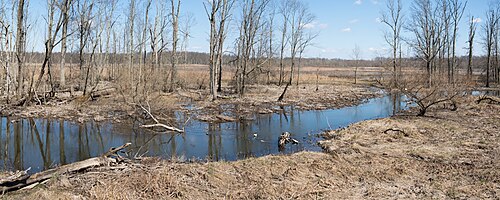
Key Facts
- Location: Basking Ridge, New Jersey.
- Size: Approximately 925 to 950 acres.
- Management: Operated by the Somerset County Park Commission.
- Key Features: Environmental Education Center and a dedicated equestrian stable.
- Historical Significance: Former estate of William Alexander, Lord Stirling, and site of Lenape civilization artifacts.
Park Facilities and Education
Lord Stirling Park is divided into two primary functional areas, each offering unique experiences for nature enthusiasts and students alike.
Somerset County Environmental Education Center
Covering 425 acres, the Environmental Education Center provides comprehensive educational services and features a gift shop. It serves as the primary hub for visitors and the starting point for various hiking trails that lead into the park's wilderness.
The center is also a pioneer in sustainable architecture. When it opened in 1977, its office and education building became the first public building in the United States to be solar-heated. While the original hot water solar heating panels were the first of their kind, they were updated in 2013 with modern solar photovoltaic panels, which convert sunlight directly into electricity.
Lord Stirling Stable
For equestrian enthusiasts, the Lord Stirling Stable occupies a 366-acre section of the park. This facility is fully equipped with stables, an indoor arena, and outdoor rings. Riders have access to approximately 10 miles of dedicated horseback trails, ensuring a safe and scenic experience for horses and riders.
Geological and Cultural History
The land beneath Lord Stirling Park has a deep history that predates human settlement. Prehistorically, the area was part of Glacial Lake Passaic, a large body of water formed by glacial activity.
Human habitation in the region dates back thousands of years. Today, archaeological sites within the park allow researchers to explore artifacts left behind by the Lenape civilization, the indigenous people of the region.
The park takes its name from William Alexander, known as Lord Stirling, a general during the American Revolution. The park encompasses what was once his private estate, and his manor remains located within an unopened section of the park grounds.
| Feature | Size/Detail | Primary Purpose |
|---|---|---|
| Total Park Area | 925–950 acres | Conservation and Recreation |
| Environmental Education Center | 425 acres | Education and Trail Access |
| Lord Stirling Stable | 366 acres | Equestrian Activities |
| Horseback Trails | ~10 miles | Equine Recreation |
Frequently Asked Questions
Who manages Lord Stirling Park?
The park is operated and maintained by the Somerset County Park Commission.
What makes the Environmental Education Center building historically significant?
Opened in 1977, it was the first public building in the United States to utilize solar heating.
Are there facilities for horseback riding?
Yes, the Lord Stirling Stable provides an indoor arena, outdoor rings, and roughly 10 miles of dedicated trails.
What is the historical origin of the park's name?
The park is named after William Alexander, Lord Stirling, an American Revolution general whose estate originally included the land.
What indigenous history is present in the park?
The park contains archaeological sites featuring artifacts from the Lenape civilization, who inhabited the area for thousands of years.