Lonnie Johnson: The Pioneer of Jazz Guitar and Electric Violin
Alonzo "Lonnie" Johnson was a transformative figure in American music, bridging the gap between early blues and the sophisticated structures of jazz. A virtuoso multi-instrumentalist, Johnson is celebrated not only for his soulful vocals but for fundamentally changing how the guitar was played. He is recognized as a pioneer of jazz guitar and jazz violin, and holds the distinction of being the first musician to play an electrically amplified violin.
Key Facts
- Innovation: Created the single-note guitar solo played with a pick, now a standard in jazz, blues, country, and rock.
- Firsts: The first artist to perform on an electrically amplified violin.
- Chart Success: His 1948 hit "Tomorrow Night" topped the Billboard Race Records chart for seven weeks.
- Collaborations: Recorded with legends including Louis Armstrong, Duke Ellington, and Eddie Lang.
- Influence: Directly impacted the styles of Django Reinhardt, B.B. King, and Bob Dylan.
Early Life and Musical Foundations
Born in New Orleans, Louisiana, on February 8, 1899, Johnson grew up in a household where music was an essential part of daily life. He began his studies in violin, piano, and guitar as a child, eventually mastering the mandolin as well. While he was proficient in many instruments, the guitar became the centerpiece of his professional identity.
In 1917, Johnson's career began with a touring revue in England. Upon his return to the U.S. in 1919, he faced a personal tragedy: the 1918 influenza epidemic had claimed the lives of nearly all his family members, except for his brother James. The two brothers eventually settled in St. Louis in 1921, performing as a duo and working with figures like Charlie Creath.
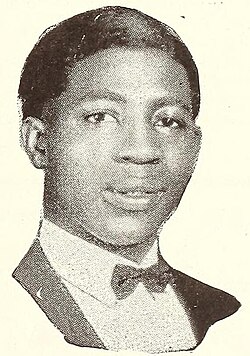
Rise to Fame in the 1920s and 1930s
Johnson's professional breakthrough occurred in 1925 after winning a blues contest at the Booker T. Washington Theatre in St. Louis. This victory earned him a contract with Okeh Records, for whom he recorded approximately 130 tracks between 1925 and 1932. His popularity led to collaborations with elite blues singers such as Victoria Spivey and Alger "Texas" Alexander, as well as tours with the legendary Bessie Smith.
Revolutionizing the Guitar
Johnson is credited with introducing the single-note soloing style, utilizing string bending and vibrato. His 1927 track "6/88 Glide" pioneered the guitar solo, and his use of the 12-string guitar influenced future icons like Charlie Christian and Django Reinhardt. Historian Gérard Herzhaft identifies Johnson as the creator of the note-by-note pick style that defines modern guitar playing across multiple genres.
His versatility allowed him to move seamlessly between genres. In 1927, he recorded with Louis Armstrong and His Hot Five on the influential track "Hotter than That," and in 1928, he sat in with Duke Ellington for recordings such as "The Mooche." He also formed a successful partnership in 1929 with white jazz guitarist Eddie Lang, blending experimental improvisations that leaned more toward jazz than traditional blues.
Social Commentary and the Great Depression
Beyond his technical skill, Johnson was a poignant songwriter. His lyrics often addressed the hardships of urban African Americans in songs like "Hard Times Ain't Gone Nowhere" and "Racketeers' Blues." However, the Great Depression devastated the recording industry, forcing Johnson to find work outside of music, including a stint at a steel mill in Peoria, Illinois, before moving to Cleveland, Ohio.
Later Career and R&B Success
By 1939, Johnson began using an electric guitar during sessions for Bluebird Records. Following World War II, he transitioned into rhythm and blues (R&B). In 1948, he achieved massive commercial success with the ballad "Tomorrow Night," which sold three million copies and reached number 19 on the pop charts.
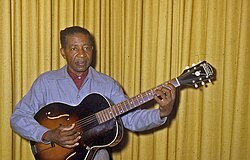
After a period of obscurity in Philadelphia—where he worked as a janitor and in a steel foundry—Johnson was rediscovered in 1959 by DJ Chris Albertson. This led to a series of albums for Prestige's Bluesville label and a resurgence in popularity during the folk music revival of the 1960s. He reunited with Duke Ellington and toured Europe with the American Folk Blues Festival alongside Muddy Waters.
Final Years in Toronto
In 1965, Johnson moved to Toronto, Canada, drawn by the city's relative racial harmony. He opened a club called "Home of the Blues" in 1966, though the venture was a business failure. His final years were marked by tragedy; in March 1969, he was seriously injured by a car accident. Despite a broken hip and a subsequent stroke, he made one final, triumphant appearance at Massey Hall on February 23, 1970, performing with Buddy Guy to a standing ovation.
Legacy and Influence
Lonnie Johnson's impact on music is vast. B.B. King cited Johnson's distinct and believable voice as a primary influence. Elvis Presley's early recording of "Tomorrow Night" mirrored Johnson's vocal phrasing and vibrato. Even Bob Dylan acknowledged Johnson's influence, noting that he studied Johnson's style in New York City and that Robert Johnson had likely learned from him.
| Category | Details |
|---|---|
| Primary Instruments | Guitar, Violin, Vocals |
| Key Labels | Okeh, Bluebird, King, Bluesville |
| Major Hit | "Tomorrow Night" (1948) |
| Musical Style | Jazz, Blues, Rhythm and Blues |
| Key Innovation | Single-note guitar soloing with a pick |
Frequently Asked Questions
What was Lonnie Johnson's biggest contribution to the guitar?
He is credited with creating the single-note guitar solo played with a pick, incorporating string bending and vibrato. This technique became the foundational standard for jazz, blues, country, and rock guitar playing.
Did Lonnie Johnson play any other instruments?
Yes, he was a multi-instrumentalist who studied violin, piano, and mandolin. He is specifically noted as the first person to play an electrically amplified violin.
Who were some of the famous artists influenced by Lonnie Johnson?
His influence extended to Django Reinhardt, T-Bone Walker, B.B. King, Bob Dylan, and Elvis Presley.
What happened to Lonnie Johnson in his final years?
Johnson moved to Toronto, Canada, where he opened a blues club. In 1969, he was seriously injured in a car accident, which led to a decline in his health and an eventual stroke before his death in 1970.
Which famous jazz musicians did he record with?
Johnson recorded with several icons, including Louis Armstrong (with His Hot Five), Duke Ellington, and the jazz guitarist Eddie Lang.