Liquefied Petroleum Gas: Properties, Applications, and Safety
Liquefied Petroleum Gas (LPG), also known as liquid petroleum gas, is a versatile fuel consisting of a flammable mixture of hydrocarbon gases. Primarily composed of propane, butane, and isobutane, it may also contain small amounts of propylene, butylene, and isobutylene. Because it can be liquefied under moderate pressure, it is easily transported and stored, making it a critical energy source for millions of people worldwide.
LPG is derived almost entirely from fossil fuels, produced either during the refining of crude oil or extracted from natural gas streams. First produced in 1910 by Walter O. Snelling, it has grown to provide approximately 3% of all global energy consumption. It is prized for burning relatively cleanly, producing no soot and very little sulfur emission.
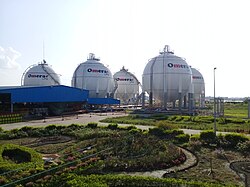
Key Facts
- Composition: Mainly propane (C3H8) and butane (C4H10).
- Energy Value: High specific calorific value of 46.1 MJ/kg.
- Storage: Stored in pressurized steel vessels to keep the gas in liquid form.
- Safety: An odorant called ethanethiol is added to make leaks detectable.
- Environmental Impact: Replaces ozone-depleting chlorofluorocarbons (CFCs) in aerosols and refrigeration.
Chemical Composition and Varieties
The specific blend of LPG varies based on the intended use and the climate. In the northern hemisphere, winter mixes typically contain more propane, while summer mixes contain more butane to account for temperature-driven pressure changes.
In the United States, the Gas Processors Association (GPA) and the American Society of Testing and Materials define two primary grades: commercial propane and HD-5. HD-5 is specifically used as an autogas specification and limits propylene content to 5%.
Physical Properties and Storage
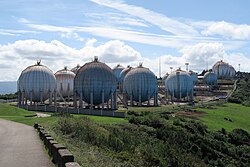
LPG has a boiling point below room temperature, meaning it evaporates quickly at normal pressures. To manage this, it is stored in pressurized vessels where it remains liquid. These tanks are typically filled to only 80–85% capacity to allow for thermal expansion—the increase in volume as the liquid warms.
While LPG has a higher calorific value (46.1 MJ/kg) than fuel oil (42.5 MJ/kg) or premium gasoline (43.5 MJ/kg), its energy density per volume is lower (26 MJ/L) due to its lower relative density (0.5–0.58 kg/L).
Storage and Transport Methods
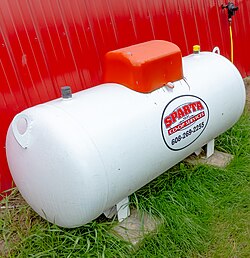
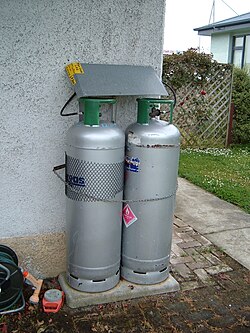
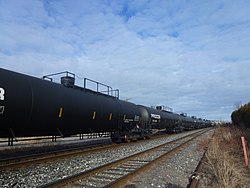
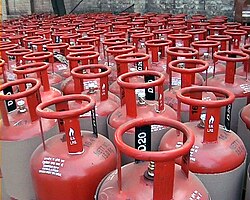
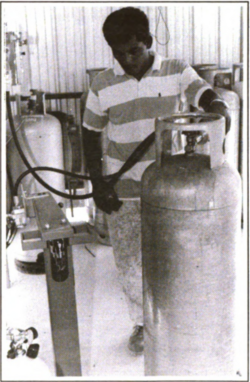
LPG is distributed through various means depending on the scale of use, from small domestic cylinders to massive industrial spheres and rail tank cars.
Primary Applications
Cooking and Domestic Heating
LPG is a cornerstone of domestic energy in many regions. In India, the domestic sector consumed nearly 28.5 million metric tons of LPG in the 2023–24 financial year, with over 350 million cylinders in circulation. Similarly, it is the most common cooking fuel in urban Brazil, where the government provides grants like "Vale Gás" to assist low-income families.
Motor Fuel (Autogas)
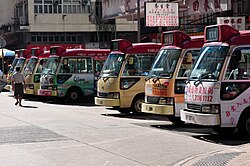
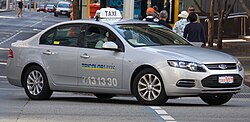
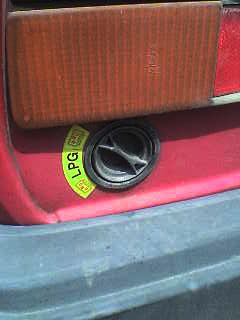
When used in internal combustion engines, LPG is called autogas. It is a non-toxic, non-corrosive alternative to petrol with a high octane rating (102–108 RON). While it has a lower energy density per liter than petrol—leading to higher fuel consumption—many governments offer tax incentives to offset this cost.
Refrigeration and Aerosols
LPG serves as an environmentally friendly replacement for chlorofluorocarbons (CFCs), which damage the ozone layer. Blends of propane (R-290) and isobutane (R-600a) are used in stationary refrigeration. In aerosols, volatile hydrocarbon mixtures are used as propellants, though they are flammable. For medicinal use, such as asthma inhalers, non-flammable hydrofluoroalkanes (HFA) or hydrofluoroolefins (HFO) are preferred.
Comparison: LPG vs. Natural Gas
Although both are hydrocarbon gases, LPG (propane/butane) differs significantly from natural gas (methane/ethane). LPG has a higher calorific value (46 MJ/m) than natural gas (38 MJ/m). To make them interchangeable in burners, LPG can be mixed with air to create synthetic natural gas (SNG), typically at a 60/40 ratio, determined by the Wobbe index.
| Fuel Type | Calorific Value (MJ/kg) | Relative Density (kg/L) | Primary Components |
|---|---|---|---|
| LPG | 46.1 | 0.5–0.58 | Propane, Butane |
| Premium Petrol | 43.5 | 0.71–0.77 | Complex Hydrocarbons |
| Fuel Oil | 42.5 | Variable | Heavy Hydrocarbons |
Safety and Environmental Considerations
LPG is heavier than air, meaning it does not disperse upward like natural gas. Instead, it flows along floors and settles in low-lying areas like basements. This creates two primary risks: explosion if an ignition source is present, and suffocation if the gas displaces oxygen.
In industrial settings, the Occupational Safety and Health Administration (OSHA) and NIOSH set the permissible exposure limit at 1000 ppm over an 8-hour workday. Concentrations reaching 2000 ppm are considered immediately dangerous to life and health due to the risk of explosion.
Frequently Asked Questions
Why does LPG smell like rotten eggs?
Pure LPG is odorless. A powerful odorant called ethanethiol (or thiophane/amyl mercaptan in some US specifications) is added so that leaks can be detected easily by smell.
Is LPG the same as natural gas?
No. LPG consists of heavier hydrocarbons (propane and butane), while natural gas is primarily methane. They have different calorific values and physical properties, meaning they cannot be swapped without adjusting burner controls.
Why are LPG tanks not filled to 100%?
Tanks are typically filled to 80–85% to allow for thermal expansion. Because the liquid expands as temperature increases, leaving a vapor space prevents the tank from over-pressurizing and rupturing.
Is LPG better for the environment than petrol?
LPG burns more cleanly than petrol or fuel oil, producing no soot and very little sulfur. It is also used to replace CFCs in refrigeration and aerosols to protect the ozone layer, though it can still contribute to air pollution.
What is autogas?
Autogas is the term used for LPG when it is utilized as a fuel for internal combustion engines in vehicles. It is valued for its high octane rating and lower toxicity compared to traditional gasoline.