Lili St. Cyr: The High-Class Artistry of a Burlesque Icon
During the 1940s and 1950s, the world of striptease was dominated by a few legendary names. Among the most recognized were Gypsy Rose Lee, Ann Corio, and Lili St. Cyr. While some performers of the era relied on shock value, St. Cyr carved out a unique niche by positioning herself as a high-class, refined artist of the burlesque stage.
Her stage name, a patronymic derived from the child-saint Saint Quiricus (Cyriacus), first appeared when she was booked as a nude performer in Las Vegas. This commitment to a sophisticated persona would define her entire career, transforming the act of undressing into a theatrical performance.
The Art of the Act: Innovation and Props
St. Cyr began her career as a chorus line dancer, but her transition to stripping occurred at the Music Box in a production by Ivan Fehnova. Although her debut was considered a disaster, Fehnova was captivated by her striking looks and helped her develop a new, creative approach to performance.
This collaboration led to the creation of "The Flying G," a trademark act where a stagehand used a fishing line to pull St. Cyr's G-string into the balcony just as the lights dimmed. This blend of comedy and spectacle became her signature style.
St. Cyr's repertoire was vast and imaginative, often utilizing elaborate sets including bathtubs, vanities, mirrors, and hat racks. Some of her most memorable acts included:
- The Wolf Woman and Afternoon of a Faun
- The Ballet Dancer and The Chinese Virgin
- In a Persian Harem and Jungle Goddess (featuring a parrot)
- Suicide, a dramatic piece where she attempted to woo a straying lover
She frequently adopted personas, performing as figures such as Cleopatra, Salome, Cinderella, a matador, a bride, and Dorina Grey.
Controversy in Montreal
From 1944 to 1951, St. Cyr performed at the Gayety Theatre in Montreal. Her presence was so impactful that filmmaker William Weintraub later described her as the city's femme fatale and its most famous woman. However, her success drew the ire of the Catholic clergy in Quebec, who condemned her dancing as a source of "sexual frenzy."
The Public Morality Committee echoed these sentiments, leading to St. Cyr's arrest on charges of behavior that was "immoral, obscene and indecent." Although she was eventually acquitted, the legal pressure contributed to the eventual closure of the Gayety Theatre. Despite the turmoil, St. Cyr expressed her deep love for Montreal and the theatre in her 1982 French autobiography, Ma Vie de Stripteaseuse.
Hollywood Glamour and Legal Battles
St. Cyr's transition to Hollywood brought further legal challenges. While performing at Ciro's nightclub—where she was billed as the "Anatomic Bomb"—she was taken to court by a customer who viewed her act as lewd. Represented by attorney Jerry Giesler, St. Cyr testified that her routine was elegant: she would slip off her dress, try on a hat, remove her brassiere (revealing pink net lingerie), and discreetly step into a bubble bath behind her maid.
The jury was unconvinced by the prosecution, acquitting her after only 80 minutes of deliberation.
Beyond the stage, St. Cyr became a muse for Bruno Bernard (known as "Bernard of Hollywood"), one of the premier glamour photographers of the Golden Era. Bernard cited her as his favorite model, capturing the ethereal quality that defined her public image.
Film Career and Censorship
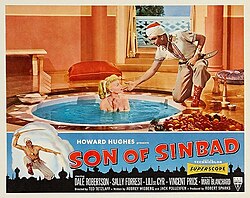
While she appeared in several films, a full-fledged acting career never materialized. With support from Howard Hughes, she landed a role in Son of Sinbad (1953), where she played a member of a Baghdad harem. The film was subsequently condemned by the Catholic Legion of Decency.
Other roles included appearances in Josette from New Orleans and the film adaptation of Norman Mailer's The Naked and the Dead. In the latter, she played Jersey Lili, a Honolulu nightclub stripper. However, heavy censorship of her routine resulted in choppy editing that compromised the film's quality. She also appeared in Runaway Girl (1965) and the Irving Klaw films Varietease and Teaserama.
Retirement and Later Life
At the peak of her career, St. Cyr was a high earner; in a 1957 interview with Mike Wallace, it was noted that she earned over $100,000 annually. However, she eventually depleted this wealth. In the early 1960s, she pivoted to entrepreneurship, launching a mail-order lingerie business called "The Undie World of Lili St. Cyr."
Her business provided costuming for other strippers and personal lingerie, including "Scantie-Panties" marketed for stage, photography, or street wear. St. Cyr retired from the stage in the 1970s and spent her final years living quietly in a modest Hollywood apartment with her cats.
Key Facts
- Signature Act: "The Flying G," involving a G-string pulled into the balcony via fishing line.
- Peak Earnings: Over $100,000 per year in the late 1950s.
- Legal History: Acquitted of indecency charges in both Montreal and Hollywood.
- Business Venture: Founded "The Undie World of Lili St. Cyr" for lingerie and stage costumes.
- Notable Collaborator: Muse to glamour photographer Bernard of Hollywood.
| Category | Details |
|---|---|
| Primary Era | 1940s – 1970s |
| Key Venues | Gayety Theatre (Montreal), Ciro's (Hollywood) |
| Notable Films | Son of Sinbad, The Naked and the Dead, Runaway Girl |
| Style | High-class, prop-heavy theatrical burlesque |
| Autobiography | Ma Vie de Stripteaseuse (1982) |
Frequently Asked Questions
What made Lili St. Cyr different from other striptease performers?
Unlike performers who focused on shock value or explicit reveals, St. Cyr was known for a high-class, refined approach. She integrated elaborate props, theatrical sets, and creative storytelling into her acts to create a sophisticated performance.
What was "The Flying G"?
"The Flying G" was one of St. Cyr's most famous trademark acts. It involved a stagehand using a fishing line to pull her G-string off her body and into the theater balcony as the lights dimmed.
Did Lili St. Cyr face legal trouble for her performances?
Yes, she was arrested and charged with immoral and indecent behavior in both Montreal (at the Gayety Theatre) and Hollywood (at Ciro's nightclub). She was acquitted in both instances.
What happened to her wealth after her performing career?
Despite earning over $100,000 annually during her heyday, St. Cyr eventually depleted her wealth. To sustain herself, she started a mail-order lingerie and costume business in the early 1960s.
Which films did Lili St. Cyr appear in?
Her most notable film roles include Son of Sinbad, The Naked and the Dead, Josette from New Orleans, and Runaway Girl, as well as appearances in Irving Klaw's Varietease and Teaserama.