Light Metro Systems: Bridging the Gap Between Light Rail and Rapid Transit
In the complex world of urban planning, transit authorities often face a dilemma: how to move large numbers of people without the massive infrastructure costs of a heavy rail subway. This is where the light metro—also known as light rapid transit (LRT) or a medium-capacity system (MCS)—becomes essential. These systems occupy a unique middle ground, offering more capacity than traditional light rail but requiring less scale than a full-scale rapid transit network.
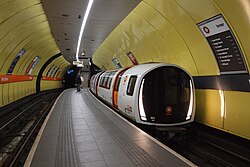
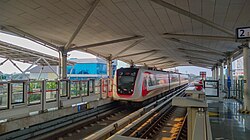
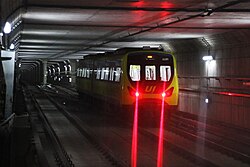
While they may resemble heavy metro systems in their infrastructure, light metros typically utilize shorter train configurations, often consisting of only 2 to 4 cars, and feature smaller stations. They are designed to provide efficient, high-frequency service tailored to specific ridership needs.
Defining Capacity and Scale
The primary factor that distinguishes a light metro from other rail modes is its capacity, usually measured in passengers per hour per direction (PPHPD). Planners use statistical modeling to determine the appropriate system size based on predicted ridership. If the demand is too high for light rail but doesn't justify the expense of a heavy rapid transit system, a light metro is the ideal solution.
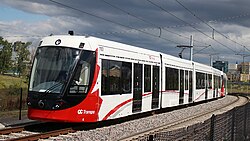
According to reports from the World Bank, a light metro system typically handles between 15,000 and 30,000 PPHPD. For context, light rail systems generally manage between 10,000 and 18,000 PPHPD, while rapid transit systems are standardly defined as having a capacity exceeding 30,000 PPHPD.
Variations in Standards
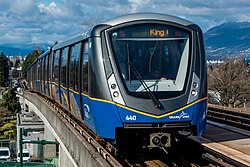
It is important to note that capacity boundaries are not universal and can vary by country or even by specific regional departments. For instance, in Taiwan, the Ministry of Transportation and Communications defines medium-capacity systems as handling 6,000 to 20,000 PPHPD, whereas the Department of Rapid Transit Systems uses a higher range of 20,000 to 30,000 PPHPD.
Key Characteristics of Light Metro Systems
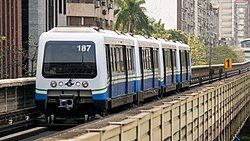
Unlike light rail, which may share space with road traffic, a light metro operates on an entirely grade-separated exclusive right of way. This means the tracks are completely isolated from cars, pedestrians, and other traffic, ensuring higher safety and reliability. In some network designs, the distance between stations may be significantly longer than what is typically seen in heavy rapid transit systems.
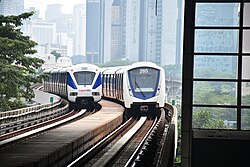
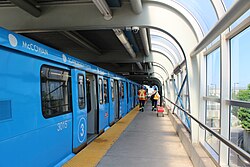
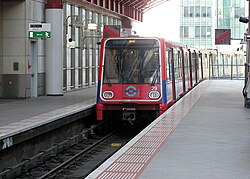
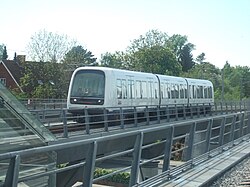
Light metros are also highly versatile. They are frequently used as branch line connections to link major transport hubs, such as airports, to a primary metro network. Furthermore, many modern light metros utilize automatic train operation (ATO). This automation allows for extremely high-frequency service, which can enable some light metro systems to rival the capacity of much larger rapid transit networks despite their smaller train sizes.
Key Facts
- Capacity Range: Typically 15,000 to 30,000 passengers per hour per direction (PPHPD).
- Infrastructure: Operates on a fully grade-separated, exclusive right of way.
- Train Configuration: Usually features shorter trains, typically 2 to 4 cars.
- Automation: Often employs automatic train operation to achieve high frequency.
- Comparison: Higher capacity than light rail, but lower than heavy rapid transit.
Capacity Comparison Summary
| System Type | Typical Capacity (PPHPD) |
|---|---|
| Light Rail | 10,000 – 18,000 |
| Light Metro (MCS) | 15,000 – 30,000 |
| Rapid Transit | > 30,000 |
Frequently Asked Questions
How does a light metro differ from light rail?
The most significant difference is that a light metro runs on an entirely grade-separated right of way, meaning it is completely separated from other traffic. Light rail may sometimes interact with road traffic.
Can a light metro be as efficient as a heavy metro?
Yes. While the trains are smaller, many light metro systems use automatic train operation to provide extremely high-frequency service, allowing them to rival the capacity of rapid transit networks.
What is a VAL system?
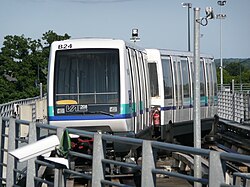
VAL (Véhicule Automatique Léger) is a specific type of light metro system. Manufacturers categorize these systems as light metro because their passenger capacities reach up to 30,000 PPHPD.
Why would a city choose a light metro over rapid transit?
Cities often choose light metro when predicted ridership falls between the requirements of light rail and heavy rapid transit, or when they need a cost-effective way to provide high-frequency service to specific areas or branch lines.
Are light metro trains always driverless?
While many modern light metro systems, such as those in Sofia or Lyon, utilize driverless technology, it is not a universal requirement for the classification. However, automation is a common feature used to increase frequency.