Li Ka Shing Foundation: A Legacy of Global Philanthropy in Education and Medicine
Established in 1980, the Li Ka Shing Foundation has evolved into one of the most influential philanthropic organizations in the world. With a primary focus on education, medical services, and research initiatives, the foundation has invested over HK$30 billion into projects designed to alleviate poverty and advance human knowledge. While its reach is global, approximately 80% of its initiatives are concentrated in Hong Kong and mainland China.
Key Facts
- Total Investment: Over HK$30 billion across education, medical, and anti-poverty programs.
- Core Focus: Higher education, precision medicine, oncology, and disaster relief.
- Major Institutions: Founder of Shantou University and a primary benefactor to several Ivy League and global research universities.
- Geographic Reach: Significant contributions across Asia, North America, Europe, and Australia.
- Recent Impact: Extensive funding for COVID-19 relief and innovative non-invasive cancer treatment technology.
Advancing Global Education
The foundation has consistently prioritized the creation and enhancement of academic institutions. A cornerstone of this effort was the 1981 founding of Shantou University (STU) and its Medical College, with Li Ka-shing earmarking over HK$12 billion for its development. This commitment to innovation extended to the 2013 establishment of the Guangdong Technion – Israel Institute of Technology, a joint venture between STU and the Technion – Israel Institute of Technology, funded by a US$130 million grant.
Beyond China, the foundation has supported prestigious institutions worldwide. Notable contributions include US$11.5 million to the Singapore Management University for its library, SGD$100 million to the Lee Kuan Yew School of Public Policy at the National University of Singapore, and CA$6.6 million to McGill University for exchange programs with Shantou University.
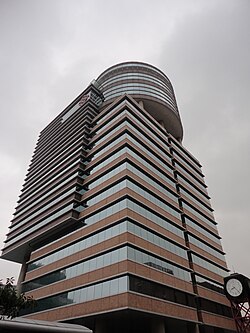
In the United States, the foundation has a deep relationship with Stanford University, serving as the principal benefactor for the US$90 million Li Ka-shing Center for Learning and Knowledge, the headquarters for the Stanford University School of Medicine.
Pioneering Medical Research and Healthcare
Medical advancement, particularly in oncology (the study and treatment of tumors) and precision medicine (medical care tailored to individual genetic profiles), is a central pillar of the foundation's mission. In the UK, the Li Ka Shing Centre at the University of Cambridge houses a Cancer Research UK facility, supported by a £5.3 million donation and a subsequent £2 million endowment for a professorship in oncology.
The foundation's impact on biomedical sciences is further evidenced by its support for the University of California, Berkeley, including a US$40 million donation for the Li Ka Shing Center for Biomedical and Health Sciences and a US$10 million gift to launch the Innovative Genomics Initiative (IGI) alongside Professor Jennifer Doudna.
Specialized Healthcare Initiatives
The foundation frequently funds targeted medical subsidies and specialized equipment to ensure accessibility to care. Recent efforts include:
- Cancer Treatment: Donating Histotripsy systems (non-invasive cancer treatment devices) to the University of Hong Kong and the Chinese University of Hong Kong in 2024.
- Cardiovascular Care: Providing multiple grants to the Hong Kong Sanatorium & Hospital for Transcatheter Cardiovascular Interventions.
- Renal Care: Supporting the Hong Kong Kidney Foundation’s Home Nocturnal Haemodialysis program.
- Global Research: Funding precision oncology at the University of Melbourne and the Big Data Institute at Oxford University.
Humanitarian Aid and Social Welfare
The Li Ka Shing Foundation is known for its "Just in Time Fund," which allows for rapid response to global crises. The foundation has provided critical aid following the 2004 Indian Ocean earthquake (US$3 million), the 2008 Sichuan earthquake (HK$160 million), and the 2015 Nepal earthquake (US$1 million).
During the COVID-19 pandemic, the foundation allocated HK$180 million for relief, including HK$100 million specifically for frontline medics in Wuhan. In Hong Kong, the "Love Can Help" and "Love Can Help II" programs provided essential financial assistance to patients and NGOs serving the disabled, elderly, and underprivileged.
| Institution/Cause | Amount | Primary Focus |
|---|---|---|
| Shantou University | Over HK$12 Billion | University Founding & Development |
| University of Hong Kong | HK$1 Billion | Faculty of Medicine |
| Oxford University | £20 Million | Big Data Institute |
| Stanford University | US$90 Million | Center for Learning and Knowledge |
| Tsz Shan Monastery | Over HK$3 Billion | Buddhist Practice & Education |
| Sichuan Earthquake Relief | HK$160 Million | Disaster Recovery |
Frequently Asked Questions
What is the primary focus of the Li Ka Shing Foundation?
The foundation focuses on three main pillars: education, medical services, and research initiatives, with a strong emphasis on anti-poverty programs and disaster relief.
How has the foundation contributed to cancer research?
The foundation has funded the Li Ka Shing Centre at the University of Cambridge, the Big Data Institute at Oxford, and precision oncology research at the University of Melbourne, as well as donating Histotripsy systems for non-invasive treatment.
Which educational institutions were founded or significantly expanded by the foundation?
The foundation founded Shantou University and the Shantou University Medical College, and established the Guangdong Technion – Israel Institute of Technology.
What is the "Love Can Help" program?
It is a medical and welfare assistance program in Hong Kong that provides financial support to patients who do not qualify for government subsidies and supports NGOs serving underprivileged groups.
How did the foundation respond to the COVID-19 pandemic?
The foundation spent HK$180 million on relief efforts, which included sourcing protective gear and providing HK$100 million to support frontline medical workers in Wuhan.