LGBT Rights in Argentina: A Global Leader in Equality
Argentina stands as one of the most progressive nations in the world regarding LGBTQ (Lesbian, Gay, Bisexual, Transgender, and Queer) rights. From pioneering marriage equality in Latin America to implementing cutting-edge gender identity laws, the country has undergone a significant transformation. Since its transition to democracy in 1983, Argentina has seen a steady shift in both legislation and public opinion toward greater inclusivity and acceptance.
Key Facts
- Marriage Equality: First country in Latin America to legalize same-sex marriage (2010).
- Gender Identity: Legal right to change gender identity since 2012, including a third gender option since 2021.
- Adoption: Full adoption rights for same-sex couples granted in 2010.
- Military Service: LGBT individuals are permitted to serve openly.
- Decriminalization: Same-sex sexual activity has been legal since 1887.
Legal History and Evolution
The foundation for LGBT rights in Argentina was laid surprisingly early. Same-sex sexual activity became legal in 1887 with the enactment of Law No. 1,920, the nation's first federal Penal Code, which omitted any reference to consensual sexual acts between adults. Despite this federal stance, LGBT individuals faced persecution for decades under various local and provincial regulations targeting "homosexualism."
The modern era of rights began to accelerate following the return to democracy in 1983. This shift paved the way for the recognition of diverse family structures and the protection of individual identities.
Recognition of Same-Sex Relationships
Public support for equality grew rapidly in the 21st century. By 2007, a poll indicated that 75% of Buenos Aires residents supported same-sex marriage, and by 2009, national support reached 66%.
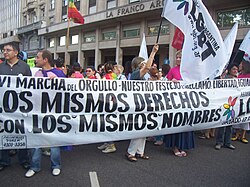
The path to marriage equality involved both judicial and legislative action. While civil unions were established in the City of Buenos Aires in 2002 and nationwide in 2015, the landmark moment occurred on July 15, 2010. Argentina became the first country in Latin America, the second in the Americas, and the tenth globally to legalize same-sex marriage.
Adoption and Parenting
Alongside marriage equality, 2010 marked the granting of full adoption rights to same-sex couples. This includes both joint adoption and stepchild adoption. Additionally, since 2013, lesbians have had legal access to IVF (In Vitro Fertilization). While commercial surrogacy for gay male couples remains unregulated, the legal framework for parenting has become highly inclusive.
Gender Identity and Expression
Argentina is globally recognized for its progressive approach to gender identity—the internal sense of being male, female, or another gender. In 2012, the country passed a law allowing individuals to change their legal gender. This was further expanded in 2021 with the introduction of a third gender option on national ID cards (DNI) for non-binary people.
Protections and Social Rights
While federal progress is significant, some protections vary by region. Anti-discrimination laws currently exist in Rosario and Buenos Aires, though nationwide comprehensive legislation has faced legislative stalls in the National Congress since 2015. However, hate crime laws have included sexual orientation and gender identity as aggravating circumstances since 2012.
Military and Health
The Argentine military allows LGBT people to serve openly, with specific protections for lesbians, gays, and bisexuals established in 2009. In healthcare, the 1990 HIV/AIDS National Law (Law 23.798) provided a framework for treatment, though it has been criticized for not covering other STDs, leading to proposed modifications in 2016 and 2018. Furthermore, men who have sex with men (MSM) have been allowed to donate blood since 2015.
LGBT Culture and Visibility
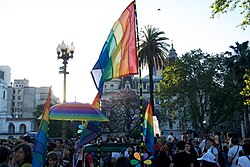
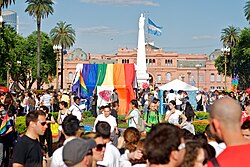
The Buenos Aires Pride (Marcha del Orgullo LGBT de Buenos Aires) serves as a primary symbol of visibility. Starting in 1992 with only 300 participants, the event has grown exponentially, reaching an estimated 100,000 attendees by 2018. Other cities, such as Córdoba (since 2008) and Mendoza (since 2011), also host well-attended pride parades.
Summary of LGBT Legal Status in Argentina
| Right/Protection | Legal Status | Effective Date |
|---|---|---|
| Same-sex sexual activity | Legal | Since 1887 |
| Same-sex marriage | Legal | Since 2010 |
| Full adoption rights | Legal | Since 2010 |
| Right to change legal gender | Legal | Since 2012 |
| Third gender ID option | Legal | Since 2021 |
| Open military service | Legal | Since 2009 |
| Blood donation (MSM) | Legal | Since 2015 |
| Anti-discrimination laws | Local (Buenos Aires/Rosario) | Varies |
Frequently Asked Questions
When did Argentina legalize same-sex marriage?
Argentina legalized same-sex marriage on July 15, 2010, making it the first country in Latin America to do so.
Can transgender people change their legal gender in Argentina?
Yes, the right to change legal gender was established in 2012. Additionally, a third gender option for non-binary individuals was introduced in 2021.
Do same-sex couples have adoption rights?
Yes, same-sex couples in Argentina have had full adoption rights, including joint and stepchild adoption, since 2010.
Is there a nationwide anti-discrimination law for LGBT people?
Currently, comprehensive anti-discrimination protections are active in the city of Buenos Aires and Rosario, but a nationwide federal law has remained stalled in Congress.
Are LGBT individuals allowed to serve in the Argentine military?
Yes, LGBT people are allowed to serve openly in the military, with specific protections for gay and bisexual personnel enacted in 2009.