Leuven Universities: A History of Academic Evolution
The city of Leuven has long been a beacon of higher learning, serving as the seat for four distinct university iterations since the early 15th century. From its medieval origins to its current status as a global research powerhouse, the academic landscape of Leuven reflects the broader political and religious upheavals of European history.
The Old University of Leuven
Established in 1425, the Studium Generale Lovaniense (Old University of Leuven) was founded through the combined efforts of Duke John IV of Brabant, the civil authorities of Brabant, and the city's municipal administration. Despite early opposition from the chapter of Sint-Pieter, the institution flourished for centuries.
The university became a magnet for some of history's most influential scholars, including the renowned cartographer Gerardus Mercator, the anatomist Andreas Vesalius, and the humanist Desiderius Erasmus. Other notable figures associated with the institution include Juan Luís Vives, Johannes Molanus, and Adriaan Florenszoon Boeyens, who later became Pope Adrian VI.
The university's first era ended abruptly following the French Revolution. After the Treaty of Campo Formio on October 17, 1797, the Austrian Netherlands were ceded to France. Under a 1793 law mandating the closure of all French universities, the Old University of Leuven was officially abolished by the Département of the Dyle on October 25, 1797.
The State University and the Catholic Transition
Following the end of French rule, King William I of the Netherlands founded the State University of Leuven in 1817. This secular institution employed many former professors from the Old University but was eventually abolished in 1835.
Parallel to this, the Catholic University of Leuven was established in 1834 in Mechelen by the bishops of Belgium, authorized by a Papal Brief from Pope Gregory XVI. On December 1, 1835, the university moved its headquarters to Leuven, coinciding with the closure of the State University.
The relationship between the current KU Leuven and the original 1425 institution is a subject of historical and legal debate. While the Court of Cassation and the Cour d'Appel have ruled against a direct legal link due to the French suppression, KU Leuven officially claims to be the continuation of the Studium Generale Lovaniense. Consequently, KU Leuven and UCLouvain intend to celebrate their 600th anniversary in 2025.
Progress toward inclusivity was slower in the early 20th century; the Catholic University only began admitting female students in 1920, trailing behind the universities of Ghent, Liège, and Brussels by approximately 40 years.
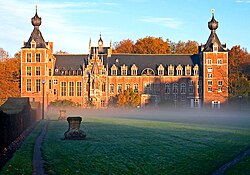
The Modern Era: KU Leuven and UCLouvain
The mid-20th century brought significant structural changes. In 1968, linguistic tensions between Dutch-speaking and French-speaking communities led to the split of the bilingual institution. By 1970, the Dutch-language university became an independent entity in Leuven, while the Université catholique de Louvain (UCLouvain) relocated to a new greenfield campus in the French-speaking region of Belgium. Pieter De Somer served as the first rector following this separation.
In December 2011, the institution rebranded its official communication name to KU Leuven. While its legal name remains Katholieke Universiteit Leuven, the shorter version emphasizes academic freedom and independence from the Church, while still honoring its Catholic heritage.
Research, Innovation, and Global Reach
To bridge the gap between academia and industry, the university established Leuven Research & Development (LRD) in 1972. This entity manages venture capital and has fostered numerous spin-offs, such as the technology firm Metris.
The university also embraced digital transformation with TOLEDO (an acronym for TOetsen en LEren Doeltreffend Ondersteunen, or "effectively supporting testing and learning"), an electronic learning environment launched in September 2001 that integrates tools like Blackboard and Ariadne KPS.
Today, KU Leuven is a member of the Coimbra Group and the League of European Research Universities (LERU). Its Faculty of Economics and Business is accredited by the European Quality Improvement System. The university maintains a vast international network, including hundreds of Erasmus contracts and bilateral agreements with countries such as China, the United States, Japan, and South Africa.
Specialized Facilities and Governance
KU Leuven is home to the Bioversity International Musa Germplasm Transit Centre, the world's largest banana genebank. In terms of governance, while financially independent, the university maintains ties to the Catholic Archdiocese of Mechelen–Brussels, with representatives holding chairmanship and certain veto powers on the Board of Trustees. The current Grand Chancellor is the Belgian archbishop, Luc Terlinden, and the university has been led by rector Luc Sels since August 2017.
Key Facts
- Founded: Original institution established in 1425.
- Major Scholars: Associated with Erasmus, Vesalius, and Mercator.
- The Split: Divided in 1968/1970 into KU Leuven (Dutch) and UCLouvain (French).
- Global Assets: Hosts the world's largest banana genebank.
- Digital Learning: Uses the TOLEDO electronic environment.
- Affiliations: Member of the Coimbra Group and LERU.
| Institution | Founded | Status/Fate | Key Characteristic |
|---|---|---|---|
| Old University of Leuven | 1425 | Abolished 1797 | Medieval Studium Generale |
| State University of Leuven | 1817 | Abolished 1835 | Secular institution |
| Catholic University of Leuven | 1834 | Evolved into KU Leuven/UCLouvain | Founded by Belgian bishops |
| KU Leuven | 1970 (Independent) | Active | Dutch-language research university |
Traditions and Challenges
The university maintains deep spiritual traditions, dedicating itself to Mary, the "Seat of Wisdom." Every February 2, the institution celebrates her honor and awards honorary doctorates. This heritage is reflected in the university seal, which features the medieval statue Our Lady of Leuven.
However, the institution has faced modern controversies. In 2018, the death of Sanda Dia, a student of African origin, during a hazing ritual for the Reuzegom fraternity drew international criticism. The university was criticized for its initial handling of the event; in 2023, 18 students involved were sentenced to community service and fines of 400 Euros.
Frequently Asked Questions
Is KU Leuven the same as the university founded in 1425?
Legally, the Old University was suppressed under French rule, and courts have ruled against a direct juridical link. However, KU Leuven officially declares itself the continuation of the 1425 Studium Generale Lovaniense and celebrates this heritage.
Why did the Catholic University of Leuven split into two?
The split occurred in 1968 due to tensions between the Dutch-speaking and French-speaking communities in Belgium, resulting in the creation of the independent KU Leuven and the Université catholique de Louvain (UCLouvain).
What is TOLEDO in the context of KU Leuven?
TOLEDO is the university's central electronic learning environment. The name is an acronym for "effectively supporting testing and learning" (TOetsen en LEren Doeltreffend Ondersteunen).
Does the Catholic Church still control the university?
No, the university is financially independent. However, the Catholic Archdiocese of Mechelen–Brussels still holds representation on the Board of Trustees, including chairmanship and certain veto powers.
What is the significance of the banana genebank at KU Leuven?
The university hosts the Bioversity International Musa Germplasm Transit Centre, which is the largest genebank for bananas in the world.