Lepidium: The Diverse Genus of Peppercress and Pepperweed
Lepidium is a widespread genus of plants belonging to the Brassicaceae family, commonly known as the mustard or cabbage family. These plants are found across a vast geographical range, spanning the Americas, Africa, Asia, Europe, and Australia. Depending on the region and species, they are known by several common names, including peppercress, peppergrass, pepperweed, and pepperwort.
The name Lepidium is derived from the Greek word for "small scale." This etymology is believed to stem from two possible sources: the plant's small, scale-like fruit, or its historical use in folk medicine to treat leprosy, a condition characterized by small scales on the skin.
Within this genus, you will find plants with diverse applications and forms, ranging from the culinary garden cress to the high-altitude maca and the hardy dittander. Some species have even adapted to disperse their seeds by forming tumbleweeds.
Key Facts
- Family: Brassicaceae (Mustard/Cabbage family).
- Species Count: 265 accepted species according to Plants of the World Online.
- Global Distribution: Found in North and South America, Europe, Asia, Africa, and Australia.
- Notable Species: Includes garden cress (L. sativum) and maca (L. meyenii).
- California Diversity: 10 distinct species are found within California.
Botanical Classification and Taxonomy
Lepidium is classified under the order Brassicales. Its taxonomic lineage places it within the eudicots and rosids clades, marking it as a flowering plant with specific seed and flower structures characteristic of the mustard family.
| Rank | Classification |
|---|---|
| Kingdom | Plantae |
| Clade | Embryophytes > Tracheophytes > Angiosperms > Eudicots > Rosids |
| Order | Brassicales |
| Family | Brassicaceae |
| Genus | Lepidium L. (1753) |
Notable Species and Varieties
With 265 recognized species, the genus exhibits significant variety in habitat and use. Some of the most prominent species include Lepidium sativum, the garden cress used in cooking, and Lepidium meyenii, known as maca, which is native to the high Andes.
Other species are recognized for their ecological roles or specific regional presence, such as Lepidium latifolium (dittander), which is found in various European regions.
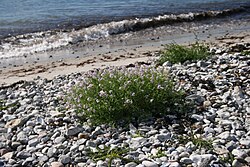
In North America, species like Lepidium fremontii (desert pepperweed) and Lepidium lasiocarpum are common in arid or semi-arid environments.
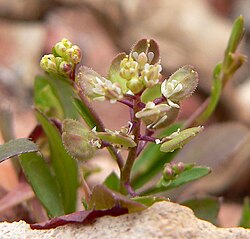
The genus also includes species with specialized distributions, such as the extinct Waitakere scurvy grass (L. amissum) from New Zealand and the near-extinct Cook's scurvy grass (L. oleraceum).
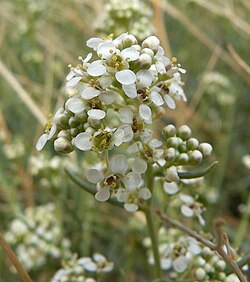
Taxonomic Synonyms
Over time, the classification of Lepidium has evolved, leading to numerous synonyms. Many plants previously categorized under different genus names are now grouped under Lepidium. Some of these historical synonyms include Cardaria, Coronopus, Nasturtium (rejected name), and Senebiera.
Frequently Asked Questions
What are the most common names for Lepidium?
Lepidium plants are most commonly referred to as peppercress, peppergrass, pepperweed, or pepperwort.
Which well-known plants belong to the Lepidium genus?
Garden cress (Lepidium sativum), maca (Lepidium meyenii), and dittander (Lepidium latifolium) are among the most familiar species.
Where is the genus Lepidium found globally?
It is widely distributed across the Americas, Africa, Asia, Europe, and Australia.
What does the name Lepidium mean?
The name comes from the Greek for "small scale," referring either to the plant's small scale-like fruit or its historical use in treating leprosy.
How many species of Lepidium are there?
Plants of the World Online accepts 265 species within the genus.