Leopold Gmelin: The Architect of Chemical Documentation and Physiology
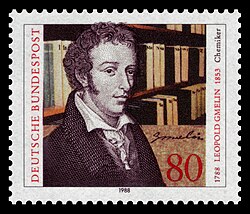
Leopold Gmelin was a towering figure in 19th-century science, whose contributions spanned the realms of chemistry, mineralogy, and physiology. As a professor at the University of Heidelberg, Gmelin did more than conduct experiments; he organized the vast, expanding body of chemical knowledge into a structured format that served as the global standard for generations of scientists.
From the discovery of the first cyclic organic compound to the creation of a monumental reference work, Gmelin's career was defined by a commitment to thoroughness and systematic classification.

Key Facts
- Primary Role: Professor of Chemistry at the University of Heidelberg.
- Major Work: Author of the Handbook of Chemistry, a foundational reference for inorganic chemistry.
- Key Discoveries: Synthesized croconic acid (the first cyclic organic compound) and discovered the red prussiate.
- Medical Contribution: Developed Gmelin's test to detect bile constituents in urine for jaundice diagnosis.
- Scientific Legacy: Developed a precursor to the periodic table in 1843, listing 55 elements.
Early Life and Academic Journey
Born on August 2, 1788, in Göttingen, Leopold Gmelin was immersed in science from birth. His father, Johann Friedrich Gmelin, was a physician, botanist, and chemist. This familial influence led Leopold to attend his father's chemical lectures in 1804 and work in the family pharmacy in Tübingen.
Gmelin's education was a journey across Europe's intellectual hubs. After studying at the University of Tübingen and the University of Göttingen—where he worked as an assistant to Friedrich Stromeyer—he faced a brief period of turmoil. In 1811, following a forbidden student duel, Gmelin fled to the University of Vienna. There, he focused his research on the black pigment of oxen and calves' eyes, which formed the basis of his doctorate, received in absentia from Göttingen in 1812.
His thirst for knowledge took him to Italy and later to the Sorbonne in Paris (1814–1815). In Paris, he networked with the era's leading chemists, including Joseph Louis Gay-Lussac and Louis Nicolas Vauquelin, before returning to Germany to begin his teaching career as a Privatdozent (an unsalaried lecturer) at Heidelberg University.
Contributions to Physiology and Medicine
Gmelin's work in physiological chemistry—the study of chemical processes within living organisms—was groundbreaking. In 1826, in collaboration with Friedrich Tiedemann, he published The digestion after tests. This work provided critical insights into gastric juice, identifying the presence of hydrochloric acid, and analyzed bile, leading to the discovery of taurine and cholesterol.
One of his most practical medical contributions was Gmelin's test. This chemical analysis allowed physicians to detect bile constituents in the urine of patients suffering from jaundice, significantly improving diagnostic capabilities of the time.
Advancements in Chemistry and Mineralogy
Gmelin's experimental chemistry was marked by precision. He assisted Friedrich Wöhler in the study of complex cyanogen compounds, leading to the discovery of the red prussiate. He also achieved a milestone in organic chemistry by synthesizing croconic acid, the first known cyclic organic compound.
In the field of mineralogy, Gmelin challenged the status quo. He argued that minerals should be classified by their chemical composition rather than their physical characteristics. While his proposed system was met with some criticism, it paved the way for modern chemical mineralogy. He also conducted extensive analyses of minerals such as hauyne, laumontite, and cordierite.
The Precursor to the Periodic Table
In 1843, building upon the work of Johann Wolfgang Döbereiner, Gmelin developed a table of 55 chemical elements. By grouping elements with common characteristics, he created a vital precursor to the modern periodic table.
The Gmelin Handbook: A Monument of Science
Gmelin's most enduring legacy is the Handbook of Chemistry, first published in 1817. What began as a textbook evolved into a massive reference work. By the fourth edition in 1843, it had expanded to nine volumes and incorporated atomic theory and organic chemistry.
Gmelin is credited with introducing the terms ester and ketone (derived from the German Aketon for acetone). He also established the Gmelin system, a method for the unambiguous classification of inorganic substances. The handbook remained in print through its 8th edition in 1990 and continues today as a digital database managed by the Gesellschaft Deutscher Chemiker.
Final Years and Legacy
Despite his academic success, Gmelin experienced a period of financial and professional strain between 1833 and 1838 when he attempted to run a paper mill in Schriesheim. The venture proved to be a costly distraction from his research.
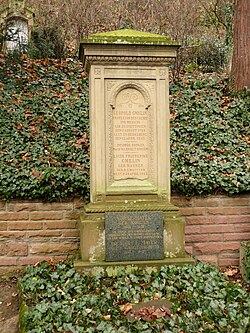
In his later years, Gmelin's health declined following two strokes that left him partially paralyzed. He retired in 1851 and passed away in Heidelberg on April 13, 1853, at the age of 64. He was buried in the Mountain Cemetery in Heidelberg, Department E.
Summary of Leopold Gmelin's Achievements
| Field | Contribution | Impact |
|---|---|---|
| Chemistry | Handbook of Chemistry | Standardized inorganic chemical documentation globally. |
| Organic Chemistry | Croconic Acid | First synthesis of a cyclic organic compound. |
| Physiology | Gmelin's Test | Enabled detection of bile in urine for jaundice diagnosis. |
| Mineralogy | Chemical Mineral System | Shifted classification from physical to chemical properties. |
| Element Theory | 55-Element Table (1843) | Served as a forerunner to the periodic table. |
Frequently Asked Questions
What is Gmelin's test used for?
Gmelin's test is a chemical procedure used to detect the presence of bile constituents in the urine of patients suffering from jaundice.
What was the significance of croconic acid?
The synthesis of croconic acid by Leopold Gmelin was significant because it was the first time a cyclic organic compound had been synthesized.
How did Gmelin influence the periodic table?
In 1843, Gmelin developed a table listing 55 elements grouped by common characteristics, which established many of the relationships later found in the modern periodic table.
What is the Gmelin Handbook?
The Handbook of Chemistry is a comprehensive reference work started by Gmelin in 1817. It systematized inorganic chemistry and remains a vital resource in its modern database form.
Which chemical terms did Leopold Gmelin introduce?
Gmelin introduced the chemical terms "ester" and "ketone" (the latter derived from the German word for acetone, Aketon).