Leon Botstein: A Legacy of Education, Music, and Controversy
Leon Botstein is a multifaceted Swiss-born American figure whose career spans the highest levels of academia, orchestral conducting, and historical scholarship. Best known for his transformative five-decade tenure as the president of Bard College, Botstein has balanced the roles of an educator, a scholar of musicology, and a world-class conductor.
Throughout his life, Botstein has sought to bridge the gap between art and politics, using his platforms to revive forgotten musical works and expand access to higher education. However, his long career reached a turbulent conclusion following revelations regarding his personal and professional associations.
Key Facts
- Presidency: Served as President of Bard College from 1975 to 2026.
- Musical Leadership: Director of the American Symphony Orchestra and former Music Director of the Jerusalem Symphony Orchestra.
- Educational Innovation: Co-founded the Bard Prison Initiative, bringing college programs to incarcerated individuals.
- Academic Background: Holds a BA from the University of Chicago and an MA and PhD from Harvard University.
- Major Contributions: Established the Bard Music Festival and Bard SummerScape.
Early Life and Academic Foundation
Born on December 14, 1946, in Zürich, Switzerland, Botstein showed early musical promise, graduating from the High School of Music and Art in Manhattan at age 16. He pursued a degree in history at the University of Chicago, graduating in 1967. During his undergraduate years, he was deeply involved in music, serving as concertmaster and assistant conductor of the university orchestra and founding its chamber orchestra.
Botstein furthered his studies at the Boston University Tanglewood Institute before attending Harvard University. There, he focused on the musical life of Vienna during the 19th and early 20th centuries, earning his MA in 1968 and later a PhD. His early academic years were marked by a dual commitment to historical research and active musical performance.
Leadership at Bard College
In 1975, Botstein became the president of Bard College, a position he held until 2026. He is credited with significantly elevating the institution's international profile and transforming its mission. One of his most enduring legacies is the Bard Prison Initiative, established in 1999, which provides college-level education to prisoners across nine U.S. states.
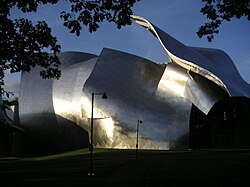
Botstein also integrated the arts into the campus fabric. In 1990, he founded the Bard Music Festival, which eventually led to the creation of the Richard B. Fisher Center for the Performing Arts, a facility designed by renowned architect Frank Gehry.
Expanding Cultural Horizons
Beyond the core college, Botstein developed Bard SummerScape in 2003, a festival dedicated to opera, theater, film, and music. Through this venture, he has staged 13 rare operas, continuing his lifelong mission of rescuing obscure works from historical oblivion.
Conducting and Musical Scholarship
Botstein's influence extends far beyond the campus. In 1992, he was appointed director of the American Symphony Orchestra (ASO), a role he has maintained for decades. Under his leadership, the ASO became known for performing lesser-known compositions.
His international reach expanded in 2003 when he became the music director of the Jerusalem Symphony Orchestra. He led the orchestra on numerous tours, including a notable 2009 performance of Mendelssohn's Elijah at Bach's Thomaskirche in Leipzig. He later transitioned to the roles of Conductor Laureate and Principal Guest Conductor for the ensemble.
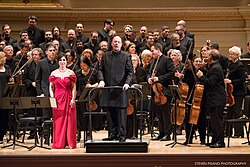
As a scholar, Botstein has authored several books exploring the intersection of music, culture, and politics. His notable works include The History of Listening: How Music Creates Meaning (2000) and Vienna: Jews and the City of Music, 1870-1938 (2004). His recording of Gavriil Popov's First Symphony with the London Symphony Orchestra earned a Grammy nomination in 2005.
Controversy and Retirement
The final years of Botstein's presidency were overshadowed by his relationship with financier and convicted sex offender Jeffrey Epstein. Between 2011 and 2018, Botstein maintained a friendly correspondence with Epstein, which included approximately 25 visits to Epstein's New York townhouse and a 2012 trip to the private island of Little Saint James.
Botstein stated that his engagement with Epstein was strictly in his capacity as Bard's chief fundraiser and that any funds received were for the institution. However, an independent review conducted by the law firm WilmerHale in 2026 concluded that while Botstein did nothing illegal, he had minimized the nature of the relationship and that his actions reflected poorly on his leadership.
Following pressure from alumni and the findings of the review, Botstein announced his retirement on May 1, 2026, effective at the end of the academic year. Some reports indicated he was forced out by a vote of the Board of Trustees.
Summary of Career and Achievements
| Category | Key Details |
|---|---|
| Academic Leadership | President of Bard College (1975–2026); Chancellor of Open Society University Network (2020) |
| Musical Directorships | American Symphony Orchestra; Jerusalem Symphony Orchestra; Campus Grafenegg |
| Key Initiatives | Bard Music Festival, Bard SummerScape, Bard Prison Initiative |
| Education | University of Chicago (BA), Harvard University (MA, PhD) |
| Notable Awards | Austrian Cross of Honor for Science and Art; National Arts Club Gold Medal |
Frequently Asked Questions
When did Leon Botstein retire from Bard College?
Leon Botstein announced his retirement on May 1, 2026, with his tenure ending at the conclusion of the 2025-26 academic year.
What is the Bard Prison Initiative?
The Bard Prison Initiative is a college-in-prison program established by Botstein in 1999 that provides higher education to incarcerated individuals and is currently active in nine states.
Which orchestras has Leon Botstein conducted?
In addition to the American Symphony Orchestra and the Jerusalem Symphony Orchestra, he has performed or recorded with the London Philharmonic, Los Angeles Philharmonic, BBC Symphony, and the St. Petersburg Philharmonic, among others.
What was the nature of the WilmerHale review?
The review was an independent investigation into Botstein's relationship with Jeffrey Epstein. It found that while no illegal acts were committed, Botstein was not fully accurate in describing the relationship, which impacted his leadership standing.
What are some of Botstein's major publications?
His major works include The History of Listening: How Music Creates Meaning and Vienna: Jews and the City of Music, 1870-1938.