Lene Buhl-Mortensen: Mapping Marine Biodiversity in Norwegian Waters
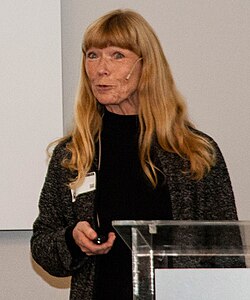
The depths of the Norwegian seas hold a vast array of biological secrets, from the topography of the seabed to the intricate lives of tiny crustaceans. At the forefront of uncovering these mysteries is Lene Buhl-Mortensen, a distinguished Dano-Norwegian marine biologist whose career has been dedicated to the systematic study and mapping of ocean life.
Currently serving as a Research Professor at the Norwegian Institute of Marine Research, Buhl-Mortensen has established herself as a leading authority on the creatures that inhabit the cold waters of the North. Her work bridges the gap between taxonomy—the science of naming, defining, and classifying organisms—and biogeography, the study of the distribution of species and ecosystems in geographic space.
Academic Foundation and Expertise
Buhl-Mortensen's expertise is built upon a rigorous academic background. She earned her fil.kand. degree in biology from the University of Gothenburg in 1980, followed by a dr.scient. (PhD) from the University of Bergen in 1994. This educational trajectory provided the foundation for her specialized research into marine fauna.
Her primary scientific focus involves the study of small crustaceans, specifically:
- Amphipods: Small, shrimp-like crustaceans found in diverse marine environments.
- Copepods: Tiny crustaceans that are fundamental components of the marine food web.
- Barnacles: Sessile crustaceans known for their hard shells and ability to attach to surfaces.
Leading the MAREANO Program
One of the most significant contributions of Buhl-Mortensen's career is her leadership of MAREANO. This national mapping program is funded directly by the Norwegian state budget and is tasked with documenting the topography, environment, and seabed fauna outside the coast of Norway.
Through the MAREANO program, Buhl-Mortensen has played a pivotal role in mapping biodiversity within the Barents Sea. Her field research and analytical work have not only expanded our understanding of existing ecosystems but have also led to the discovery of several previously unknown species in the region.
Key Facts
- Full Name: Lene Buhl-Mortensen
- Born: June 20, 1956, in Esbjerg
- Current Role: Research Professor at the Norwegian Institute of Marine Research
- Specializations: Taxonomy and biogeography of amphipods, barnacles, and copepods
- Major Project: Former head of the MAREANO national mapping program
- Key Achievement: Discovery of multiple new marine species in Norwegian waters
Professional Summary
| Category | Details |
|---|---|
| Education | University of Gothenburg (fil.kand., 1980); University of Bergen (dr.scient., 1994) |
| Primary Research Area | Barents Sea biodiversity and crustacean taxonomy |
| Institutional Affiliation | Norwegian Institute of Marine Research |
| Key Program Leadership | MAREANO (National seabed mapping) |
Frequently Asked Questions
Who is Lene Buhl-Mortensen?
Lene Buhl-Mortensen is a Dano-Norwegian marine biologist and Research Professor at the Norwegian Institute of Marine Research, specializing in the taxonomy and biogeography of marine crustaceans.
What is the MAREANO program?
MAREANO is a Norwegian state-funded national mapping program designed to document the seabed fauna, environment, and topography of the waters outside Norway.
Which specific marine organisms does she study?
She is an expert in the taxonomy of amphipods, barnacles, and copepods.
What are her major academic credentials?
She holds a fil.kand. in biology from the University of Gothenburg (1980) and a dr.scient. (PhD) from the University of Bergen (1994).
What has she contributed to the Barents Sea research?
She has focused on mapping biodiversity in the Barents Sea and has discovered several new species in that area.