Legislatures: The Foundations of Lawmaking and Political Oversight
A legislature is a deliberative assembly endowed with the legal authority to create laws and exercise political oversight. Whether operating within a state, a nation, or a city, legislatures serve as one of the principal institutions of government. They are typically distinguished from the executive (the branch that implements laws) and the judiciary (the branch that interprets laws).
Legislatures function at various levels of governance, ranging from local and subnational (such as states or provinces) to national and supranational entities, like the European Parliament. While their structures vary, their core purpose remains the creation of primary legislation—the fundamental laws enacted by these bodies.

Key Facts
- Core Functions: Representation, deliberation, legislation, authorizing expenditure, forming governments, and oversight.
- Structural Types: Can be unicameral (one chamber), bicameral (two chambers), or multicameral (multiple chambers).
- Power Systems: Defined by their relationship with the executive, such as fusion of powers (parliamentary) or separation of powers (congressional).
- Oldest Legislature: The Icelandic Althing, founded in 930 CE.
- Largest National Legislature: China's National People's Congress, with 2,980 members.
Types of Legislative Systems
The way a legislature interacts with other branches of government defines its type. According to scholar Amie Kreppel, the most critical distinguishing feature is the relationship between the legislature and the executive.
Parliamentary Systems
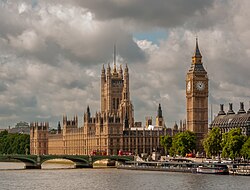
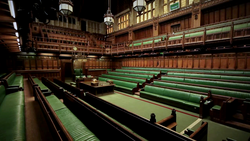
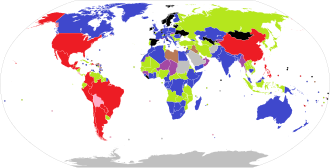
In parliamentary systems, there is a fusion of powers between the executive and the legislature. This means the executive branch is drawn from and remains part of the legislature. The United Kingdom is a primary example of this model.
Congressional Systems
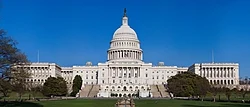
In contrast, systems utilizing a separation of powers feature a legislature that is institutionally independent from other branches. In these systems, the head of state and head of government are merged into a single executive office, known as the presidency, and are elected separately from the legislature. While a congress may have the power to initiate impeachment in extreme circumstances, its ability to remove the executive is generally limited. The United States operates under this model.
Supreme State Organs of Power
Found in communist states, these operate under the doctrine of unified power. Rather than separating powers, a supreme state organ centralizes executive, legislative, and judicial authority, with other organs performing delegated functions within a defined division of labor.

Legislative Structure and Chambers
Legislatures are organized into different configurations of chambers, often referred to as "houses." The number of chambers determines the system's classification:
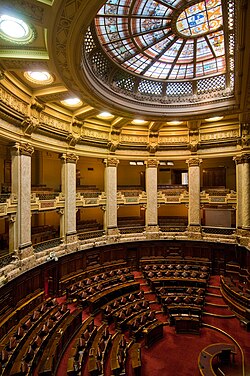
- Unicameral: A single assembly that debates and votes as one unit.
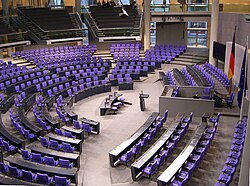
- Bicameral: Two separate assemblies. Usually, one is the lower house (often representing the population directly) and the other is the upper house (often representing administrative divisions or states).
- Multicameral: Three or more chambers. While rare in modern national governments, historical examples include the former Yugoslavia.
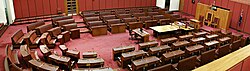
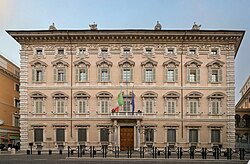
In federal systems, the upper house typically represents the component states of the federation. For example, in the United States and Australia, the upper house is designed to grant representation to states, often providing equal weight to smaller populations.
The Functions of a Legislature
Democratic legislatures perform several vital roles to maintain a functioning society:
Representation
Legislators represent their constituents in several ways:
- Formalistically: Through established rules of representation.
- Symbolically: How constituents perceive their representatives.
- Descriptively: How well the legislature's demographics match the wider society.
- Substantively: How effectively representatives respond to constituent needs.
Oversight and Deliberation
Beyond making laws, legislatures engage in deliberation (discussion and decision-making) and oversight (monitoring the executive branch to ensure laws are implemented correctly). They also hold the power of the purse, which involves authorizing government expenditure.
Summary of Legislative Characteristics
| Feature | Parliamentary System | Congressional System | Unified Power System |
|---|---|---|---|
| Power Principle | Fusion of Powers | Separation of Powers | Unified Power |
| Executive Relation | Executive is part of legislature | Executive is independent | Executive is centralized in the organ |
| Common Name | Parliament | Congress | Supreme State Organ |
Frequently Asked Questions
What is the difference between a unicameral and a bicameral legislature?
A unicameral legislature consists of a single chamber or assembly, whereas a bicameral legislature is divided into two separate chambers, typically an upper house and a lower house.
How do legislatures represent their people?
Representation can be achieved through formal rules, symbolic perception, descriptive demographics (matching the population's makeup), or substantive action (responding to actual needs).
Why do some legislatures have more members than others?
Size is a trade-off between efficiency and representation. Smaller legislatures operate more efficiently, while larger legislatures can better represent the diverse political views of a large population.
What is the role of a legislative committee?
Committees are smaller groups of legislators delegated to handle specific responsibilities, such as giving the first consideration to newly proposed legislation.
What is legislative supremacy?
Legislative supremacy is a principle where the legislature is considered the supreme branch of government, meaning it cannot be bound by other institutions like the judiciary or a written constitution.