Legazpi Landmarks: A Journey Through History and Architecture
The town of Legazpi is a rich tapestry of historical legacies and modern developments. From its deep roots in the 16th century to its contemporary social infrastructure, the town offers a diverse array of architectural styles and cultural monuments that reflect its evolution over the centuries.
The Heart of the Town: Plaza de Euskadi and Historic Residences
At the center of the town's cultural identity is the Plaza de Euskadi. This central hub is home to a monument dedicated to Miguel López de Legazpi, as well as the Plaza Porticada. One of the most distinguished structures in the area is the Casa Uzcanga, a residence built in 1867 by José Antonio de Alberdi.
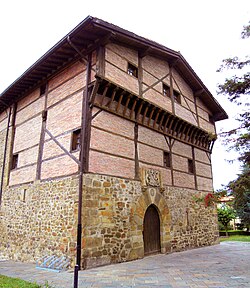
Beyond the main plaza, the town's residential history is preserved in its traditional caseríos (traditional Basque farmhouses). In the Barrio of Aranburu, visitors can find the Caserío Aitzabaso, also known as "Areizaga Dorrea," which is celebrated for its distinctive arches. Meanwhile, the Barrio of Soraitz preserves the Caserío Gurrutxaga Goikoa and Caserío Aizpuru.
Sacred Spaces and Spiritual Heritage
Legazpi's religious architecture spans several centuries, showcasing a transition from Renaissance styles to modernism. The Church of Santa María de la Asunción stands as a primary example, with its original construction dating back to 1576 and its tower added later in the 18th century.
The town also preserves two ancient hermitages, the Ermita de San Gregorio and Ermita de San Cristóbal, both dating back to 1540. More recent additions to the spiritual landscape include the Templo del Convento de las Hermanas Mercedarias de la Caridad, built in 1930, and the Templo parroquial El Salvador. The latter, opened in October 1971, is a modern architectural work designed by Iñigo Guibert de Encío.
Civic Infrastructure and Public Works
The town's commitment to public welfare and recreation is evident in its modern facilities. The Argizao Stadium serves as the local hub for athletics and football matches, with the Zumarraga Hospital located just to its east. For education, the Instituto De Educacion Secundaria Jose Maria Iparraguirre serves the community from the northwestern outskirts of the town.
A notable example of contemporary social care is the Lamorous-Argixao old people's home (Centro gerontológico Lamorous Argixao). Inaugurated in September 2008, this ultra-modern facility provides accommodation for 115 seniors, featuring 30 day care spaces and 30 psycho-geriatric units. The facility was further enhanced in July 2019 with the addition of an outdoor meeting area.
Art and Remembrance
The municipal cemetery is more than a place of rest; it is an architectural curiosity. It features an underground crypt designed by architect José Antonio Pizarro, who drew inspiration from Ancient Egypt. The cemetery also hosts two evocative sculptures by artist Vicente Larrea: "El Ángel de la vida" (The Angel of Life) and "El Ángel de la muerte" (The Angel of Death).
Key Facts
- Oldest Religious Sites: Ermita de San Gregorio and Ermita de San Cristóbal (1540).
- Historic Residence: Casa Uzcanga, built in 1867.
- Modern Care: Lamorous-Argixao home accommodates 115 seniors.
- Architectural Influence: The municipal crypt is influenced by Ancient Egyptian design.
- Key Figures: Miguel López de Legazpi is honored with a monument in Plaza de Euskadi.
| Landmark | Type | Date/Period | Key Feature |
|---|---|---|---|
| Church of Santa María de la Asunción | Religious | 1576 (Tower 18th C) | Historic parish church |
| Casa Uzcanga | Residential | 1867 | Built by José Antonio de Alberdi |
| Templo parroquial El Salvador | Religious | 1971 | Modern design by Iñigo Guibert de Encío |
| Lamorous-Argixao | Healthcare | 2008 | 115-bed senior care facility |
| Caserío Aitzabaso | Residential | Historic | Known for its arches |
Frequently Asked Questions
Who was Miguel López de Legazpi?
Miguel López de Legazpi is a historical figure honored with a monument in the Plaza de Euskadi, the central square of the town.
What is unique about the municipal cemetery?
The cemetery features an underground crypt designed by José Antonio Pizarro with influences from Ancient Egypt, as well as two sculptures by Vicente Larrea representing the angels of life and death.
When was the Church of Santa María de la Asunción built?
The church was first constructed in 1576, and its tower was added later during the 18th century.
What facilities are available at the Lamorous-Argixao center?
The center provides accommodation for 115 seniors, including 30 psycho-geriatric units, 30 day care spaces, and an outdoor meeting area added in 2019.
Where is the Argizao Stadium located?
The stadium is a local venue for football and athletics, situated to the west of the Zumarraga Hospital.