Leeds: A Dynamic Hub of Culture, Economy, and History in West Yorkshire
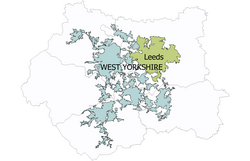
Leeds is a prominent city and metropolitan borough located in West Yorkshire, England. As a major center within the Yorkshire and the Humber region, it blends a rich industrial heritage with a forward-looking economy. Known for its diverse population and vibrant urban landscape, Leeds serves as a critical administrative, financial, and cultural heart for the North of England.
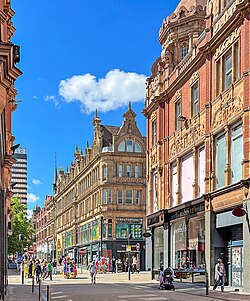
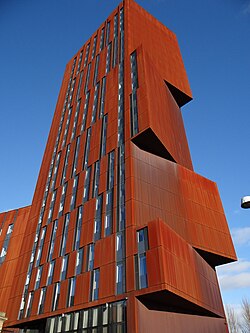
The city is characterized by its sprawling urban subdivisions and a mix of historic architecture and modern developments, ranging from the traditional charm of the Corn Exchange to the cutting-edge facilities of its business district.
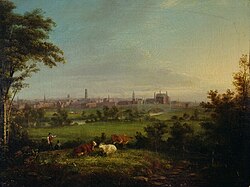
Key Facts
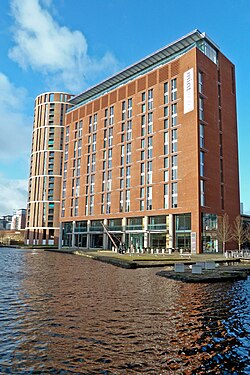
- Population: Approximately 536,280 (2021 estimate).
- Economy: Worth £64.6 billion, with a forecast growth of 21% over the next decade.
- Geography: Covers an area of 111.6 km² (43.1 sq mi).
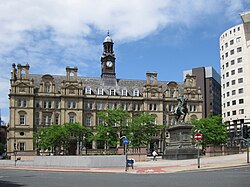
- Governance: The Leeds Civic Hall serves as the seat of local government.
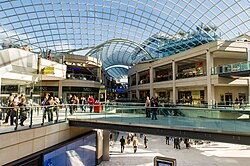
- Key Infrastructure: Home to one of Europe's largest shopping centers, Trinity Leeds.
Geography and Climate
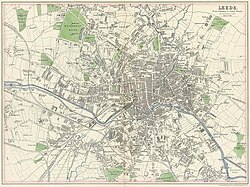
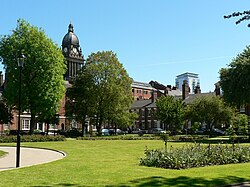
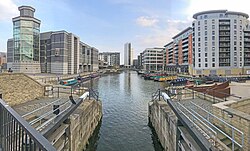
Leeds is situated in the West Yorkshire urban area, with its landscape defined by the River Aire and a network of canals, including the Leeds and Liverpool Canal.
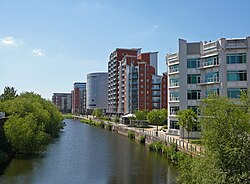
The city's climate is temperate, with average precipitation reaching approximately 660mm annually. Temperature extremes vary significantly, with record highs reaching 34.4°C in August and record lows dropping to -8.5°C in February.
Demographics and Society
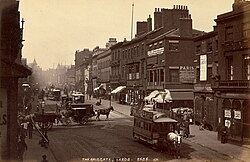
The population of Leeds has seen steady growth since the 19th century, rising from 94,421 in 1801 to over 750,000 in the wider district by 2011. The city is a multicultural hub; according to 2021 census data for the Leeds urban subdivision, the population is 71.2% White, 13.1% Asian, and 8.3% Black.
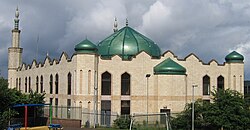
Religious diversity is also a hallmark of the city. While Christianity (42.3%) and those with no religion (40.2%) are the largest groups, the city hosts significant communities of Muslims (7.8%), Sikhs (1.2%), Hindus (1.1%), and Jews (0.8%).
Economy and Infrastructure
![Leeds is home to many large urban parks.[59]](/images/7d/dc/7ddc3092c7509eb0d0cfaa3ad2300e74e612943e3cf28b143e459eac3d2e4fc1.jpg)
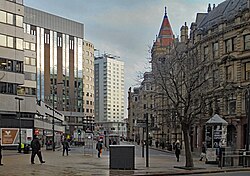
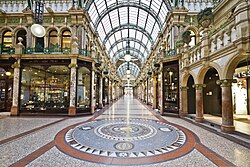
Leeds boasts a powerful economy valued at £64.6 billion. The city is a leader in finance, law, and the public sector, notably housing the NHS England HQ. Its retail sector is anchored by the Victoria Quarter and Trinity Leeds, the latter being one of the largest shopping centers in Europe.
![With an economy worth £64.6 billion, Leeds is forecast to grow 21% over the next 10 years.[108]](/images/77/df/77df2bd807950b2d36f901793fc820bb73986e7ade00c4d686ac9803300deec4.png)
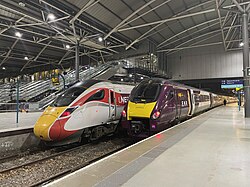
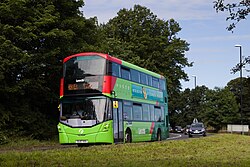
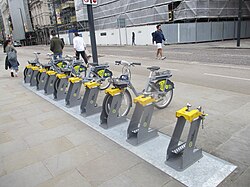
Transport in Leeds is highly integrated. The city is served by a major railway station and widespread bus networks. In recent years, the city has embraced sustainable mobility, with electric rental bicycles becoming a common sight throughout the urban center.
Culture, Landmarks, and Leisure
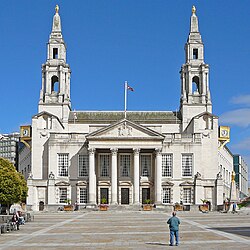
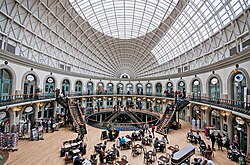
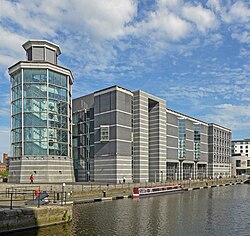
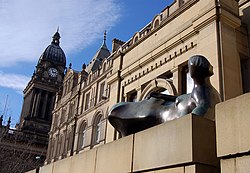
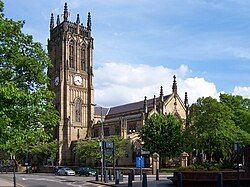
From historic sites to modern art, Leeds offers a wealth of cultural experiences. The city is home to the Royal Armouries Museum and the Leeds Art Gallery, featuring works such as the Henry Moore statue. For those interested in history, the Leeds Corn Exchange (opened 1864) and the Grade I listed Leeds Minster are essential visits.
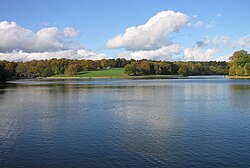
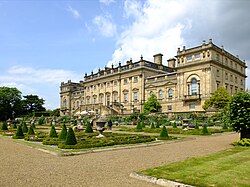
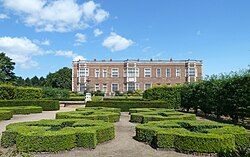
The city is also renowned for its green spaces. Roundhay Park is one of the largest urban parks in Europe, and Temple Newsam provides a stunning example of a historic mansion and garden.
Sports and Entertainment
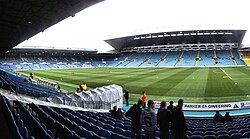
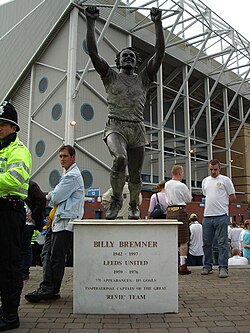
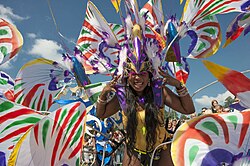
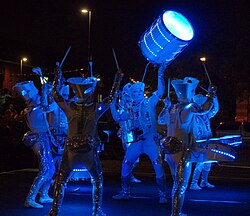
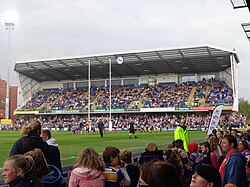
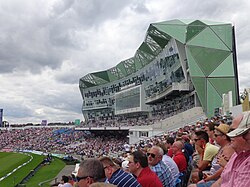
Leeds is a powerhouse of English sport. It is home to Leeds United (football) at Elland Road, the Leeds Rhinos (rugby league), and the Yorkshire CCC (cricket) at Headingley Stadium. The city also hosts major events like the Leeds West Indian Carnival and Light Night, one of the UK's largest arts and light festivals.
City Overview Summary
| Category | Details |
|---|---|
| Metropolitan County | West Yorkshire |
| Population (2021 Est.) | 536,280 |
| Economic Value | £64.6 Billion |
| Primary River | River Aire |
| Major Stadiums | Elland Road, Headingley |
Frequently Asked Questions
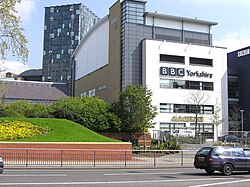
![The Leeds Arena building was named the "best new venue in the world" in 2014 by the Stadium Business Awards.[254]](/images/33/d0/33d0147d8643544b875000abac7de25f509fa79e91e3c020a64e3a3b38d3e4b8.jpg)
What is the economic outlook for Leeds?
Leeds has an economy worth £64.6 billion and is forecast to grow by 21% over the next 10 years.
Which are the major sports teams based in Leeds?
The city is home to Leeds United (football), Leeds Rhinos (rugby league), and Yorkshire CCC (cricket), among others.
What are some of the most notable landmarks in the city?
Key landmarks include the Leeds Civic Hall, the Royal Armouries Museum, the Victoria Quarter, and the historic Leeds Corn Exchange.
How diverse is the population of Leeds?
Leeds is highly diverse, with significant Asian (13.1%) and Black (8.3%) populations in the urban subdivision, and a wide variety of religious communities including Christian, Muslim, Sikh, and Hindu faiths.
What are the best ways to get around the city?
Residents and visitors can use the extensive bus networks, the central railway station, and a widespread system of electric rental bicycles.