Latin American Crime and Violence: Root Causes and Regional Impact
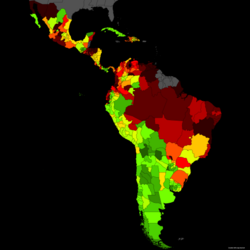
Crime and violence have profoundly shaped the social and economic landscape of Latin America, affecting millions of residents. In the wake of transitions from authoritarian regimes to democracies, the region has struggled with a surge in violent crime. The Pan American Health Organization once described this phenomenon as the social pandemic of the 20th century, noting that between 2000 and 2017 alone, the region saw more than 200,000 murders.
The impact extends beyond the immediate human tragedy. High levels of violence create a vicious cycle that thwarts economic growth, discourages foreign investment, and diverts critical resources away from productive social activities toward the prevention and punishment of crime. This instability hinders democratic consolidation and regional integration across the Americas.
Key Facts
- Global Disproportion: Latin America accounts for nearly 40% of the world's murders despite housing only 9% of the global population.
- Victimization: In 2018, data from LAPOP indicated that one in four Latin Americans had been assaulted and robbed.
- Economic Barrier: Crime impedes growth by redirecting resources from development to security and punishment.
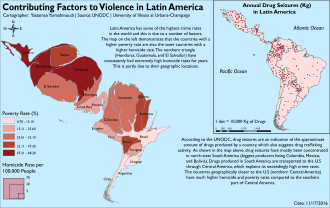
- Root Causes: Primary drivers include social inequality, drug trafficking, weak rule of law, and poor education systems.
The Drivers of Violence
Experts suggest that social inequality is a primary catalyst for violence. In many impoverished communities, the state fails to provide basic security and services, allowing organized crime—criminal groups that operate in a structured, hierarchical manner—to seize control of local territories.
Several systemic factors contributed to the rise of violent crime between the 1980s and 1990s:
- High unemployment and low economic growth rates.
- Rapid, unplanned urbanization of large metropolitan areas.
- The proliferation of illegal arms and narcotics.
- A culture of violence reinforced by the media, police, and private security.
- Ineffective criminal justice systems and poor public education.
- The legacy of civil wars and armed conflicts.
Regional Analysis: Nations Most Affected
Brazil
Brazil faces significant challenges with violent crime, particularly in large cities like Rio de Janeiro and Recife. In 2018, the country recorded 63,880 murders. Violence is especially acute in favelas (impoverished urban slums), where gangs often exercise more control than the state.
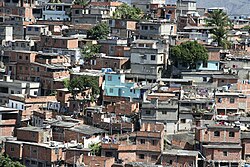
![The scene of a murder in Rio de Janeiro. More than 800,000 people were murdered in Brazil between 1980 and 2004.[27]](/images/76/6f/766f06377e2a0585d98016b7234c5c12e4fdd8bc5d8b1111046e7f3b93f5b931.jpg)
Colombia
Colombia has seen a notable decline in violence following political shifts. The number of kidnappings fell by 92% since 2000, dropping to 205 cases by 2016. In that same year, Colombia reached a 40-year low in homicides (24.4 per 100,000), coinciding with the peace agreement signed with the FARC.
El Salvador
Historically one of the most violent nations, El Salvador's homicide rate peaked at 105 per 100,000 in 2012. However, following a massive gang crackdown initiated by President Nayib Bukele, the rate plummeted to 1.9 per 100,000 by 2024, making it one of the safest countries in Central America.

Honduras and Guatemala
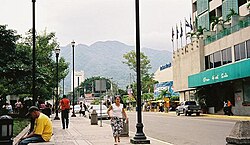
Honduras has struggled with some of the highest intentional homicide rates globally, with San Pedro Sula often cited as one of the world's most violent cities. In Guatemala, the crisis manifests heavily in human trafficking; UNICEF reports that nearly 60% of the 50,000 sex trafficking victims in the country are children.
Mexico and Puerto Rico
Mexico's drug war led to extreme spikes in violence, most notably in Ciudad Juarez, which saw homicides jump from 300 in 2007 to 3,622 in 2010. In Puerto Rico, the ease of drug trafficking into the island has fueled turf wars and police corruption, leading to the second-highest homicide rate in the United States.
Venezuela
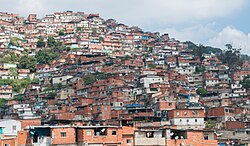
Venezuela has faced a severe security crisis, particularly in barrios (slum areas). The capital, Caracas, has been described as the "kidnap capital of the world," with the 2014 murder rate reaching 82 per 100,000—more than four times the rate seen in 1998.
Summary of Regional Crime Trends
| Location | Key Statistic | Context/Period |
|---|---|---|
| Brazil | 63,880 murders | Annual total in 2018 |
| Colombia | 24.4 per 100,000 | Homicide rate in 2016 (40-year low) |
| El Salvador | 1.9 per 100,000 | Homicide rate in 2024 |
| Honduras | 82.1 per 100,000 | Intentional homicide rate in 2010 |
| Ciudad Juarez | 3,622 homicides | Peak recorded in 2010 |
| Venezuela | 82 per 100,000 | Murder rate in 2014 |
Frequently Asked Questions
Why is the homicide rate so high in Latin America?
The high rates are attributed to a combination of extreme social inequality, the influence of drug cartels, weak judicial systems, and the failure of the state to maintain the rule of law in impoverished areas.
How has the drug trade influenced regional violence?
Drug traffickers use violence to resolve disputes over territory and profits. This organized crime often fills the power vacuum in areas where the government is unable to provide security, leading to prolonged conflict.
Which city was once called the "murder capital of the world"?
San Pedro Sula in Honduras has frequently held this label due to its status as an industrial heartland and its extremely high homicide rates.
What caused the recent drop in crime in El Salvador?
The significant decrease in homicides is attributed to a government-led gang crackdown starting in 2022, which drastically reduced the influence of gangs (Maras) in the country.
How does crime affect the economy of these nations?
Crime creates a negative cycle where high violence discourages investment and forces governments to spend limited resources on security and incarceration rather than on education or infrastructure.