The Evolution of the Latin Alphabet: From Ancient Inscriptions to Global Standard
The Latin alphabet is the foundation of the most widely used writing system in the world. While we often associate it with the 26 letters used in modern English, its history is a complex journey of adaptation, spanning thousands of years and multiple civilizations. From its origins in ancient Egypt to its current role in writing over 3,000 languages, the Latin alphabet has undergone profound transformations to meet the needs of evolving cultures.
Today, the Latin script is used by approximately 70% of the global population. It serves as the primary writing system for much of Western and Central Europe, the Americas, sub-Saharan Africa, and Oceania. However, the alphabet used by a modern English speaker is significantly different from the set of characters used by a Roman citizen in the 1st century BC.
The Ancestry of the Script
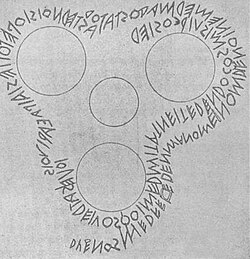
The lineage of the Latin alphabet is a fascinating chain of linguistic inheritance. It did not emerge in a vacuum but was part of a continuous evolution of symbols:
- Egyptian Hieroglyphs: The distant ancestral root.
- Phoenician Alphabet: A major developmental step in phonetic writing.
- Greek Alphabet: Specifically the Cumaean version.
- Etruscan Alphabet: An Old Italic script used by the Etruscans, who ruled early Rome.
- Latin Alphabet: Developed by the Romans from the Etruscan model.
As the Roman Empire expanded, so did its influence. During the Middle Ages, the script was adapted to write Romance languages (the direct descendants of Latin), as well as Celtic, Germanic, Baltic, and some Slavic languages. Later, through colonialism and religious expansion, it spread to include indigenous languages in the Americas, Australia, and Africa.
The Classical Latin Alphabet
In the Classical period, the Latin alphabet was not the 26-letter set we recognize today. It primarily consisted of 21 letters, with the addition of Y and Z to accommodate Greek loanwords. These two "foreign" letters were placed at the end of the alphabet.
One notable characteristic of Classical Latin was its "defective" nature regarding certain sounds. For example, the letters I and V were used to represent both vowels (/i/, /u/) and consonants (/j/, /w/). It was not until the Early Modern era that J was separated from I, and U was separated from V.
Signs, Abbreviations, and Punctuation
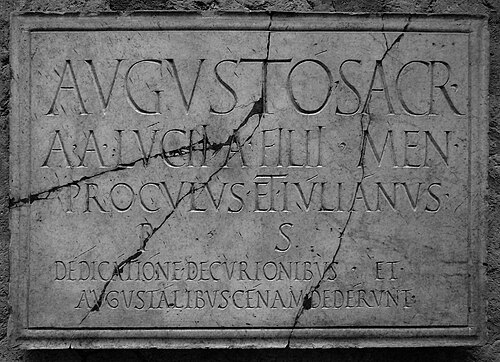
Classical Latin did not use diacritical marks (accents) as regularly as modern languages do. Instead, they occasionally used an apex to mark long vowels. Interestingly, rather than using an apex, the letter I was often simply written taller to indicate a long vowel. To separate words, Romans used an interpunct—a small dot or mark placed between words.
The Development of G
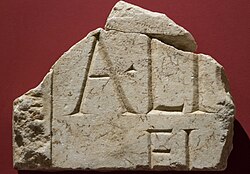
In the early stages of the alphabet, the letter C was used for both the /g/ and /k/ sounds. Around the 3rd century BC, the letter G was introduced as a modification of C (adding a small vertical stroke) to specifically represent the voiced /g/ sound, allowing C to be reserved for the /k/ sound.
From Cursive to Modern Type
The way Latin was written changed depending on the context. While formal inscriptions were carved in Roman square capitals, everyday life required faster methods. Old Roman cursive was used by merchants, schoolchildren, and even emperors for informal communication. This eventually evolved into Uncial and later New Roman cursive (minuscule), which features letter forms much more recognizable to modern readers, such as a, b, d, and e.
The Middle Ages saw the introduction of the letter W (originally a ligature of two Vs) to accommodate Germanic languages. The development of Carolingian minuscule was a pivotal moment, as it introduced the lower-case forms and writing conventions that became the standard for much of the Western world.
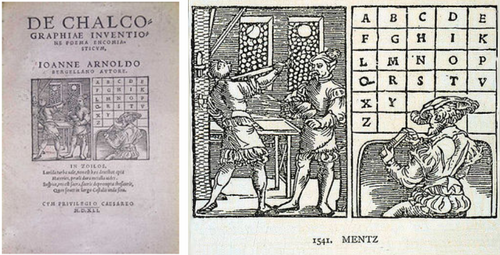
With the invention of the printing press and the subsequent Renaissance, the alphabet began to stabilize into the forms used in modern typography. The transition from handwritten manuscripts to printed books helped standardize the shapes of the letters we use in digital communication today.
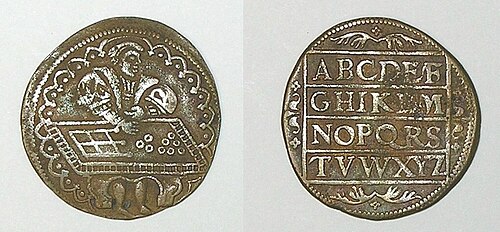
Summary of Alphabet Evolution
| Period/Type | Key Characteristics | Notable Features |
|---|---|---|
| Old Latin | 21 characters | Used C for both /g/ and /k/; Z was later replaced by G. |
| Classical Latin | 23 characters | Included Y and Z for Greek words; I and V served dual roles. |
| Medieval/Early Modern | Expansion | Addition of W; separation of I/J and U/V. |
| Modern Latin | 26 letters (Standard) | The ISO basic Latin alphabet used globally for most modern languages. |
Key Facts
- The Latin alphabet is the most widely used writing system in the world.
- It is used to write over 3,000 languages.
- The modern 26-letter inventory was finalized through the addition of W and the separation of J and U.
- The script evolved from Etruscan, which descended from Greek, Phoenician, and Egyptian origins.
- Interpuncts were used in antiquity as word dividers.
Frequently Asked Questions
Why did the Romans add the letter G?
Originally, the letter C was used for both the /g/ and /k/ sounds. To distinguish between them, the letter G was created by adding a small vertical stroke to the C, typically around the 3rd century BC.
What is the difference between the Latin alphabet and the Latin script?
The "Latin alphabet" often refers specifically to the set of letters used to write the Latin language. The "Latin script" refers to the broader system of writing that uses these letters to represent many different languages, often including additional letters or diacritics (accents).
How did the letter W come to exist?
The letter W was added during the Middle Ages. It originated as a ligature (a combination of two characters) of two Vs, created to represent specific sounds found in Germanic languages.
Did the Romans use lowercase letters?
No, the Classical Latin alphabet primarily used capital letters (majuscule). Lowercase letters (minuscule) developed later, evolving from cursive handwriting styles during the Middle Ages.
What were interpuncts?
Interpuncts were small marks, such as dots, used by the Romans as word dividers. This practice fell out of common use after approximately 200 AD.