Languedoc: The History and Heritage of a Former French Province
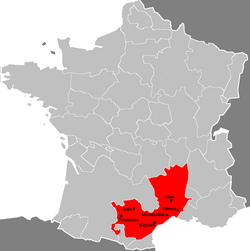
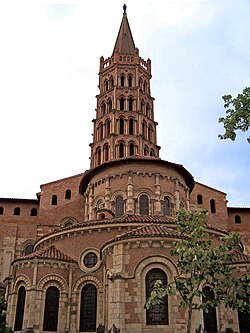
Languedoc (locally known as Lengadòc) is a historic province of France that once spanned a vast area of the south. Defined by its unique linguistic heritage and a spirited history of independence, the region is now primarily integrated into the modern administrative region of Occitanie. From the pink-brick architecture of Toulouse to the rugged plateaus of the Cévennes, Languedoc represents a critical intersection of Roman, Visigothic, and French royal influence.
The province covered approximately 42,700 square kilometers (16,500 square miles), stretching between the Rhône river to the east and the Garonne river to the west, and extending north toward the Massif Central.
Key Facts
- Capital: Toulouse (historically), with Montpellier serving as a major administrative hub.
- Timeline: Formed as a government entity in the mid-16th century; dissolved in 1791.
- Language: Historically associated with the langue d'oc (Occitan).
- Modern Status: Mostly part of the Occitanie region, with smaller portions in Auvergne-Rhône-Alpes.
- Major Cities: Toulouse, Montpellier, Nîmes, Béziers, and Alès.
Historical Evolution
The roots of Languedoc are deeply ancient. The area was once part of the Roman province of Gallia Narbonensis and later fell under the Visigothic Kingdom between the 5th and 8th centuries. After a brief occupation by the Emirate of Córdoba, it was incorporated into the Kingdom of the Franks by Pepin the Short in 759.
The 13th century marked a pivotal shift in the region's trajectory. The Albigensian Crusade (1208–1229), launched by the Catholic Church to eliminate the Cathar heresy, allowed the French Capetian dynasty to extend its power south of the Loire. This led to the gradual integration of various principalities into the Royal French Domain, including the Viscounty of Albi and the County of Toulouse by 1271.
The Rise of the Province
By 1346, the Estates of Languedoc began to convene, and by 1359, a perpetual union was formed between the bailiwicks (sénéchaussées) of Bèucaire, Carcassona, and Tolosa. These were bonnes villes—towns granted special privileges by the King of France in exchange for providing military support.
During the Ancien Régime, the province was divided into two généralités (administrative districts): Toulouse for Haut-Languedoc (Upper Languedoc) and Montpellier for Bas-Languedoc (Lower Languedoc). This division persisted until the French Revolution in 1789.
Administrative and Political Structure
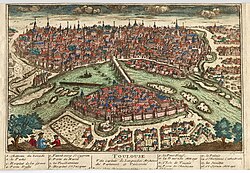
The governance of Languedoc was a complex balance of power between the monarchy and local authorities. While Toulouse was the traditional capital and seat of the Parlement of Toulouse—the supreme court of justice for the region—the French monarchy often favored Montpellier to curb the independence of the Toulouse parliament.
The States of Languedoc held the rare privilege of deciding on tax matters, a concession granted by the kings of France to maintain the loyalty of this distant and spirited region. Meanwhile, the governors of Languedoc initially resided in Pézenas, though later governors were required to live at Versailles under Louis XIV to prevent regional rebellions.
Geography and Modern Demographics
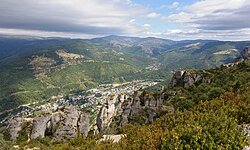
The landscape of Languedoc is characterized by extreme contrasts. The coastal plains and the metropolitan area of Toulouse are densely populated, while the interior, particularly the Cévennes area in Lozère, remains one of the most sparsely populated regions in Europe.
| Modern Region | Approx. Territory Share | Key Departments Included |
|---|---|---|
| Occitanie | >80% | Gard, Hérault, Aude, Lozère, Tarn, Haute-Garonne |
| Auvergne-Rhône-Alpes | <20% | Ardèche, Haute-Loire |
Economy, Culture, and Sport
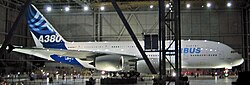
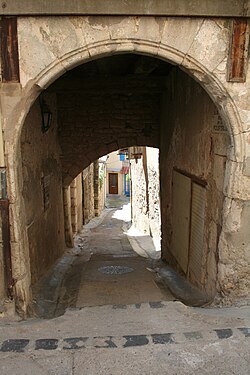
Today, the region is a global hub for aerospace, centered in Toulouse, and a major center for cancer research and biotechnology. Tourism is a primary economic driver, ranging from massive summer resorts on the coast to historic villages like Saint-Guilhem-le-Désert and Estaing, noted for their Romanesque architecture.
Culturally, the region is defined by its passion for rugby union, with the Stade Toulousain being one of Europe's most successful clubs. In the east, bullfighting remains popular, while the coast maintains the tradition of Joutes nautiques (sea jousting), a sport dating back to the 11th century.
Frequently Asked Questions
What was the Albigensian Crusade?
The Albigensian Crusade (1208–1229) was a military campaign initiated by the Catholic Church to eliminate Catharism, which it viewed as a heresy. This conflict ultimately allowed the French crown to annex the region and integrate it into the Kingdom of France.
Why is Toulouse considered the capital of Languedoc?
Toulouse served as the center of the historic County of Toulouse and was the seat of the Parlement of Toulouse, the region's highest judicial authority, making it the political and legal heart of the province.
What is the difference between Haut-Languedoc and Bas-Languedoc?
Haut-Languedoc (Upper Languedoc) refers to the inland administrative district centered around Toulouse, while Bas-Languedoc (Lower Languedoc) refers to the coastal district centered around Montpellier.
Which modern French region contains most of Languedoc?
The majority of the former province of Languedoc is now part of the Occitanie region, which was formed in 2016 by the merger of the Languedoc-Roussillon and Midi-Pyrénées regions.
What is the significance of the Occitan language in this region?
The region's name is derived from the langue d'oc (the language of 'yes'), a Romance language known as Occitan, which was the primary tongue of the area before the dominance of standard French.