Lake Constance: A Tri-National Gem of the Alps
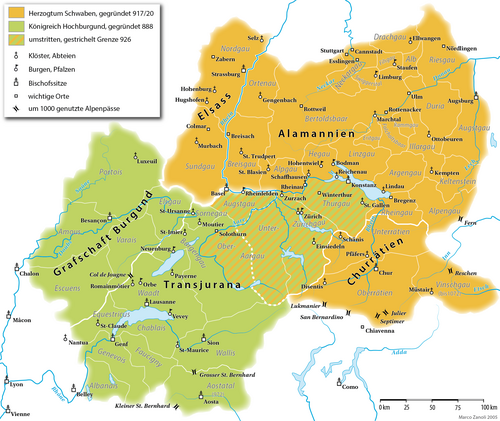
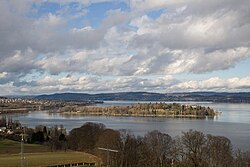
Nestled in the foothills of the Alps, Lake Constance (known as Bodensee in German) is one of Central Europe's most significant bodies of water. Shared by Germany, Switzerland, and Austria, this expansive glacial lake serves as a vital hub for transportation, ecology, and tourism. Its unique position at the intersection of three nations has shaped its history, from a confusing patchwork of time zones to its current status as a collaborative international treasure.
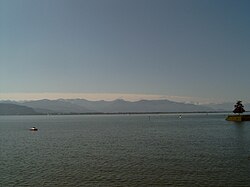
The lake is a primary part of the Rhine river system, fed largely by the Alpine Rhine and draining through the High Rhine. Its serene waters and diverse shorelines make it a premier destination for nature lovers and travelers alike.
Key Facts
- Location: Border region of Germany, Switzerland, and Austria.
- Total Surface Area: 536 km² (207 sq mi).
- Maximum Depth: 251.14 meters (824 feet).
- Water Volume: Approximately 48 km³.
- Primary Inflow: Alpine Rhine.
- Primary Outflow: High Rhine.
- Major Sections: Obersee (Upper Lake) and Untersee (Lower Lake).
Geography and Divisions
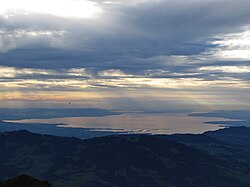
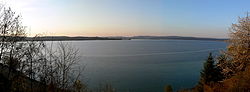
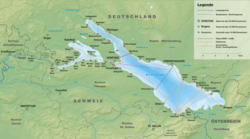
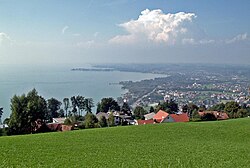
Lake Constance is the third largest lake in Central Europe by area and the second largest by water volume. It stretches over 69.2 kilometers between Bregenz and Stein am Rhein, with a total shoreline of 273 kilometers. The distribution of the shore is as follows: Germany holds 173 km (split between Baden-Württemberg and Bavaria), Switzerland holds 72 km, and Austria holds 28 km.
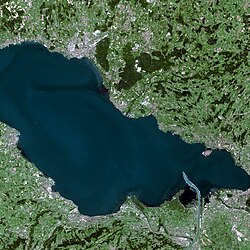
The lake is divided into two primary basins:
- Obersee (Upper Lake): The larger eastern section, covering 473 km². It includes the northwestern arm known as the Überlinger See. The deepest point of the entire lake is located here, between Fischbach and Uttwil.
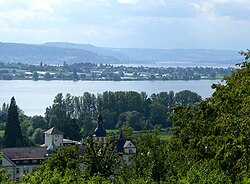
- Untersee (Lower Lake): The smaller western section, covering approximately 63 km².
Tributaries and Water Flow
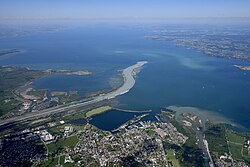
The lake's hydrology is dominated by the Alpine Rhine, which provides over 61% of the total water inflow. Other significant tributaries include the Bregenzer Ach, Argen, and Schussen. The catchment area is vast, extending as far south as Lago di Lei in Italy.
History and Cultural Evolution
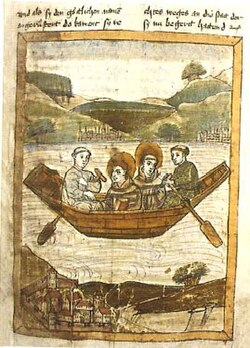
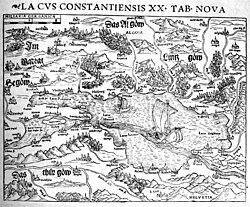
The region's history is marked by its role as a crossroads of trade. A curious historical quirk occurred in the 19th century when the lake was split among five different local time zones. Depending on whether a traveler was in Constance, Friedrichshafen, Lindau, Bregenz, or on the Swiss shore, they would observe different local times (such as Karlsruhe, Munich, or Berne time). This caused significant confusion for shipping and trade until Central European Time (CET) was universally adopted by 1895.
Ecology and Wildlife
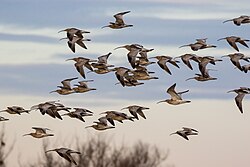
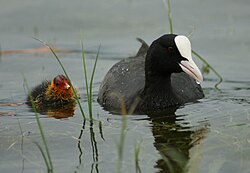
Lake Constance is a critical sanctuary for biodiversity. It serves as an essential overwintering site for roughly 250,000 birds annually, including species such as the dunlin, lapwing, and curlew.
Aquatic Life
The lake is home to a variety of fish, including several species of whitefish (Coregonus), lake trout, and zander. While pollution nearly wiped out the Lake Constance trout in the 1980s, protective measures have allowed the population to recover. However, the lake also faces challenges from non-native species:
- Zebra Mussel: Introduced between 1960 and 1965, these mussels can block water pipes and compete with native shellfish, though they now serve as food for waterfowl.
- Killer Shrimp: Since 2002, this voracious predator has spread across the lake, feeding on fish eggs and larvae.
Tourism and Recreation
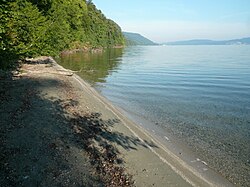
Tourism is a cornerstone of the local economy, with approximately 70 million visitors annually. The region offers a wide array of activities, from hiking the Way of St. James (including the Via Beuronensis and Schwabenweg) to sailing and diving.

Water Activities
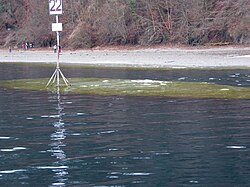
Swimming is most popular from mid-June to mid-September, with water temperatures typically ranging between 20°C and 27°C. For those interested in the depths, the lake offers various diving spots, including the "devils table" and several historic shipwrecks, such as the Jura (sunk in 1864) and the Friedrichshafen (scuttled in 1944).
Transportation
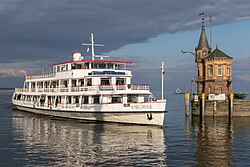
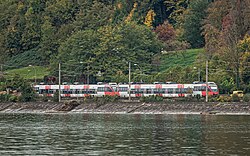
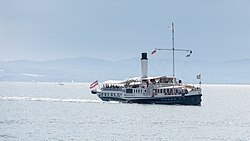
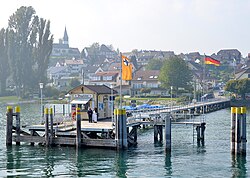
The lake is well-connected by rail and ship. Eight main harbors provide ferry services, including Bregenz (Austria), Rorschach and Romanshorn (Switzerland), and Lindau, Friedrichshafen, Meersburg, Unteruhldingen, and Konstanz (Germany).
Lake Constance Summary Table
| Feature | Detail |
|---|---|
| Surface Area | 536 km² |
| Maximum Length | 63 km |
| Maximum Width | 14 km |
| Average Depth | 90 m |
| Maximum Depth | 251.14 m |
| Surface Elevation | 395 m above sea level |
| Residence Time | 4.3 years |
Frequently Asked Questions
Which countries share Lake Constance?
Lake Constance is shared by Germany, Switzerland, and Austria.
What are the two main sections of the lake?
The lake is divided into the Obersee (Upper Lake), which is the larger eastern basin, and the Untersee (Lower Lake), the smaller western basin.
Does Lake Constance ever freeze?
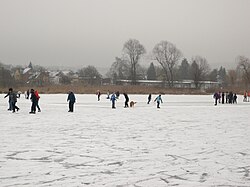
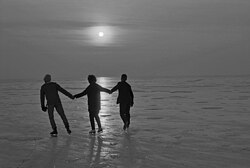
Yes, though it is rare. Complete freeze-overs have occurred in years such as 1435, 1560, 1695, 1830, and most recently in 1963.
What is the primary source of water for the lake?
The Alpine Rhine is the primary inflow, contributing approximately 61.1% of the lake's total water discharge.
What are some of the major islands in the lake?
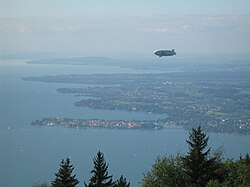
The most notable islands include Mainau, Reichenau, and Lindau.