Kyiv Convoy: Analysis of the Russian Military Column in March 2022
In the early stages of the 2022 invasion of Ukraine, one of the most scrutinized military movements was the massive Russian convoy advancing toward the capital. First identified via satellite imagery, this column represented a significant effort to besiege Kyiv and secure a decisive victory in the opening phase of the conflict.
Movements and Progression
On Monday, February 28, 2022, Maxar Technologies first detected the convoy in satellite images. The column entered Ukraine from Belarus, moving south through the towns of Prybirsk and Ivankiv. The strategic objective appeared to be the capital city, Kyiv, as part of the preparations for the projected Battle of Kyiv.
Despite its size, the convoy's progress was far from seamless. By March 1, reports indicated the column was approximately 25 kilometers (16 mi) from the city center. However, it soon stalled, remaining between 25 and 30 kilometers outside the city. A UK Defence Ministry intelligence update on March 7 attributed this delay to a combination of staunch Ukrainian resistance, mechanical breakdowns, and severe traffic congestion.
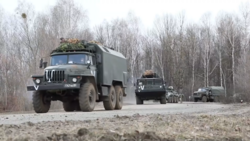
Composition and Scale
The scale of the formation was immense, characterized by a diverse array of military assets. Satellite footage revealed vehicles parked three abreast across wider sections of the road, indicating the sheer volume of equipment. The column consisted of Russian supply trucks, troops, weapons, and artillery.
Estimates of the convoy's size evolved as more data became available. While initial estimates placed the column at 27 kilometers (17 mi), later reports from The Independent and Reuters revised this figure, stating the convoy had grown to approximately 64 to 65 kilometers (40 mi) in length by March 1. By March 2, the convoy was estimated to transport up to 15,000 troops.
| Metric | Details |
|---|---|
| Estimated Length | 64–65 kilometers (40 mi) |
| Estimated Troop Strength | Up to 15,000 personnel |
| Primary Composition | Supply trucks, artillery, weapons, and troops |
| Stalling Point | 25–30 kilometers from Kyiv city center |
Air Cover and Defensive Challenges
To protect the column, Russian forces deployed mobile anti-aircraft systems. However, the effectiveness of these defenses was contested. By March 1, Ukrainian forces utilizing Baykar Bayraktar TB2 drones—Turkish-manufactured unmanned aerial vehicles—had successfully destroyed four 152mm artillery pieces, three SAM (Surface-to-Air Missile) systems, more than 10 trucks, and several tanks in other areas.
The success of the TB2 drones was linked to poor Russian coordination and a failure to achieve air supremacy. Despite this, Ukrainian commanders faced limitations in deploying them against the convoy due to a shortage of drones and trained operators, as well as the risk of Russian forces tracking the drones via radio emissions.
The Role of S-400 Systems
By March 3, aviation researcher Justin Bronk noted that Russia had moved additional air defense systems forward. The convoy fell within the reach of S-400 missile systems stationed along the Belarusian–Ukrainian border. This created a high-risk environment for the Ukrainian Air Force, effectively neutralizing conventional crewed aircraft attacks unless they employed very low-level, visual-targeting operations.
Key Facts
- Detection: First spotted by Maxar Technologies on February 28, 2022.
- Route: Entered from Belarus through Prybirsk and Ivankiv toward Kyiv.
- Dimensions: Stretched up to 65 kilometers (40 mi) in length.
- Personnel: Estimated at 15,000 troops as of March 2.
- Obstacles: Delayed by Ukrainian resistance, mechanical failure, and congestion.
- Air Defense: Protected by mobile systems and S-400s, making it a difficult target for crewed aircraft.
Frequently Asked Questions
How long was the Russian convoy heading toward Kyiv?
While initial estimates were 27 kilometers, later reports from Reuters and The Independent estimated the convoy reached a length of 64 to 65 kilometers (40 mi).
Why did the convoy stall outside of Kyiv?
According to the UK Defence Ministry, the column was delayed by a combination of mechanical breakdowns, traffic congestion, and strong resistance from Ukrainian forces.
What role did Bayraktar TB2 drones play?
The TB2 drones were used by Ukraine to destroy various Russian assets, including SAM systems and artillery. However, their use against the convoy was limited by a lack of available drones, trained personnel, and the risk of radio emission tracking.
Why was it difficult for the Ukrainian Air Force to attack the convoy?
The convoy was protected by mobile anti-aircraft systems and was within the range of S-400 missile systems located on the Belarusian–Ukrainian border, which deterred conventional crewed aircraft.
How many troops were estimated to be in the convoy?
As of March 2, 2022, the convoy was estimated to hold up to 15,000 troops.