Ku-Band Satellite Communications: Global Allocations and Regional Applications
The Ku-band (Kurz-under), spanning frequencies from 11 to 18 GHz, is a critical segment of the microwave spectrum used extensively for satellite communications. Because different regions of the world have different regulatory needs and environmental challenges, the International Telecommunication Union (ITU) divides the globe into regions to manage how these frequencies are allocated.
Whether providing high-speed data via Fixed Satellite Services (FSS) or delivering television to millions of homes via Broadcasting Satellite Services (BSS), the Ku-band offers a balance of bandwidth and antenna size that makes it ideal for global connectivity.
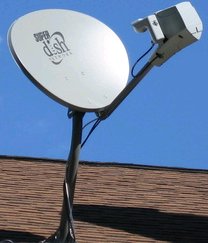
Key Facts
- ITU Regions: The world is divided into regions (1, 2, 3, and P) to standardize frequency allocations.
- FSS vs. BSS: Fixed Satellite Services (FSS) typically handle point-to-point data, while Broadcasting Satellite Services (BSS) handle direct-to-home television.
- Hardware: Receiver antenna sizes vary by service, ranging from small 18-inch dishes for BSS to larger 1.5-meter antennas for FSS.
- Environmental Impact: High precipitation can cause rain fade (signal attenuation), which requires specific link budget adjustments in tropical zones.
Regional Frequency Allocations
North and South America (ITU Region 2)
In the Americas, the Ku-band is split primarily between two services. The Fixed Satellite Service (FSS) operates from 11.7 to 12.2 GHz (with a local oscillator frequency or LOF of 10.75 to 11.25 GHz) and utilizes an uplink from 14.0 to 14.5 GHz. North America is served by over 22 FSS satellites, each equipped with 12 to 48 transponders providing 20 to 120 watts of power. These systems generally require antennas between 0.8 and 1.5 meters for clear reception.
The Broadcasting Satellite Service (BSS), often used for Direct Broadcast Satellites (DBS), operates from 12.2 to 12.7 GHz (LOF 11.25 to 11.75 GHz). These satellites typically carry 16 to 32 transponders with a 27 MHz bandwidth and higher power outputs (100 to 240 watts), allowing consumers to use smaller antennas as small as 18 inches (450 mm).
Europe and Africa (ITU Region 1)
In Region 1, the FSS is allocated to the 11.45 to 11.7 GHz and 12.5 to 12.75 GHz bands, with an uplink of 14.0 to 14.5 GHz. For direct broadcast services, such as those provided by Astra satellites, the Ku-band ranges from 10.7 to 12.75 GHz, utilizing Low LOF (9.75 GHz) and High LOF (10.6 GHz). The BSS specifically occupies the 11.7 to 12.5 GHz segment.
Australia (ITU Region 3)
Australia operates under a class license that permits downlinking from 11.70 GHz to 12.75 GHz and uplinking from 14.0 GHz to 14.5 GHz.
Challenges in Tropical Climates: The Case of Indonesia
Indonesia is categorized as Region P, a designation for countries with very high rain precipitation. Frequencies above 10 GHz are susceptible to signal degradation during heavy rainfall, a phenomenon known as rain fade. To ensure reliable communication, engineers use a link budget—a detailed calculation of all gains and losses in a communication system—to determine the power needed to overcome atmospheric loss.
Research in cities such as Padang, Cibinong, Surabaya, and Bandung has confirmed that the ITU model and the DAH Model (an ITU recommendation since 2001, No. ITU-R P.618-7) are valid for predicting rain attenuation in Indonesia. By applying these models, operators can achieve 99.7% link availability.
Consequently, Ku-band and Ka-band usage is increasing in the region. Key satellites serving Indonesia include:
- NSS 6: Launched in 2002 at 95° East, providing Ku-band coverage across Sumatra, Java, Borneo, Celebes, Bali, Nusa Tenggara, and the Moluccas.
- SES-12: Launched in 2018 to replace NSS 6 at the same location, carrying 54 Ku-band transponders.
- IPSTAR 1: Launched in 2004 using Ku-band footprints.
- Other providers: MEASAT-3b, JCSAT-4B, AsiaSat 5, ST-2, Chinasat 11, Koreasat 8/ABS-2, SES-8, SES-9, Telkom-3S, and Nusantara Satu.
Other Ku-Band Applications
While satellite services are dominant, the ITU has allocated Ku-band frequencies to several other specialized services. These include the fixed service (microwave towers), radio astronomy, space research, mobile and mobile satellite services, radiolocation (radar), amateur radio, and radionavigation, though some of these are only minor users of the band.
Summary of Ku-Band Specifications
| Region | FSS Frequency (Downlink) | BSS Frequency (Downlink) | Uplink Frequency | Typical Antenna Size |
|---|---|---|---|---|
| Region 2 (Americas) | 11.7 - 12.2 GHz | 12.2 - 12.7 GHz | 14.0 - 14.5 GHz | 0.45m (BSS) to 1.5m (FSS) |
| Region 1 (Europe/Africa) | 11.45-11.7 & 12.5-12.75 GHz | 11.7 - 12.5 GHz | 14.0 - 14.5 GHz | Varies by service |
| Region 3 (Australia) | 11.70 - 12.75 GHz | Included in range | 14.0 - 14.5 GHz | Varies by service |
Frequently Asked Questions
What is the difference between FSS and BSS?
Fixed Satellite Service (FSS) is generally used for point-to-point communication and data, often requiring larger antennas. Broadcasting Satellite Service (BSS) is designed for direct-to-home broadcasting, utilizing higher power transponders that allow for much smaller receiver dishes.
How does heavy rain affect Ku-band signals?
Heavy rain causes rain fade, where water droplets absorb and scatter the microwave signal. This is particularly problematic in tropical regions like Indonesia (Region P), where frequencies above 10 GHz can experience significant attenuation.
How can engineers prevent signal loss in rainy areas?
Engineers use an appropriate link budget during the design phase to calculate the necessary power levels. By increasing the power, they can overcome the loss caused by rain fade and maintain high link availability.
What is a transponder in the context of satellites?
A transponder is a device that receives a signal at one frequency, amplifies it, and retransmits it at another frequency. In the Ku-band, these can range from 12 to 54 per satellite depending on the model and region.
Which satellites provide Ku-band coverage for Indonesia?
Numerous satellites provide coverage, including SES-12, NSS 6, IPSTAR 1, MEASAT-3b, JCSAT-4B, AsiaSat 5, ST-2, Chinasat 11, Koreasat 8/ABS-2, SES-8, SES-9, Telkom-3S, and Nusantara Satu.