Understanding Korean Sign Language (KSL)
Korean Sign Language, commonly known as KSL (한국 수화 언어), is the primary sign language used by Deaf communities in South Korea. Far more than just a collection of gestures, KSL is a complete and complex language with its own unique grammar and structure. In a landmark move for linguistic rights, KSL is recognized as one of the official languages of South Korea, standing alongside spoken Korean.
While it shares historical roots with other regional languages, KSL has developed a distinct identity shaped by the history of the Korean peninsula. Today, it serves as a vital tool for communication in education, legal settings, medical environments, and daily social life.
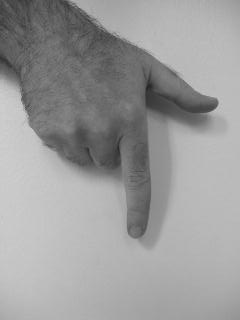
History and Evolution
The roots of KSL can be traced back as far as 1889. The formal history of Deaf education in the country began with the establishment of the first South Korean school for the Deaf in Seoul on April 1, 1913. This institution underwent several name changes over the decades, eventually becoming the Seoul School for the Deaf in 1951.
The linguistic landscape of the peninsula changed significantly following the division of Korea in 1945. Due to the lack of exchange between the North and the South, Korean Sign Language (KSL) and North Korean Sign Language (NKSL) diverged into two separate languages. Interestingly, KSL also shares some grammatical features with Japanese Sign Language (JSL), a connection that developed during the period of Japanese rule in Korea.
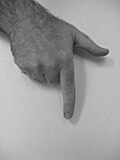
Demographics and Official Status
KSL is used by a significant portion of the population. While estimates vary, the number of Deaf people in South Korea is estimated to be between 180,000 and 300,000, representing approximately 0.36% to 0.6% of the total population. As of late 2014, official government data noted over 250,000 individuals with hearing impairments and over 18,000 with language disorders.
A major turning point occurred on December 31, 2015, when the South Korean National Assembly passed legislation to recognize KSL as an official language. This resulted in the Fundamental Law of Korean Sign Language, which came into effect in August 2016. This law mandates that the government provide translation services and ensures that signed interpretation is available in courts, public events, and social services.

The Mechanics of KSL
KSL is a sophisticated system that utilizes both manual and non-manual communication. To convey complex meanings, signers use non-manual markers—facial expressions and body movements that serve lexical, syntactic, and affective functions. These include:
- Raising or furrowing the eyebrows
- Frowning
- Nodding or shaking the head
- Leaning or shifting the torso
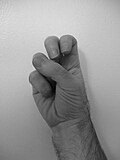
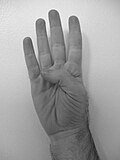
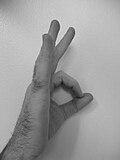
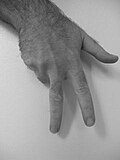
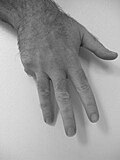
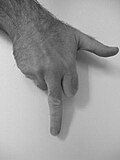
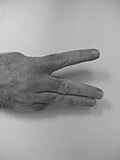
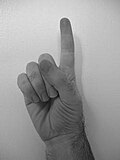
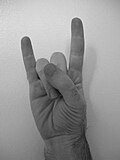
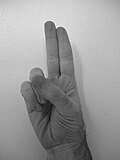
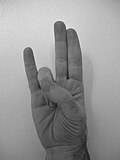
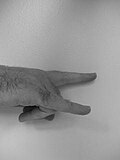
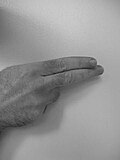
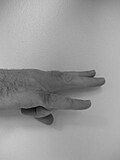
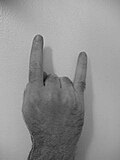
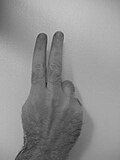
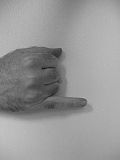
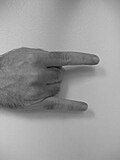
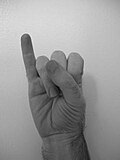
Beyond full signs, KSL users employ a manual alphabet. This is a one-handed system where each sign mimics the shape of the letters in Hangul (the Korean writing system). This alphabet is integrated into KSL to allow for the signing of specific names or terms.
The Consonants
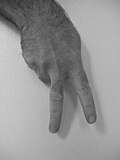
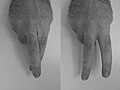
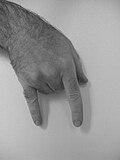
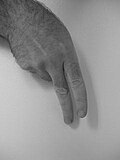
The manual alphabet includes various hand shapes to represent consonants. Most are static, but the letter ssang siot (ㅆ) is unique because it involves motion, starting with two crossed fingers pointing down before snapping open.
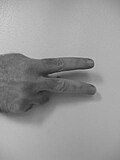
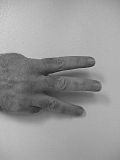


The Vowels
The vowels are also represented through specific hand shapes. While some orientations may appear similar, they are distinct within the manual alphabet system.



Research and Usability
In 2013, studies were conducted to evaluate KSL gestures based on three primary criteria: intuitiveness (the link between the gesture and its meaning), preference (how much users like the gesture), and physical stress (the strain placed on the body). Research indicated that while official gestures are standardized, user-designed gestures often perform better in terms of preference and physical ease. Furthermore, there is a strong correlation between how intuitive a sign is and how much users prefer it.
The versatility of KSL extends into specialized fields. For example, it is used in military settings for silent communication and in hospital operating rooms where sanitation requirements prevent vocal or keyboard-based interaction.
Key Facts
- Official Status: Recognized as an official language of South Korea via the Korean Sign Language Act (2016).
- Language Family: Considered part of the Japanese Sign Language family.
- Manual Alphabet: A one-handed system that mimics the shapes of Hangul letters.
- Non-manual Markers: Uses facial expressions and torso movements to convey grammar and emotion.
- Management: Standardized and catalogued by the National Institute of the Korean Language (NIKL).
Summary of KSL Overview
| Category | Details |
|---|---|
| Primary Use | Deaf communities in South Korea |
| Official Status | Official language (since 2016) |
| Alphabet Type | One-handed manual alphabet (Hangul-based) |
| Key Components | Manual signs and non-manual markers |
| Standardization Agency | National Institute of the Korean Language (NIKL) |
Frequently Asked Questions
Is KSL the same as North Korean Sign Language?
No. While they share historical origins, KSL and North Korean Sign Language (NKSL) diverged after the division of the Korean peninsula in 1945 due to a lack of communication between the two regions.
How is KSL different from spoken Korean?
KSL is a visual-gestural language with its own unique grammar and syntax. It is not simply a manual translation of spoken Korean; it uses non-manual markers like eyebrow movement and head tilting to convey meaning that spoken Korean conveys through tone or inflection.
What is the purpose of the Korean Sign Language Act?
The Act establishes KSL as an official language equal to spoken Korean. It requires the government to provide translation services and ensures that Deaf individuals have access to communication in legal, educational, and medical settings.
What are "non-manual markers" in KSL?
Non-manual markers are facial expressions and body movements—such as nodding, frowning, or shifting the torso—that are essential to the language's grammar and the expression of emotion.
Who manages the standardization of KSL?
The National Institute of the Korean Language (NIKL), a government agency, manages and catalogues KSL. They have worked to publish official dictionaries and phrasebooks to standardize the language.