Korean Rock: The Evolution of South Korea's Rock Music Scene
Korean rock is a vibrant musical tradition that blends Western influences with a distinct local identity. Its origins are deeply tied to the geopolitical history of the peninsula, specifically the presence of U.S. military forces. From its beginnings on military bases to the underground clubs of Hongdae, the genre has navigated political censorship, societal shifts, and global trends to become a diverse pillar of South Korean music.
Key Facts
- Origins: Imported by U.S. soldiers during and after the Korean War.
- The Godfather: Shin Jung-hyeon is widely regarded as the "Godfather of rock" in South Korea.
- Group Sound: A term used for early Korean rock bands in the 1960s.
- Chosun Punk: A localized blend of punk rock that emerged in the 1990s.
- Key Hubs: Modern underground scenes are centered in Seoul (Hongdae and Mullae-dong), Busan, and Daegu.
The Foundations: 1950s and 1960s
Rock music arrived in South Korea in 1950 via U.S. soldiers fighting in the Korean War. Following the war's end in 1953, military bases became the primary venues where local musicians could learn and perform American rock. In 1957, Shin Jung-hyeon debuted as the country's first rock guitarist on one of these bases, later asserting that Korean rock was born in this environment. Other early acts, such as The Kim Sisters, used these stages as a springboard for international careers in the United States.
By 1962, Shin Jung-hyeon formed Add4, the first official Korean rock band. This sparked the rise of "Group Sound" musicians—bands like the Key Boys (famous for "Let's Go to the Beach"), HE6, Pearl Sisters, and K'okkiri Brothers. While heavily influenced by British and American rock, these artists began transitioning from military bases to performing for the general South Korean public. However, the conservative atmosphere of the Park Chung Hee administration meant that the emerging hippie and youth cultures were often viewed as targets for suppression.
Censorship and Resilience: 1970s and 1980s
The 1970s were marked by strict government censorship. Rock music was often classified as a depraved youth culture. High-profile artists suffered under these policies; Shin Jung-hyeon was imprisoned on drug charges, and Han Dae-soo went into self-exile in New York after the government banned two of his albums. Despite this, the culture grew privately through the spread of phonographs in middle-class homes, the circulation of pirated foreign records, and the popularity of music cafes.
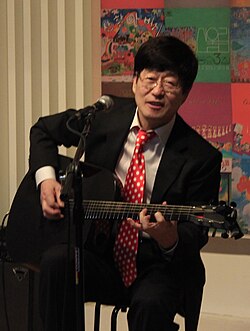
Toward the end of the 1970s, bands like Sanulrim emerged, keeping the spirit of rock alive before dance music began to dominate the 1980s. In the 1980s, the scene shifted toward heavy metal. The "Big 3"—Boohwal, Sinawe, and Baekdoosan—became the faces of the era. The 1980 college song festival saw the debut of Magma, a hard rock band that shocked audiences and paved the way for subsequent acts like T-sams (1987) and Infinite Track (1988). With slightly eased censorship, rock music reached its closest point to the mainstream, frequently topping public television and radio charts.
Democratization and the Indie Explosion: 1990s to Present
The democratization of South Korea following the presidency of Roh Tae-woo led to a revival of rock in the early 1990s. Increased access to foreign music inspired a new generation to form bands. This era saw the birth of "Chosun Punk," a localized punk style spearheaded by bands like Crying Nut and No Brain, and supported by the indie label Drug Records and its venue, Club Drug.
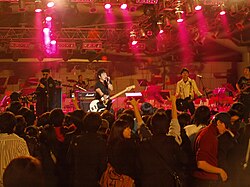
As the internet and globalization expanded, the scene diversified. The late 1990s introduced straight edge hardcore punk via The Geeks and ska-punk through bands like Lazybone, Beach Valley, and later Skasucks (formed in 2006). Simultaneously, a second wave of heavy metal emerged. While bands like Crash, Seed, and Sad Legend focused on Thrash and Death Metal, others integrated traditional Korean elements. Examples include Dokaebi (death metal with Korean chanting) and Gostwind (progressive metal using traditional instruments).
Modern Media and Promotion
In recent years, Korean rock has been documented in various media. KBS produced the drama series Rock, Rock, Rock (2010) based on the life of Boohwal's Kim Tae-won, and ArirangTV aired Rock on Korea (2013). The 2018 documentary K-Pop Killers provided a detailed look at the extreme metal scene, interviewing members of Baekdoosan and Mahatma.
Today, promotion has shifted almost entirely online. While mainstream attention is limited, underground labels founded by musicians and social networking platforms keep the community connected. Some bands, such as Dark Mirror ov Tragedy, have even secured contracts with foreign labels.
Korean Rock Summary
| Era | Key Characteristics | Notable Artists/Bands |
|---|---|---|
| 1950s-60s | U.S. military base influence; "Group Sound" | Shin Jung-hyeon, Add4, Key Boys |
| 1970s | Strict censorship; growth of music cafes | Sanulrim, Han Dae-soo |
| 1980s | Heavy Metal dominance; "Big 3" | Boohwal, Sinawe, Baekdoosan, Magma |
| 1990s-Present | Indie explosion; Chosun Punk; Extreme Metal | Crying Nut, No Brain, Crash, Jambinai |
Major Rock Festivals
- Busan Rock Festival
- Dongducheon Rock Festival
- Pentaport Rock Festival
- Jisan Valley Rock Festival
- DMZ Peace Train Music Festival
- ETPFEST
Frequently Asked Questions
Who is considered the Godfather of Korean rock?
Shin Jung-hyeon is widely recognized as the "Godfather of rock" in South Korea, having debuted in 1957 and formed the first Korean rock band, Add4, in 1962.
What is "Group Sound"?
"Group Sound" refers to the early Korean rock bands that emerged in the 1960s, many of whom started their careers performing for U.S. soldiers on military bases.
What is Chosun Punk?
Chosun Punk is a localized blend of punk rock that emerged in the early 1990s, led by bands such as Crying Nut and No Brain and supported by the indie label Drug Records.
How did political censorship affect Korean rock in the 1970s?
Under the Park Chung Hee administration, rock music was viewed as a depraved youth culture. This led to the imprisonment of artists like Shin Jung-hyeon and the banning of albums by artists such as Han Dae-soo.
Where is the modern underground rock scene located?
Most underground shows currently take place in Seoul (specifically the Hongdae and Mullae-dong areas), as well as in Busan and Daegu.