Korean Language Divergence: How North and South Korea Developed Distinct Standards
While sharing a common linguistic root, the Korean language has undergone a significant divergence due to the prolonged political separation and mutual hostility between North and South Korea. What was once a unified system of writing and speech has evolved into two distinct standard languages, shaped by different political ideologies and orthographic policies.
In 1933, the Korean Language Society proposed a unified orthography (Hangeul Matchumbeop Tong-iran) to standardize the language. However, the establishment of the Democratic People's Republic of Korea (North) and the Republic of Korea (South) in 1948 led to the implementation of differing linguistic policies that have widened the gap over the decades.
Key Facts
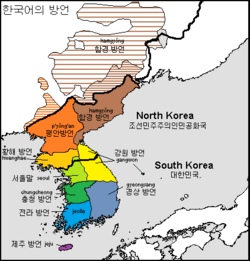
- Standard Bases: South Korean standard is based on the Seoul dialect, while North Korean standard is based on the Pyongyang dialect.
- Orthography: North Korea follows rules established through various decrees, including the 1954 orthography and subsequent revisions in 1987 and 2003.
- Vocabulary: Significant differences exist in terminology for government ministries, country names, and foreign loanwords.
- Political Influence: North Korea has implemented strict laws, such as the 2023 Pyongyang Cultural Language Protection Act, to curb the use of South Korean slang.
The Evolution of Linguistic Standards
The divergence began in earnest following the mid-20th century. In 1954, North Korea established its own rules for Korean orthography (the conventional spelling system). While initially similar to the South, these rules gradually drifted apart through various state-led initiatives.
In the 1960s, Kim Il Sung issued specific teachings regarding the development and national characteristics of the Korean language. This led to the creation of the "Standard Korean Language" rules in 1966 under the control of the North Korean cabinet. In contrast, South Korea continued to utilize the 1933 unified norms until issuing its own "Korean Orthography" and "Standard Language Regulations" in 1988, which were later amended in 2017.
Phonetic and Alphabetical Differences
Even the way the Hangeul (the Korean alphabet) is named and sorted differs between the two states. For example, the consonant 'ㄱ' is called giyeok in the South but gi-euk in the North. Furthermore, the sort order for initial consonants and vowels follows different sequences in each country.
Pronunciation and Pitch
While both standard languages share the same number of phonemes (the smallest units of sound), their actual pronunciations vary. Scholars note that while the North's standard is based on the Pyongyang dialect, some argue it actually retains elements of the older Seoul dialect, potentially resulting in a different number of monophthongs (single vowel sounds) compared to the Pyongyang dialect itself.
Comparative Linguistic Analysis
The differences between the two standards manifest in several technical areas, including the use of Sino-Korean words (words derived from Chinese characters), verb inflections, and spacing rules.
| Category | North Korean (Chosŏn'gŭl) | South Korean (Hangeul) |
|---|---|---|
| Country Name | Chosŏn (조선) | Hanguk (한국) |
| Friend | Tongmu (동무) | Chingu (친구) |
| Ministry | Seong (성) | Bu (부) |
| Minister | Sang (상) | Janggwan (장관) |
| Corn | Kangnaeng-i (강냉이) | Oksusu (옥수수) |
| Tractor | Ttŭrakttorŭ (뜨락또르) | Teuraekteo (트랙터) |
Controversies and Modern Challenges
Researching these differences is complex. Many North Korean defectors speak regional dialects rather than the official standard language, which can lead to inaccurate linguistic studies. Some scholars argue that the perceived gap is sometimes exaggerated by North Korean propaganda or South Korean over-interpretation.
In recent years, the tension has moved into the realm of pop culture. The North Korean government has become increasingly wary of the "Korean Wave" (Hallyu) and the influx of South Korean slang. In 2023, the Pyongyang Cultural Language Protection Act was adopted, which includes severe penalties for the use of South Korean linguistic expressions, which the state labels as "puppet language."
Frequently Asked Questions
Do North and South Koreans understand each other?
While there are significant differences in vocabulary, spelling, and pronunciation, the fundamental structure of the language remains the same. Many scholars suggest that communication barriers are often more cultural and lexical than purely linguistic.
Why are the names for the country different?
North Korea uses Chosŏn, referring to the ancient name of the peninsula. South Korea uses Hanguk, a shortened version of names used during the Korean Empire and the provisional government eras.
How do they handle foreign loanwords differently?
North Korea often adopts loanwords from Russian or uses different phonetic transliterations, whereas South Korea heavily utilizes English-based transliterations.
Is the North Korean standard based on the Pyongyang dialect?
Officially, yes. However, some South Korean linguists argue that the North's standard language actually follows older Seoul-based norms more closely than the local Pyongyang dialect.
What is the "middle ㅅ" (sai siot)?
The sai siot is a linguistic feature used in compound words. There are differences in how this is applied and pronounced between the North and the South, such as in the word for "chopsticks."