Korean Air: South Korea's Premier Flag Carrier
Korean Air serves as the primary flag carrier of South Korea, connecting the nation to a vast network of global destinations. Operating under the call sign "KOREAN AIR," the airline has evolved from its early foundations into a major international player, a member of the SkyTeam alliance, and a leader in both passenger and cargo aviation.
Managed by the Hanjin Group, the airline maintains its headquarters in the Gangseo District of Seoul. With a massive operational footprint, Korean Air utilizes major hubs at both Seoul–Gimpo and Seoul–Incheon to facilitate domestic and international travel.

Key Facts
- Founded: June 1962 (as Korean Air Lines)
- Alliance: SkyTeam member
- Frequent-flyer Program: SKYPASS
- Primary Hubs: Seoul–Incheon and Seoul–Gimpo
- Fleet Size: Approximately 169 aircraft
- Destinations: 108 locations
A Legacy of Evolution and Rebranding
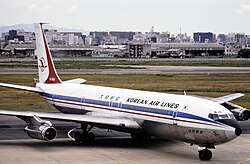
The history of the airline is marked by significant transitions in identity and scale. Originally established as Korean Air Lines, the company officially transitioned to the name Korean Air on March 1, 1984. This change signaled a new era of modernization and global expansion.
The airline's visual identity has also undergone notable changes. For decades, specific logos defined the brand, including the version used from 1969 to 1984. More recently, a rebranding effort was launched to coincide with the integration of Asiana Airlines. As of March 11, 2025, the airline has introduced a new Taegeuk symbol as part of its updated corporate identity.



Founding and Early Operations
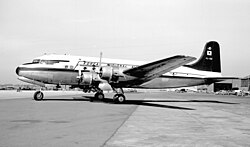
The airline's roots trace back to the mid-20th century. Early operations utilized classic aircraft such as the Douglas DC-4, which was part of the fleet in the early 1950s.
Alliance and Global Partnerships
On June 23, 2000, Korean Air became a founding member of the SkyTeam alliance, alongside major carriers like Air France, Delta Air Lines, and Aeroméxico. This partnership, which also includes SkyTeam Cargo, has significantly expanded the airline's reach through extensive codeshare agreements. These agreements allow passengers to book seamless travel with partners such as Air France, KLM, Japan Airlines, and many others.
Fleet and Technical Capabilities
Korean Air maintains a diverse and modern fleet designed to meet the demands of long-haul international travel and efficient short-haul domestic routes. The fleet includes a mix of wide-body aircraft for transcontinental flights and narrow-body aircraft for regional service.
Passenger Aircraft
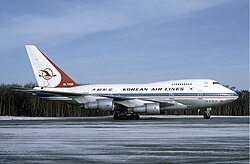
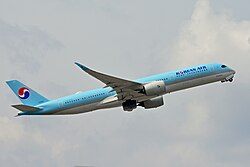
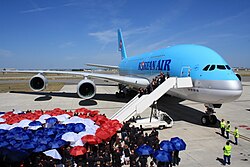
The airline operates several advanced models, including the Airbus A350-900 and the Boeing 787 Dreamliner series. For high-capacity routes, the Boeing 747-8I and the Boeing 777-300ER are essential components of the fleet. The airline has also placed significant orders for future technologies, such as the Boeing 777-9 and the Airbus A321neo.
Cargo and Specialized Services
Beyond passenger travel, Korean Air is a major player in global logistics. Its dedicated cargo fleet includes specialized freighters like the Boeing 747-400ERF, Boeing 747-8F, and the Boeing 777F. Additionally, the airline operates a Business Jet fleet, featuring high-end aircraft such as the Gulfstream G650ER and Bombardier Global Express XRS for specialized charter needs.

In-Flight Experience and Services
Korean Air is recognized for its service quality, having received numerous accolades, including the Skytrax 5-Star Airline Rating. Passengers can enjoy a variety of amenities designed to enhance comfort during long journeys.
Catering and Entertainment
The in-flight dining experience often features traditional Korean cuisine, such as Bibimbap, alongside international options. The airline's economy class also provides full meal services to ensure passenger satisfaction.


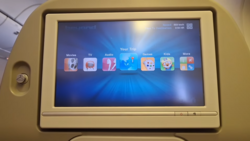
To keep passengers engaged, the airline provides advanced In-Flight Entertainment (IFE) systems. Modern aircraft, such as the Boeing 777-300ER, are equipped with high-quality screens offering a wide selection of movies, music, and games.
Summary of Airline Profile
| Category | Details |
|---|---|
| Parent Company | Hanjin Group |
| Revenue (2025) | US$ 11.5 billion |
| Net Income (2025) | US$ 672.5 million |
| Total Assets (2025) | US$ 25.95 billion |
| Employees | 20,000 |
Frequently Asked Questions
What is the SkyTeam alliance?
SkyTeam is a major global airline alliance that Korean Air helped found in 2000. It allows member airlines to cooperate on routes, lounges, and frequent-flyer benefits.
Which airline is the parent company of Korean Air?
Korean Air is owned and operated by the Hanjin Group.
What is SKYPASS?
SKYPASS is the official frequent-flyer program operated by Korean Air, allowing passengers to earn and redeem miles for travel.
Does Korean Air fly to North Korea?
The article does not provide information regarding flights to North Korea; however, it notes that Air Koryo is the carrier for North Korea.
What are the main hubs for Korean Air?
The airline's primary hubs are located at Seoul–Incheon International Airport and Seoul–Gimpo International Airport.