Korea Electric Power Corporation: Powering South Korea's Modern Era
The Korea Electric Power Corporation, widely recognized as KEPCO (or Hanjeon), stands as the backbone of South Korea's energy infrastructure. As the nation's largest electric utility, KEPCO manages the complex lifecycle of electricity, including its generation, transmission, and distribution. From massive nuclear power plants to cutting-edge wind and solar projects, KEPCO is a global energy leader, responsible for approximately 96% of South Korea's electricity generation as of 2023.
With an installed capacity of 83,235 MW through its various affiliates and subsidiaries, KEPCO has earned a prestigious place among the world's largest companies, consistently ranking within the top 300 of the Fortune Global 500. The corporation maintains high international standing with an AA credit rating from S&P and an Aa2 stable rating from Moody's.
Key Facts
- Founded: Originally established as Seoul Electric Company in 1898.
- Ownership: A public state-owned enterprise with the South Korean government holding a 51.10% stake.
- Market Reach: Responsible for 96% of South Korea's electricity generation.
- Global Presence: Involved in energy projects across 18 countries.
- Financial Scale: Reported 2023 revenue of KRW 88.22 trillion.
- Core Services: Generation, transmission, and distribution of electrical power.
A Legacy of Light: Historical Evolution
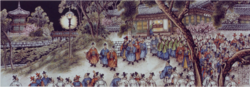
The history of electricity in Korea dates back to 1887, when the first electric lights were illuminated at Gyeongbok Palace. The formal industry began to take shape with the founding of the Hanseong Electric Company in January 1898.
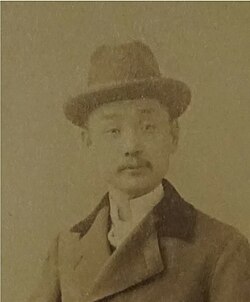
The early years were marked by complex management shifts and political tensions. Following the death of pro-American president Lee Chae-yeon in 1900, leadership transitions led to disputes over funding and business expansion. By 1904, the Hanmi Electric Company was established to stabilize these assets. Following the integration of several regional providers under the Chōsen Electricity Control Decree in 1943, the Korea Electric Company (KECO) was officially formed on July 1, 1961.
In 1982, the entity became wholly government-owned and was renamed the Korea Electric Power Corporation. KEPCO later expanded its financial reach by listing on the Korea Stock Exchange in 1989 and the New York Stock Exchange in 1994.
Industry Restructuring
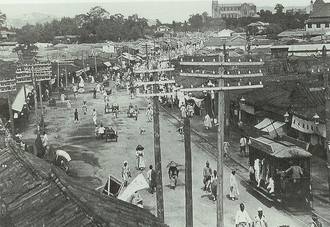
To modernize the sector, the South Korean government initiated a major restructuring in the late 1990s. Under the Act on the Promotion of Restructuring the Electric Power Industry (2000), the generation business was split into specialized subsidiaries. This led to the creation of Korea Hydro & Nuclear Power (KHNP), which manages nuclear and hydro assets, and five thermal power generation companies: Korea South-East Power, Korea Midland Power, Korea Western Power, Korea Southern Power, and Korea East-West Power.
Modern Operations and Global Expansion
Today, KEPCO operates a diverse energy portfolio. Domestically, it serves industrial, commercial, residential, educational, and agricultural sectors. Its generation mix is highly varied, utilizing nuclear, oil, coal, liquefied natural gas (LNG), hydro, wind, and solar sources.

Nuclear and Renewable Innovation
KEPCO is a major player in the nuclear sector. Beyond traditional plants, the company is exploring the future of energy through Small Modular Reactors (SMRs). In 2020, KEPCO entered a memorandum of understanding to develop a floating nuclear power plant based on the BANDI-60 60 MWe reactor technology.
International Footprint
KEPCO's influence extends far beyond the Korean Peninsula. The company is active in 18 countries, with significant operations in the Philippines, where its projects account for 12% of the nation's installed generation capacity. Other international activities include:
- Consultation: Transmission and distribution projects in Myanmar, Vietnam, Indonesia, and Egypt.
- Wind Power: Involvement in large-scale wind projects in China.
- Resource Development: Securing coal and uranium supplies through stakes in mines in Australia, Indonesia, Canada, and Niger.
The Smart Grid Initiative
To improve efficiency and reduce greenhouse gas emissions, KEPCO has committed to a massive Smart Grid investment. This initiative involves using digital communication technology to detect and react to local changes in usage, making the distribution of electricity more intelligent and responsive. A key component of this is the Jeju Smart Grid Demonstration Project.
Corporate Summary
| Metric | Value (KRW) |
|---|---|
| Total Revenue | 88.22 trillion |
| Operating Income | 4.54 trillion |
| Net Income | 4.71 trillion |
| Total Assets | 239.71 trillion |
| Total Equity | 37.26 trillion |
Frequently Asked Questions
What is KEPCO's primary role in South Korea?
KEPCO is the largest electric utility in South Korea, responsible for the generation, transmission, and distribution of electricity across the country.
How much of South Korea's electricity does KEPCO generate?
As of 2023, KEPCO and its subsidiaries are responsible for 96% of South Korea's total electricity generation.
Is KEPCO a private or government-owned company?
KEPCO is a public state-owned enterprise. The South Korean government holds a 51.10% ownership stake, both directly and indirectly.
Where is KEPCO headquartered?
The company is headquartered in Naju, South Jeolla, South Korea.
Does KEPCO operate outside of South Korea?
Yes, KEPCO is involved in energy projects in 18 countries, including significant operations in the Philippines, China, and the UAE.
What is a Smart Grid?
A smart grid is an advanced electricity distribution system that uses digital technology to make the delivery of power more efficient, reliable, and environmentally friendly.