Konstantin von Neurath: The Diplomat of the Third Reich
Konstantin von Neurath was a career diplomat and politician whose life spanned the transition of Germany from an Empire to a Republic and, eventually, to the totalitarian regime of the Third Reich. A member of the Swabian nobility, Neurath provided a veneer of traditional respectability to the early years of Adolf Hitler's government, serving as the Reich Minister of Foreign Affairs from 1932 to 1938.
While he was not an ideological fanatic in the mold of other Nazi leaders, his willingness to facilitate the regime's expansionist goals and his later role as the Reich Protector of Bohemia and Moravia led to his conviction as a war criminal. His career serves as a case study in how professional civil servants were co-opted by the Nazi state.
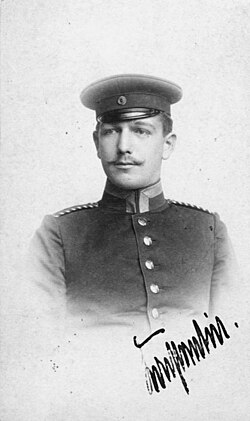
Key Facts
- Role: Served as German Foreign Minister (1932–1938) and Reich Protector of Bohemia and Moravia (1939–1943).
- Political Affiliation: Joined the Nazi Party in 1937 and held the honorary rank of SS-Obergruppenführer.
- Military Service: Fought in World War I and was awarded the Iron Cross, 1st class.
- Legal Outcome: Convicted at the Nuremberg trials for crimes against peace, war crimes, and crimes against humanity.
- Sentence: Sentenced to 15 years in prison; released early in 1954 due to ill health.
Early Life and Diplomatic Foundations
Born on February 2, 1873, in Kleinglattbach, Konstantin Hermann Karl von Neurath was born into a political dynasty. His grandfather had been a Foreign Minister for the Kingdom of Württemberg, and his father was a member of the German Reichstag. This background paved the way for Neurath's entry into the diplomatic service in 1901.
Neurath's early career took him to London, where he served as a Vice-Consul and later as a Legationsrat (legation counsel). During World War I, he balanced diplomatic duties with military service in the Imperial German Army, serving with the Grenadier Regiment "Queen Olga." While stationed in the Ottoman Empire, he authored a memorandum that justified the actions of the Ottoman government during the Armenian genocide, while simultaneously attempting to frame the German government as a critic of the "excesses" of the event.
Rise to Power and the Nazi Regime
After the war, Neurath held high-profile posts as the minister to Denmark and ambassador to both Italy and Britain. In June 1932, he was appointed Foreign Minister under Chancellor Franz von Papen, a position he retained through the chancellorships of Kurt von Schleicher and Adolf Hitler.
For Hitler, Neurath was an invaluable asset. As a seasoned aristocrat and diplomat, he lent an aura of legitimacy to a regime that was viewed with suspicion by other European powers. Neurath oversaw critical early Nazi foreign policy milestones, including the withdrawal from the League of Nations in 1933, the 1935 Anglo-German Naval Agreement, and the remilitarization of the Rhineland.
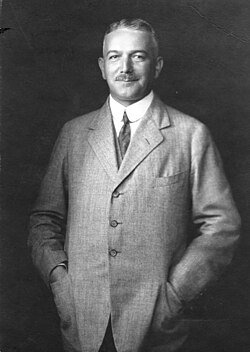
The Hossbach Memorandum and Fall from Grace
The turning point in Neurath's career occurred during the November 1937 conference, documented in the Hossbach Memorandum. During this meeting, Hitler outlined his plans for territorial expansion in Central and Eastern Europe to secure Lebensraum (living space) and autarky (economic self-sufficiency).
Neurath, along with other military leaders, expressed tactical objections. He feared that German aggression would trigger a wider European war involving France and Britain before Germany was fully prepared. While Neurath did not oppose the idea of annexation on moral grounds, his caution clashed with Hitler's urgency. Consequently, in February 1938, he was replaced as Foreign Minister by the more compliant Joachim von Ribbentrop.
Reich Protector of Bohemia and Moravia
In March 1939, Hitler appointed Neurath as the Reichsprotektor (Reich Protector) of occupied Bohemia and Moravia. This appointment was intended to pacify international critics by placing a traditional diplomat in charge of the occupied Czech territories.
Despite his reputation for moderation, Neurath implemented harsh press censorship and banned trade unions and political parties. He oversaw the persecution of Czech Jews under the Nuremberg Laws and ordered a crackdown on student protesters in 1939, resulting in executions and the imprisonment of 1,200 students in concentration camps.
By September 1941, Hitler deemed Neurath too lenient. While Neurath remained the nominal head, real power shifted to Reinhard Heydrich. Neurath's resignation was eventually accepted in August 1943.
Trial, Conviction, and Final Years
Following the collapse of the Third Reich, Neurath was tried at the Nuremberg trials in 1946. He was charged with conspiracy to commit crimes against peace, crimes of aggression, war crimes, and crimes against humanity.
The International Military Tribunal found that while Neurath was a willing participant in the regime's crimes, he was a "minor adherent" compared to the primary architects of the Holocaust. He was sentenced to 15 years in prison, serving his time at Spandau Prison until his release in 1954.
Neurath spent his final years at his family estate in Enzweihingen, where he died on August 14, 1956, at the age of 83.
Summary of Career and Convictions
| Period | Position/Role | Key Action/Outcome |
|---|---|---|
| 1901–1932 | Diplomat | Served in London, Constantinople, Rome, and Copenhagen. |
| 1932–1938 | Foreign Minister | Facilitated early Nazi expansion and League of Nations withdrawal. |
| 1939–1943 | Reich Protector | Administered occupied Bohemia and Moravia. |
| 1946 | Defendant | Convicted at Nuremberg; sentenced to 15 years. |
Frequently Asked Questions
Was Konstantin von Neurath a member of the Nazi Party?
Yes. Although he began his tenure as Foreign Minister as an independent, he officially joined the Nazi Party in 1937 and was awarded the Golden Party Badge.
Why did Hitler remove Neurath as Foreign Minister?
Hitler replaced him because Neurath expressed tactical reservations regarding the timing of aggression in Eastern Europe, fearing a premature conflict with Britain and France.
What was Neurath's role in Bohemia and Moravia?
He served as the Reich Protector, Hitler's personal representative. He implemented censorship, banned political organizations, and supervised the persecution of Jews in the region.
What were the charges against him at the Nuremberg trials?
He was charged and convicted on four counts: conspiracy to commit crimes against peace, planning and waging wars of aggression, war crimes, and crimes against humanity.
How long did Neurath serve his prison sentence?
He was sentenced to 15 years but was released early on November 6, 1954, due to failing health following a heart attack.