Kohat: A Historic Hub of Khyber Pakhtunkhwa
Located in the heart of the Khyber Pakhtunkhwa province, Kohat is a city of profound historical depth and strategic importance. Serving as the capital of the Kohat District, it stands as the fourth most populous city in the province and the 35th largest in Pakistan, with a population exceeding 220,000. The city is a vibrant blend of colonial-era architecture, bustling bazaars, and a significant military presence, centered around its historic fort and cantonment.
The cultural fabric of Kohat is woven from its linguistic diversity, where Pashto and the local Kohati dialect of Hindko are the primary means of communication. From its role as a frontier outpost during the British Raj to its modern status as a regional administrative center, Kohat continues to be a pivotal point of connection in northwestern Pakistan.
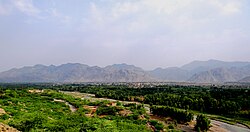
Key Facts
- Population: 228,779 (2017 Census).
- Elevation: 489 meters (1,604 feet).
- Primary Languages: Pashto (73.30%) and Hindko (19.70%).
- Key Infrastructure: The Kohat Tunnel and the N-55 Indus Highway.
- Environmental Significance: Home to Tanda Lake, a protected Ramsar site.
- Administrative Status: Capital of Kohat District, Khyber Pakhtunkhwa.
Historical Evolution
Early History and Tribal Shifts
The region was originally inhabited by Orakzai Pashtuns. However, between the 14th and 15th centuries, they were displaced from the west by the Bangash tribe and from the south by the Khattaks. By the late 15th century, following a decisive battle at Alizai, the Bangash tribes established dominance over the fertile valleys, while the Orakzai were pushed into the surrounding hills.
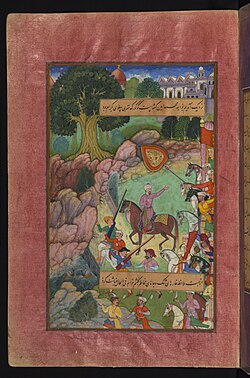
The Durrani and Sikh Eras
During the Persian invasions of the 1730s and 1740s, Kohat avoided destruction as Nader Shah's forces bypassed the city. By 1747, it was absorbed into the Durrani Empire. Following the fall of Shah Shuja Durrani in 1810, the city was managed by various chiefs leased by the kingdom in Peshawar and Kabul.
The 19th century brought the influence of the Sikh Empire. In 1839, Sikh governor Avtar Singh Sandhanwalia captured Kohat. Although the Sikhs abandoned the city in 1840, it remained a site of political tension, notably during the Second Anglo-Sikh War in 1848 when Colonel George Lawrence was briefly taken prisoner here.
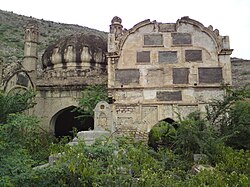
British Colonial Rule
Kohat was formally annexed by the British in March 1849. The colonial administration focused heavily on infrastructure, completing the Kohat Pass road by 1850 despite fierce resistance from local tribes. The British established a military cantonment in 1874 and a hill station at Cherat in the 1860s.
The late 19th century was marked by frequent armed skirmishes between British forces and Pashtun tribesmen, particularly the Wazirs. Kohat also served as the launch point for Sir William Lockhart's expedition against the Afridis and Mohmands during the Tirah campaign of 1897–98.
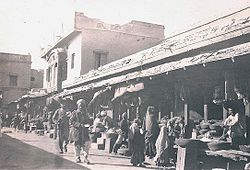
Modern Era and Challenges
In 1924, the city experienced severe communal rioting, prompting Mohandas Gandhi to undertake a 21-day fast to plead for unity. In more recent history, between 2008 and 2014, Kohat was targeted in several terrorist attacks, including suicide bombings and an attack on the Kohat Tunnel in 2011.
Geography and Environment
Topography and Climate
Kohat is situated on the left bank of the Toi river at an altitude of 489 meters. The district covers a total area of 2,545 square kilometers. The climate is characterized by hot summers and cool winters, with the heaviest rainfall occurring during the monsoon months of June and July.
Natural Landmarks and Wildlife
The city is home to the Tanda Dam and Tanda Lake, which is recognized as a protected site under the Ramsar Convention (an international treaty for the conservation of wetlands). Adjacent to this is the Tanda Wildlife Park, the largest in Khyber Pakhtunkhwa, spanning 2,800 acres and supporting a diverse array of indigenous and migratory birds and mammals.
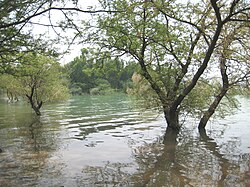
Additionally, the Kotal Pheasantry provides a breeding environment for exotic and indigenous species, including silver, golden, and white pheasants, as well as peacocks.
Demographics and Culture
Population and Religion
The population of Kohat has grown steadily, from approximately 45,000 in 1941 to over 235,000 by 2023. While the city was historically home to significant Hindu and Sikh populations in the late 19th and early 20th centuries, the 2017 census indicates that Islam is now the overwhelmingly dominant religion at 98.23%.
Language Distribution
| Language | Percentage of Population |
|---|---|
| Pashto | 73.30% |
| Hindko | 19.70% |
| Urdu | 3.75% |
| Punjabi | 2.41% |
| Others (Saraiki, Sindhi, etc.) | 0.85% |
Infrastructure and Transportation
Rail and Road Networks
The railway system in Kohat dates back to 1897. While some narrow-gauge services to Thall ceased in 1991, the city remains a terminus for the Kohat-Jand line with daily service to Rawalpindi. After a suspension in 2013, rail services were restored in 2017 following local advocacy.
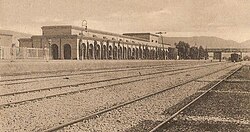
By road, Kohat is a critical node on the N-55 Indus Highway (connecting Peshawar to Karachi) and the N-80 highway (connecting to Islamabad). The 1.9-kilometer Kohat Tunnel, completed in 2004 with Japanese assistance, has significantly reduced travel time across the Kohat Pass.
Education and Notable Figures
Kohat is a center for higher learning, hosting the Kohat University of Science & Technology, Preston University, and a campus of the University of Engineering and Technology Peshawar. It also features specialized institutions like the Cadet College Kohat and the Khyber Medical College Peshawar Campus.
Notable figures associated with the region include politician Afzal Bangash, former Governor Iftikhar Hussain Shah, police officer Malik Saad, and cricketer Rashid Mansoor.
Frequently Asked Questions
What is the significance of Tanda Lake?
Tanda Lake is a protected wetland site under the international Ramsar Convention, supporting a rich variety of migratory and indigenous wildlife within the Tanda Wildlife Park.
Which languages are most commonly spoken in Kohat?
Pashto is the dominant language, spoken by 73.30% of the population, followed by Hindko at 19.70%.
How does the Kohat Tunnel benefit the region?
The 1.9-kilometer tunnel drastically reduces travel time across the Kohat Pass, providing a faster connection between Peshawar and the southern districts of Khyber Pakhtunkhwa.
What is the historical importance of the Kohat Pass road?
Constructed by the British between 1849 and 1850, the road was a strategic military and trade link, though its construction and maintenance were often contested by local tribes.
What are the main educational institutions in the city?
Key institutions include Kohat University of Science & Technology, the UET Peshawar Kohat Campus, and Cadet College Kohat.