Knowledge is Power: A History of the Soviet Science Magazine
Established during a period of intense intellectual growth, Knowledge is Power served as a primary vehicle for scientific education in the Soviet Union. Launched in January 1926, the publication was originally designed to engage teenagers, bringing complex scientific concepts to a younger audience through the Moscow-based "Molodaya Gvardiya" publishing house.
Evolution of Scientific Scope
As the demand for specialized knowledge grew, the magazine's editorial focus shifted. In 1928, the publication underwent a strategic reorganization where the coverage of life sciences—the study of living organisms—was transferred to a newly created publication titled Young Naturalist. Despite this change, Knowledge is Power continued to cover all other scientific disciplines, maintaining its role as a comprehensive resource for general science.
War, Hiatus, and Expansion
The trajectory of the magazine was severely interrupted by global conflict. Following the Axis invasion of the USSR on June 22, 1941, the country saw a significant reduction in the number of active newspapers and magazines. Consequently, Knowledge is Power entered a hiatus from 1942 to 1945.
When the magazine resumed publication in January 1946, it expanded its reach. No longer limited to teenagers, the target audience was broadened to include young adults, reflecting a post-war push for wider educational attainment.
Growth and Peak Circulation
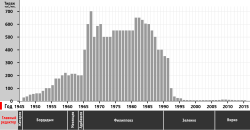
The mid-20th century marked the golden era of the publication's reach. By 1967, the magazine reached its all-time peak circulation of 700,000 copies. In 1968, management of the publication was transferred to the "Znanie" society, an organization dedicated to the dissemination of knowledge.
Production was handled by a printing plant located in the town of Chekhov. Throughout the 1970s and 80s, the magazine maintained a strong presence, recording a monthly circulation of 500,000 in 1972 and rising to 620,000 copies by 1983.
The Decline of State Patronage
The collapse of the Soviet Union brought an end to the era of state-funded scientific media. With the loss of state patronage—the financial and administrative support provided by the government—the magazine suffered a sharp decline. This transition led to severe cuts in both the editorial staff and the total circulation.
Key Facts
- Founded: January 1926 in Moscow by "Molodaya Gvardiya".
- Peak Reach: 700,000 copies in 1967.
- War Hiatus: Suspended from 1942 to 1945.
- Management: Transferred to the "Znanie" society in 1968.
- Printing Location: Chekhov.
| Year | Event / Circulation Figure |
|---|---|
| 1926 | Magazine established for teenagers |
| 1928 | Life sciences moved to Young Naturalist |
| 1942-1945 | Publication hiatus due to WWII |
| 1946 | Target audience expanded to young adults |
| 1967 | Peak circulation of 700,000 |
| 1972 | Circulation of 500,000 per month |
| 1983 | Circulation of 620,000 copies |
Frequently Asked Questions
Who was the original target audience of Knowledge is Power?
The magazine was initially established in 1926 specifically for teenagers.
Why did the magazine stop publishing between 1942 and 1945?
The publication went on hiatus due to the reduction of newspapers and magazines in the USSR following the Axis invasion on June 22, 1941.
What happened to the life sciences content in 1928?
Coverage of life sciences was transferred to a new, dedicated magazine called Young Naturalist.
Which organization managed the magazine starting in 1968?
In 1968, the magazine was transferred to the "Znanie" society.
What caused the eventual decline of the magazine?
The collapse of the Soviet Union led to the loss of state patronage, resulting in a severe reduction of staff and circulation.