King Saud University: A History of Higher Education in Saudi Arabia
The establishment of Saudi Arabia's first university was a pivotal response to the educational and professional requirements of a developing nation. Following the ascension of King Abdulaziz in 1932, the foundations for a modern educational system were laid to modernize the country. This vision was further realized in 1953 when King Saud, the eldest son of Abdulaziz, took the throne and instituted the Ministry of Education and the Council of Ministers.
Prince Fahd, who would later become King, served as the first Minister of Education. He championed the creation of a premier institution dedicated to culture and science, committing himself to the promotion of higher education within the Kingdom.
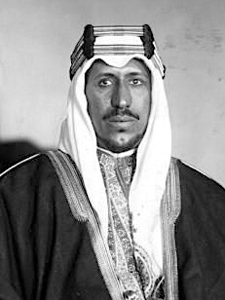
The Founding of King Saud University
In 1957, Royal Decree No. 17 officially established King Saud University (KSU). The institution was founded with a mission to disseminate knowledge, widen the scope of scientific and literary study, and ensure the Kingdom remained competitive with other nations in arts and sciences. Beyond academic advancement, the university aimed to revive Islamic civilization and nurture the ethics and minds of the youth.
The university began its academic journey in the 1957–58 academic year with the opening of the College of Arts. Rapid expansion followed to meet national needs, with the College of Sciences, the College of Pharmacy, and the College of Business (now the College of Public Administration) all established between 1958 and 1960.
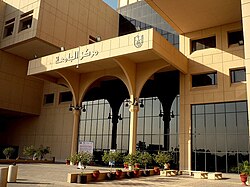
Institutional Evolution and the University of Riyadh
By 1961, Royal Decree no. 112 granted the university status as an independent legal entity with its own budget. This decree formalized the university's responsibility for higher education and scholarly research. The governance structure was defined, appointing the Minister of Education as president, supported by a vice president, a secretary general, and deans for each college.
In 1967, Royal Decree no. M/11 introduced the Statute of the University of Riyadh, renaming the institution and creating the Higher Council of the university. This council became the dominant administrative power, responsible for policy-making, budget proposals, and the creation of new departments. This governance model was further refined by Royal Decree no M/6 in 1972, which added an Academic Council to oversee scholarly research and studies.
Academic Expansion and Diversification
The university grew steadily through the 1960s and 70s:
- 1961/1962: Women were first admitted into the College of Public Administration and the College of Arts.
- 1965: The College of Agriculture was established, and KSU assumed control of the Colleges of Education and Engineering (previously managed by the Ministry of Education and UNESCO).
- 1969/1970: The College of Medicine opened.
- 1974/1975: The Arabic Language Institute was inaugurated for non-Arabic speakers.
- 1976: The College of Dentistry and the College of Applied Medical Sciences were added to the Riyadh campus, while a new campus in Abha launched with the College of Education.
- 1977: The Graduate College was established to organize all graduate programs.
Regional Growth and the Return to KSU
The university expanded its footprint with the opening of a Qassim branch in 1980, featuring colleges for Economics and Administration, Veterinary Medicine, and Agriculture. In Abha, the College of Medicine began formal studies in the 1980/1981 academic year.
In 1982, to mark its 25th anniversary, King Khalid bin Abdulaziz ordered that the University of Riyadh return to its original name: King Saud University. This era also saw the opening of the King Khalid University Hospital (KKUH) and the transition of the Center for Community Service into the Deanship of Community Service and Continuing Education.
Modern Developments (1983–2004)
The final decades of the 20th century and the start of the 21st brought further specialization. The College of Computer and Information Science and the College of Architecture and Planning were created in 1983. In 1990, the Institute of Languages and Translation was founded, later becoming a full college in 1994.
Administrative shifts continued with the 1993 royal ratification of the System of the Council of Higher Education and Universities. In 1996, the King Abdullah Center for Consulting and Research was approved. By 1998, the university's branches in the south helped form the new King Khalid University. Finally, in 2003/2004, the Qassim campus transitioned into an independent university.
Key Facts
- Founded: 1957 via Royal Decree No. 17.
- First College: College of Arts (1957–58).
- First Minister of Education: Prince Fahd.
- Name Change: Known as the University of Riyadh from 1967 until 1982.
- Gender Inclusion: Women were first admitted in the 1961/1962 academic year.
- Key Infrastructure: King Khalid University Hospital (KKUH) opened in 1982.
University Leadership Summary
The university has been led by a series of rectors who guided its growth from a single college to a comprehensive research institution.
| Rector | Term Start | Term End |
|---|---|---|
| Abdulwahab Mohammed Azzam | 1957 | 1959 |
| Sheikh Nasser Al Manqour | 1959 | 1960 |
| Abdulaziz bin Muhammad Al Khwaiter | 1961 | 1971 |
| Abdulaziz bin Abdullah Al Fadda | 1971 | 1979 |
| Mansour bin Ibrahim Al Turki | 1979 | 1990 |
| Ahmad bin Muhammad Al Dhubaib | 1990 | 1995 |
| Abdullah bin Muhammad Al Faisal | 1995 | 2007 |
| Abdullah Al Othman | 2007 | 2012 |
| Badran Al Omar | 2012 | 2024 |
| Abdullah Al-Salman | 2024 | 2025 |
| Ali bin Mohammed Mosmily | 2025 | Present |
Frequently Asked Questions
When was King Saud University founded?
The university was founded in 1957 following Royal Decree No. 17, with students first enrolling in the College of Arts during the 1957–58 academic year.
Was the university always called King Saud University?
No. In 1967, it was renamed the University of Riyadh via Royal Decree no. M/11. It returned to its original name, King Saud University, in 1982 by order of King Khalid bin Abdulaziz.
When did women first begin studying at the university?
Women were first admitted to the College of Arts and the College of Public Administration during the 1961/1962 academic year.
What was the role of Prince Fahd in the university's history?
Prince Fahd served as the first Minister of Education and was the primary advocate for the university's establishment, viewing it as a house of culture and sciences to promote higher education in the Kingdom.
Which other universities were formed from KSU branches?
The university's branches in the south helped form King Khalid University in 1998, and the Qassim campus became an independent university in the 2003/2004 academic year.