King of the Belgians
The King of the Belgians serves as the head of state for the federal government of Belgium. Since the nation gained its independence in 1830, the monarchy has evolved into a constitutional system where the sovereign acts as a symbol of national unity. The current monarch, King Philippe, ascended the throne on July 21, 2013, following the abdication of his father, King Albert II.
The title itself, Koning der Belgen (Dutch), Roi des Belges (French), or König der Belgier (German), reflects a unique relationship between the monarch and the people, emphasizing that the King is the sovereign of the citizens rather than the owner of the territory.
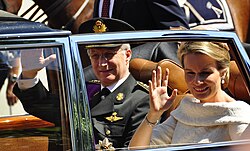
Key Facts
- Incumbent: King Philippe (since July 21, 2013).
- Heir Apparent: Princess Elisabeth, Duchess of Brabant.
- First Monarch: Leopold I, who took office on July 21, 1831.
- Primary Residences: The Royal Palace of Brussels and the Royal Castle of Laeken.
- Dynasty: House of Belgium (originally Saxe-Coburg and Gotha).
Origins of the Belgian Monarchy
Following Belgium's independence from the United Kingdom of the Netherlands in 1830, the National Congress sought a stable form of government. On November 22, 1830, the Congress voted overwhelmingly in favor of a constitutional monarchy, with 174 votes in support and only 13 against.
The path to finding a suitable monarch was not immediate. The Congress initially nominated Louis, Duke of Nemours, but international political pressures led the French King Louis-Philippe to decline the honor for his son. Consequently, Erasme-Louis, Baron Surlet de Chokier, served as Regent starting February 25, 1831.
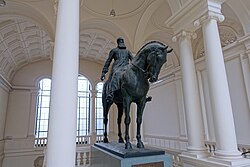
The search concluded with the appointment of Leopold of Saxe-Coburg-Saalfeld. On July 21, 1831, he swore allegiance to the Belgian constitution at the Church of St. James on Coudenberg in Brussels. This date is now celebrated annually as the Belgian National Day.
Constitutional Role and Powers
The Belgian monarch operates within a strict constitutional framework. While the King holds significant symbolic importance, his political powers are balanced by the government. Key constitutional functions include:
- Ministerial Appointments: The King is responsible for choosing the ministers.
- Legislative Influence: The King may influence ministers during discussions regarding nominations, projects, and bills.
- Promulgation: The King officially promulgates bills into law.
- Constitutional Safeguard: Any changes to the Constitution must receive the King's agreement.
The Royal House and Family
The Royal House of Belgium was founded in 1831 by Leopold I. Over time, the rules regarding royal titles have shifted. Originally, the title of Prince or Princess of Belgium was reserved for direct male descendants of Leopold I. However, a 1991 decree abolished Salic Law (which restricted inheritance to males), allowing female descendants to hold titles and inherit the throne.
A further update in 2015 restricted the granting of royal titles to the children and grandchildren of the reigning monarch and the children and grandchildren of the crown prince(ss). Spouses are no longer automatically granted these titles but may receive them via individual royal decree.
Current Royal Family Members
King Philippe and Queen Mathilde have four children: Prince Gabriel, Prince Emmanuel, and Princess Eléonore, with Princess Elisabeth serving as the heir apparent. The family also includes King Albert II and Queen Paola, as well as Princess Astrid and Prince Laurent.
The Royal Household
The administration of the monarchy is managed through several specialized departments, including:
- The King's Cabinet and Military Household.
- The Department for Foreign Relations and Protocol of the Court.
- The Department for Economic, Social and Cultural Affairs.
- The Department of Petitions and the King's Civil List.
Historical Overview of Belgian Monarchs
Since 1831, seven monarchs have led Belgium, guiding the nation through periods of industrialization, two World Wars, and the transition to a federal state.
| Monarch | Reign Period | Notes |
|---|---|---|
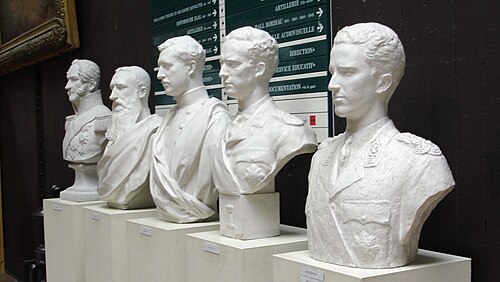
| Leopold I | 1831–1865 | First King; founder of the dynasty. |
| Leopold II | 1865–1909 | Son of Leopold I. |
| Albert I | 1909–1934 | Grandson of Leopold I. |
| Leopold III | 1934–1951 | Son of Albert I. |
| Baudouin | 1951–1993 | Son of Leopold III. |
| Albert II | 1993–2013 | Brother of Baudouin; abdicated due to health. |
| Philippe | 2013–Present | Son of Albert II. |
Frequently Asked Questions
Who is the current King of the Belgians?
The current monarch is King Philippe, who ascended the throne on July 21, 2013.
Who is next in line for the Belgian throne?
The heir apparent is Princess Elisabeth, Duchess of Brabant.
When is Belgian National Day celebrated?
It is celebrated on July 21, marking the anniversary of Leopold I swearing allegiance to the constitution in 1831.
What is the role of the King in the Belgian government?
The King serves as a constitutional monarch who chooses ministers, promulgates bills, and must agree to any changes made to the Constitution.
Does the Belgian monarchy follow Salic Law?
No. Salic Law, which restricted succession to males, was abolished by a royal decree in 1991, allowing both male and female descendants to inherit the throne.