King Abdullah II: Leadership and Legacy of the Hashemite Monarch
King Abdullah II has served as the monarch of Jordan since February 7, 1999, navigating the Hashemite Kingdom through some of the most turbulent decades in Middle Eastern history. Born on January 30, 1962, in Amman, he is the son of the late King Hussein and Princess Muna. His reign has been defined by a commitment to modernization, strategic international diplomacy, and the maintenance of stability in a volatile region.
Before ascending to the throne, Abdullah developed a deep connection to the military and the state's security apparatus, which would later inform his approach to governance and regional security.
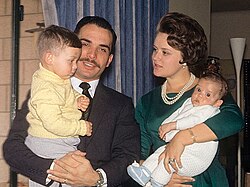
Key Facts
- Reign: February 7, 1999 – Present.
- Dynasty: House of Hashemite.
- Military Rank: Field Marshal and Commander-in-Chief of the Jordanian Armed Forces.
- Key Initiatives: The Amman Message and World Interfaith Harmony Week.
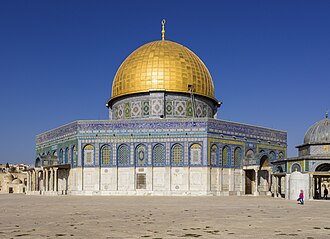
- Religious Role: Custodian of Muslim and Christian holy sites in Jerusalem.
- Family: Married to Queen Rania; father to Crown Prince Hussein, Princess Iman, Princess Salma, and Prince Hashem.
Early Life and Military Foundation
King Abdullah's preparation for leadership was rooted in both academic and military discipline. He began his service in the Jordanian Armed Forces in 1982, a career that continues to the present day. This military background provided him with a firsthand understanding of the strategic challenges facing Jordan.

The Path to the Throne
Following the death of his father, King Hussein, Abdullah ascended to the throne on February 7, 1999, and was formally enthroned on June 9, 1999. His early years as king were marked by a desire to modernize the state's administration and strengthen ties with global powers, particularly the United States.

Navigating Regional Turmoil
The 21st century brought unprecedented challenges to the Middle East. King Abdullah II has maintained a pragmatic foreign policy, engaging with a wide array of global leaders to ensure Jordan's security and economic viability.
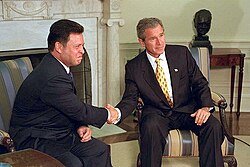
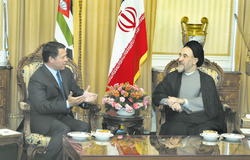
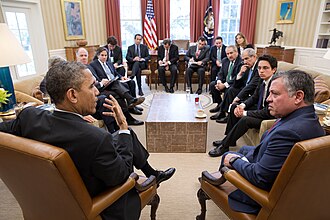
Diplomatic Engagements
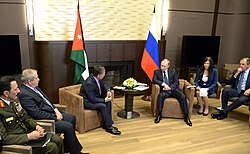
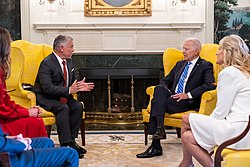
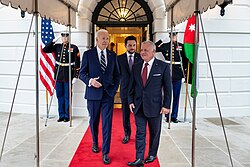
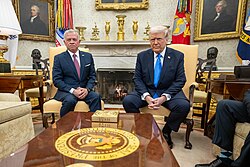
From the early 2000s through the 2020s, the King has held high-level meetings with multiple U.S. presidents and international leaders to coordinate on counter-terrorism and regional stability.
The Arab Spring and Internal Reform
Between 2010 and 2014, Jordan experienced the effects of the Arab Spring, a wave of pro-democracy protests across the Arab world. In response, King Abdullah II implemented various administrative, political, and economic reforms to address public grievances and modernize the government.

National Development and Modernization
Beyond diplomacy, the King has focused on diversifying Jordan's economy and improving its infrastructure. A significant emphasis has been placed on the energy sector to reduce dependence on imports.
Energy and Economy
One of the most notable achievements in this sector is the Tafila Wind Farm, which stands as the largest onshore wind farm in the Middle East, generating 117 MW of power.

Religious and Cultural Leadership
King Abdullah II has positioned Jordan as a center for interfaith dialogue. He launched the Amman Message to clarify the true nature of Islam and promote peace. Furthermore, he continues the Hashemite tradition of serving as the custodian of the holy sites in Jerusalem.
Global Presence and Public Engagement
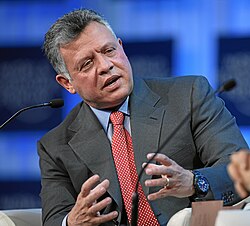
The King is a frequent speaker at international forums, including the World Economic Forum, where he discusses global economics and security.

Summary of King Abdullah II's Profile
| Category | Details |
|---|---|
| Full Name | Abdullah bin Hussein bin Talal bin Abdullah |
| Accession Date | February 7, 1999 |
| Military Rank | Field Marshal |
| Spouse | Queen Rania Al-Yassin |
| Heir Apparent | Crown Prince Hussein |
| Key Focus Areas | Interfaith Harmony, Energy Independence, Regional Stability |
Frequently Asked Questions
When did King Abdullah II ascend to the throne?
King Abdullah II became the King of Jordan on February 7, 1999, following the death of his father, King Hussein.
What is the significance of the Amman Message?
The Amman Message is an initiative launched by the King to promote a correct and moderate understanding of Islam and to foster peace and harmony among different religious and sectarian groups.
What is the King's role in Jerusalem?
King Abdullah II holds the custody of the Muslim and Christian religious sites in Jerusalem, a traditional role held by the Hashemite dynasty since 1924.
What are some of the King's major economic contributions?
The King has pushed for energy diversification, most notably through the inauguration of the 117 MW Tafila Wind Farm, the largest onshore wind farm in the Middle East.
Who is the current heir to the Jordanian throne?
The heir apparent is Crown Prince Hussein.