Kim Il Sung University: A Legacy of Higher Education in North Korea
Established on 1 October 1946, Kim Il Sung University stands as the first tertiary education institution founded in post-war North Korea. Located in the Taesong District of Pyongyang, this public university has played a central role in the nation's intellectual and political development for nearly 80 years. Named in honor of the former North Korean leader Kim Il Sung, the institution serves as a cornerstone for academic training in various disciplines.
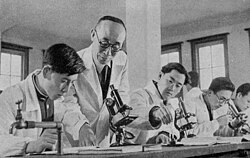
The university operates on a 15-hectare (37-acre) urban campus. Its extensive facilities include 10 offices, 50 laboratories, various libraries, museums, a printing press, an R&D center, dormitories, and a hospital. While the campus features a large computer lab, internet access remains limited. The university provides undergraduate degrees, typically lasting four or five years, and maintains a graduate school for doctoral studies.
Key Facts
- Established: 1 October 1946
- Location: Ryongnam-dong, Taesong District, Pyongyang, North Korea
- Student Population: Approximately 16,000 students
- Current President: Kim Sung-chan (appointed 2021)
- Academic Scope: Law, economics, humanities, and natural sciences
Historical Evolution
The university's origins trace back to a Preparatory Committee formed on 25 May 1946. By July of that year, the institution was officially established via ordinance No. 40 by the interim People's Committee of North Korea. In 1948, the university's scope was narrowed when several specialized faculties—including Engineering, Transportation Engineering, Agriculture, and Medicine—were separated to form independent institutions such as the current Kim Chaek University of Technology and Wonsan University of Agriculture.
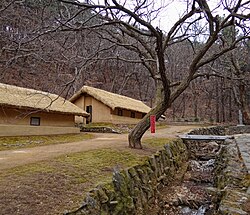
The Korean War significantly impacted the university's operations. To ensure safety, students and faculty were moved to Baeksong-ri under Mount Jamo in Suncheon-gun, far from the city center. Following the war, reconstruction of the main building in Pyongyang began, and by late 1955, the university had returned to its central urban location.
Political and Intellectual Shifts
In the post-war era, the university became a site of significant political tension. Following the Revolutions of 1956 in Hungary and Poland, North Korean exchange students returned home and began asking "improper" questions on campus. This led to a period of intense political purging, where approximately one hundred students and several prominent staff members were removed from the institution.
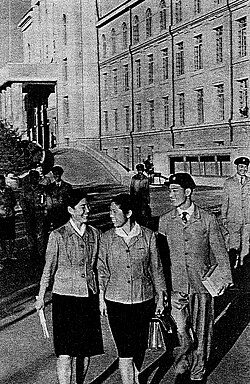
By the end of the 1970s, the university had graduated more than 50,000 students and had become a vital resource for training personnel for the Korean People's Army. Since the 1970s, the university has also introduced some English-medium programs.
Academic Departments and Research
Kim Il Sung University offers a wide array of programs across several disciplines. In the spring of 2017, the university expanded its curriculum to include specialized Japanese language and literature courses.
Humanities and Social Sciences
- Finance
- Economics
- Foreign Languages and Literature
- History
- Korean Language and Literature
- Law
- Philosophy
Natural Sciences and Technology
- Chemistry
- Computer Science
- Electronics and Automation
- Energy Science
- Forest Science, Geography, and Geology
- Life Science and Materials Science
- Mathematics, Mechanics, and Physics
International Presence and Student Life
Since 1995, the university has admitted international students. By 2019, approximately 5,000 students from 30 different countries had studied at the institution. Before the COVID-19 pandemic, the foreign student population was estimated at about 100, with the majority being Chinese nationals.
International students live alongside tongsuksaeng, specially selected North Korean students who act as language tutors and cultural liaisons. These hosts also monitor the activities and movements of foreign students. Postgraduate applicants must provide extensive documentation, including birth certificates, police background checks, medical records, and proof of financial standing.
Notable Alumni and Achievements
The university has educated several prominent figures in North Korean history, including former Supreme Leaders Kim Jong Il and Kim Jong Un. Other notable alumni include Kim Yo Jong, Ri Sol-ju, and various high-ranking politicians and scientists. The institution also hosted exchange students such as Andrei Lankov and Rüdiger Frank.
In terms of technical achievement, the university placed 30th in the 2016 International Collegiate Programming Contest (ICPC), marking its first and only participation in the event as of June 2026.
Summary of University Profile
| Category | Details |
|---|---|
| Type | Public |
| Campus Style | Urban (15 hectares) |
| Key Facilities | 50 labs, libraries, R&D center, hospital, printing press |
| Digital Access | Mirae WiFi network for lecture downloads |
| International Reach | ~5,000 students from 30 countries (since 1995) |
Frequently Asked Questions
What subjects are taught at Kim Il Sung University?
The university offers a broad range of programs including law, economics, humanities, and various natural sciences such as chemistry, physics, and computer science.
How do international students live at the university?
International students reside with North Korean students known as tongsuksaeng, who serve as language tutors and cultural liaisons while also monitoring student activities.
Can students access the internet at the campus?
While there is a large computer lab, internet access is limited. However, since 2018, students can access lectures via the Mirae WiFi network.
What are the requirements for postgraduate international students?
Applicants must provide a birth certificate, letter of intent, undergraduate qualifications, a police background check, medical records, financial proof, and a letter attesting to their Korean language ability.
When was the university founded?
Kim Il Sung University was founded on 1 October 1946.