Kilometre History: From the French Meridian to Global Standard
The modern world relies on a standardized system of measurement to ensure precision in science, trade, and navigation. At the heart of this system is the kilometre, a unit of length that emerged from a revolutionary desire for a universal, internationally based standard. Its journey from a theoretical calculation of the Earth's circumference to a global staple is a fascinating study in scientific evolution.
The Birth of the Metric System
The origins of the kilometre trace back to the French Revolution. On May 8, 1790, the French National Constituent Assembly issued a decree ordering the French Academy of Sciences to develop an entirely new measurement system. The goal was to replace the fragmented and inconsistent local units of the time with a system based on nature.
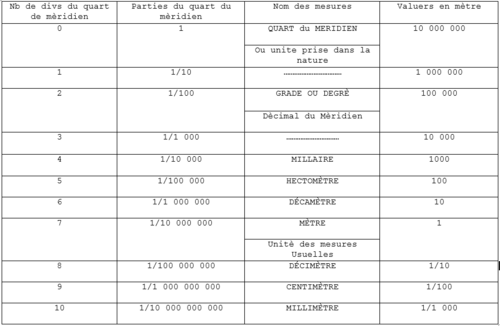
By August 1793, the French National Convention established the metre as the sole length measurement system for the French Republic. To ensure the unit was truly international, it was defined as 1/10 millionth of the distance from the Equator to the orbital poles (either North or South).
The Rivalry Between the Kilometre and the Myriametre
While the metre was formally defined in 1799, the transition to larger units was not immediate or uniform. Interestingly, the kilometre was not always the preferred unit for long distances. In its earliest days, the kilometre was referred to as the "Millaire." However, for everyday use, the French preferred the myriametre, which represented 10,000 metres.
The dominance of the myriametre is evident in historical texts. For example, in the 1802 publication Physique d'Emile: ou, Principes de la science de la nature by Develey, the term "myriamètre" appears frequently throughout the text, while "kilometre" is relegated to an appendix. Even as late as 1835, French maps utilized scales showing myriametres alongside "lieues de Poste" (Postal leagues), which measured approximately 4,288 metres.
European Adoption and Divergence
The adoption of the kilometre varied significantly across Europe during the 19th century. The Netherlands adopted the unit in 1817, though they initially called it the mijl. It took until 1867 for "kilometer" to become the sole official term for 1,000 metres in the Netherlands.
German textbooks from 1842 and 1848 provide a snapshot of this regional divergence: while the kilometre had gained traction in Italy and the Netherlands, France continued to rely on the myriametre.
Standardization and Modern Usage
The confusion between competing metric prefixes eventually ended in the 20th century. In 1935, the International Committee for Weights and Measures (CIPM) officially abolished the prefix "myria-," effectively removing the myriametre from scientific use and establishing the kilometre as the recognized unit for that magnitude of length.
Today, the symbol km is standardized in lower case by the International Bureau of Weights and Measures (BIPM). While the term is formal in science and geography, it has also entered military vernacular; in the US, UK, and Canadian militaries, the kilometre is often referred to by the slang term "klick."
Key Facts
- Origin: Established by the French National Convention in August 1793.
- Original Basis: 1/10 millionth of the distance from the Equator to the North or South Pole.
- Early Name: The kilometre was originally called the "Millaire."
- The Myriametre: A unit of 10,000 metres that was preferred over the kilometre in France until the mid-20th century.
- Standardization: The prefix "myria-" was officially abolished by the CIPM in 1935.
- Military Slang: Known as a "klick" in the US, UK, and Canadian militaries.
| Unit/Term | Value (Metres) | Historical Context |
|---|---|---|
| Metre | 1 | Defined in 1799 based on Earth's meridian. |
| Kilometre | 1,000 | Standardized globally; formerly called "Millaire." |
| Lieue de Poste | ~4,288 | Used on French maps circa 1835. |
| Myriametre | 10,000 | Preferred in France until abolished in 1935. |
Frequently Asked Questions
How was the first metre defined?
The metre was defined as 1/10 millionth of the distance from the Equator to either the North or South Pole.
What is a myriametre?
A myriametre is a unit of length equal to 10,000 metres. It was commonly used in France for everyday measurements before being abolished by the CIPM in 1935.
When did the Netherlands officially adopt the term "kilometer"?
While the Netherlands adopted the unit in 1817 (calling it the mijl), the term "kilometer" only became the sole official unit for 1,000 metres in 1867.
Who standardizes the symbol for the kilometre?
The symbol "km" is standardized in lower case by the International Bureau of Weights and Measures (BIPM).
What does "klick" mean in a military context?
In the militaries of the United States, United Kingdom, and Canada, "klick" is a slang term used to refer to one kilometre.