Kidneys: Anatomy, Function, and Clinical Significance
The kidneys are sophisticated biological filtration systems located in the retroperitoneal space—the area behind the abdominal cavity. Their primary role is to filter the blood to remove waste products and excess water, which are then excreted from the body as urine. Beyond waste removal, these organs are critical for maintaining the body's internal chemical balance and regulating blood pressure.
Key Facts
- Primary Function: Filtering blood to create urine and maintaining homeostasis.
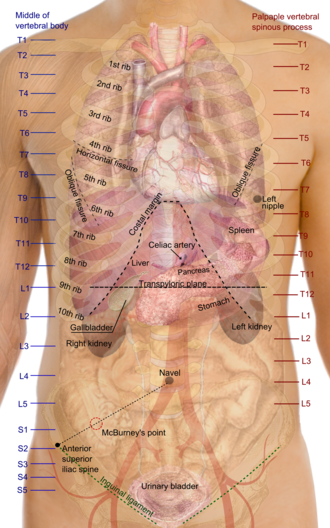
- Location: Retroperitoneal space, typically between the T12 and L3 vertebral levels.
- Functional Unit: The nephron is the microscopic structure responsible for filtration.
- Daily Output: The kidneys generate roughly 180 liters of filtrate daily, though only 800 to 2,000 milliliters are excreted as urine.
- Genetic Expression: Nearly 70% of the human body's 20,000 protein-coding genes are expressed in the adult kidneys.
Anatomy and Structure
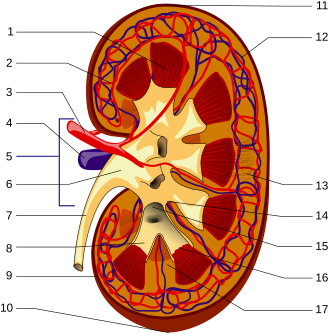
The kidneys are part of both the urinary and endocrine systems. They are supplied with blood via the renal artery and drain via the renal vein, with nerve supply provided by the renal plexus.
Physical Dimensions
Kidney size and weight vary by sex. In males, the right kidney typically weighs between 80–160 g and the left between 80–175 g. In females, the right kidney ranges from 40–175 g and the left from 35–190 g. On average, the left kidney is slightly longer (median 11.2 cm) and has a larger volume (median 146 cm³) than the right kidney (median 10.9 cm length and 134 cm³ volume).
Microanatomy and Protein Expression
The kidney is composed of various specialized cells, including podocytes and parietal cells in the glomerulus, and principal and intercalated cells in the collecting ducts. A significant portion of kidney-specific proteins function as transporters in the cell membrane. One of the most prominent is uromodulin, the most abundant protein in urine, which helps prevent bacterial growth and calcification.
The Process of Urine Formation
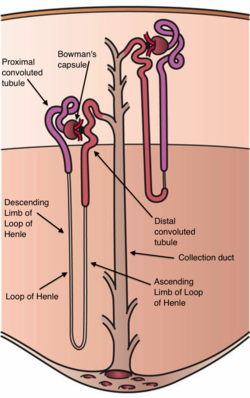
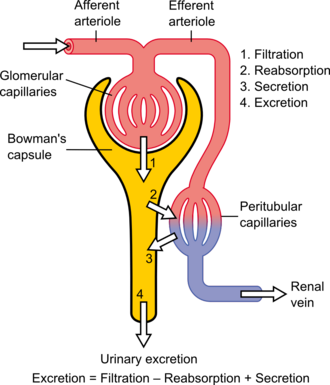
The creation of urine is a complex process carried out by the nephron, the functional unit of the kidney. This process involves four primary stages: filtration, reabsorption, secretion, and excretion.
Filtration
Filtration occurs at the renal corpuscle. Through hydrostatic filtration, pressure exerted on capillary walls forces water and small molecules into an ultrafiltrate, while larger proteins and cells are retained in the blood.
Reabsorption and Secretion
Not all filtrate becomes urine. The kidneys selectively reabsorb essential nutrients and water back into the bloodstream. For example, 100% of glucose and amino acids are reabsorbed in the early proximal tubule.
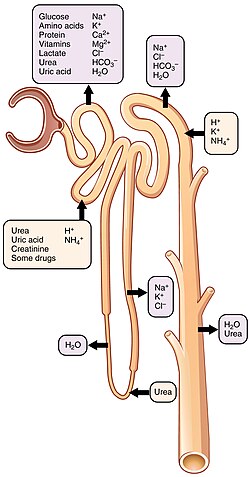
| Location | Reabsorbed Substances | Notes |
|---|---|---|
| Early Proximal Tubule | Glucose (100%), Amino Acids (100%), Bicarbonate (90%), Na, Cl, Phosphate, H₂O (all 65%) | Primary site for nutrient recovery |
| Thin Descending Loop of Henle | H₂O | Water recovery |
| Thick Ascending Loop of Henle | Na (10–20%), K, Cl | Indirectly induces Mg and Ca reabsorption |
| Early Distal Convoluted Tubule | Na, Cl | Fine-tuning of electrolytes |
| Collecting Tubules | Na (3–5%), H₂O | Regulated by ADH via V2 receptors |
Homeostasis and Regulation
The kidneys play a vital role in acid-base balance using specialized intercalated cells. Intercalated A cells respond to acidic conditions by removing hydrogen ions (H+) from the blood and secreting them into the filtrate, while returning bicarbonate (HCO₃) to the blood to raise pH. Conversely, Intercalated B cells release protons into the blood to decrease pH when the body is too alkaline.
Clinical Significance and Treatment
Various conditions can impair kidney function, ranging from congenital issues like polycystic kidney disease or horseshoe kidney to acquired diseases such as diabetic nephropathy and renal cell carcinoma.
Kidney Failure and Dialysis
When kidney function drops to approximately 10%–15% (indicated by a glomerular filtration rate or GFR of less than 15), dialysis becomes necessary. Dialysis serves as an artificial substitute for kidney function, removing metabolic waste, excess sodium, and water to regulate blood pressure.
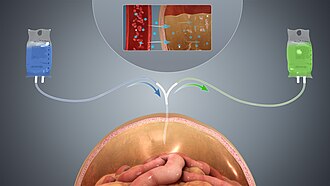
There are two primary types of dialysis: hemodialysis, which filters blood via a catheter or fistula, and peritoneal dialysis, which uses the lining of the abdomen (peritoneum) as a filter. While dialysis allows patients to maintain a functional life, life expectancy typically ranges from 5 to 30 years.
Frequently Asked Questions
How much urine does a healthy adult produce daily?
The normal range for a 24-hour urine collection is between 800 and 2,000 milliliters per day.
What is the difference between the right and left kidney?
While they perform the same function, the left kidney is generally slightly larger in volume and length than the right kidney.
What happens during hydrostatic filtration?
Hydrostatic pressure pushes water and small molecular weight materials through the capillary walls of the renal corpuscle to create an ultrafiltrate, while keeping large proteins and blood cells in the vessel.
When is dialysis required?
Dialysis is typically instituted when 85%–90% of kidney function is lost, which is clinically identified by a glomerular filtration rate (GFR) of less than 15.
How do kidneys regulate blood pH?
They use intercalated A and B cells to either secrete hydrogen ions into the urine (to raise blood pH) or release them back into the blood (to lower blood pH), maintaining a strict acid-base homeostasis.