KBO League: The Evolution of South Korean Professional Baseball
The KBO League, operated by the Korea Baseball Organization, stands as the pinnacle of professional baseball in South Korea. Since its inception in 1982, the league has grown from a modest six-team competition into a cultural phenomenon, blending high-energy fandom with a competitive structure that has produced world-class talent for the global stage.
From the early dominance of the Haitai Tigers to the modern era of expanded rosters and diverse audiences, the KBO has continuously evolved its rules and format to enhance the spectator experience and the quality of play.
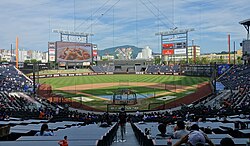
Key Facts
- Founded: 1982
- Current Teams: 10
- Most Successful Team: Kia Tigers (12 titles)
- Most Recent Champion: LG Twins (2025)
- Regular Season Format: 144 games per team
- Governing Body: Korea Baseball Organization
League Structure and Competition
The Regular Season
Since 2015, the KBO League has utilized a 144-game regular season. Each of the 10 teams plays every other opponent 16 times. To maintain player health and scheduling consistency, teams typically play six games per week, with Mondays designated as off-days.
The Postseason Path
The road to the championship is a tiered elimination process designed to reward regular-season performance while maintaining high stakes:
- Wild Card Game: The fifth-place team faces the fourth-place team.
- Semi-playoffs: The Wild Card winner faces the third-place team.
- Playoffs: The Semi-playoffs winner faces the second-place team.
- Korean Series: The Playoffs winner faces the first-place team for the ultimate title.
Game Rules and Extra Innings
The KBO employs specific limits on extra innings to prevent games from extending indefinitely. While a trial of unlimited innings occurred in 2008, the league has since standardized limits. As of the 2025 season, regular-season games are limited to two extra innings (eleven innings total). Postseason games allow for more endurance, with a limit of six extra innings (fifteen innings total).
Historical Evolution
The Early Years (1980s)
The league launched in 1982 with six charter teams: the Haitai Tigers, Lotte Giants, MBC Chungyong, OB Bears, Sammi Superstars, and Samsung Lions. The 1980s were defined by the dominance of the Haitai Tigers, who secured five titles led by stars like pitcher Sun Dong-yol. Early seasons were shorter, starting at 80 games in 1982 and expanding gradually. During this era, rosters were small, and it was common for players to both pitch and bat.
Growth and Transition (1990s–2010s)
The 1990s saw the introduction of divisional play in 1999, splitting teams into the Dream League and Magic League. The 2000s brought a period of parity, with the Hyundai Unicorns and Samsung Lions sharing the spotlight. By the 2010s, the league expanded further with the addition of the NC Dinos (2013) and the KT Wiz (2015), bringing the total to 10 teams.
International Influence and Talent Exchange
Foreign Players in the KBO
The KBO began allowing foreign imports in 1998. Initially, teams signed one hitter and one pitcher. Tyrone Woods became the first major impact import, winning the MVP in his debut year with the Doosan Bears. Over time, the league adjusted limits, eventually allowing three foreign players per team, provided at least one is a hitter.
Notable foreign contributors include pitcher Dustin Nippert, who holds the record for wins and strikeouts among foreign players, and Danny Rios, who holds the lowest career ERA for a foreign pitcher.
Transition to Major League Baseball (MLB)
The KBO has served as a springboard for South Korean talent entering the American Major Leagues. Chan Ho Park paved the way in 1994, followed by stars like Shin-Soo Choo and Byung-hyun Kim. In 2013, Hyun-jin Ryu became the first KBO player to join an MLB team via the posting system. As of 2025, 28 South Korean players have reached the MLB.
League Overview and Statistics
| Team | City | Stadium | Capacity | Founded |
|---|---|---|---|---|
| Doosan Bears | Seoul | Jamsil Baseball Stadium | 25,000 | 1982 |
| LG Twins | Seoul | Jamsil Baseball Stadium | 25,000 | 1982 |
| Kia Tigers | Gwangju | Gwangju-Kia Champions Field | 20,500 | 1982 |
| Samsung Lions | Daegu | Daegu Samsung Lions Park | 24,000 | 1982 |
| Lotte Giants | Busan | Sajik Baseball Stadium | 24,500 | 1982 (Joined) |
| Hanwha Eagles | Daejeon | Daejeon Hanwha Life Ballpark | 20,000 | 1985 |
| SSG Landers | Incheon | Incheon SSG Landers Field | 23,000 | 2000 |
| NC Dinos | Changwon | Changwon NC Park | 22,112 | 2011 |
| KT Wiz | Suwon | Suwon KT Wiz Park | 20,000 | 2013 |
| Kiwoom Heroes | Seoul | Gocheok Sky Dome | 16,744 | 2008 |
Modern Trends and Demographics
Recent data indicates a significant shift in the KBO's fan base. The league has seen a surge in female attendance, particularly among women in their 20s and 30s. By the 2025 season, women represented approximately 58% of all tickets sold, with surveys indicating a strong interest in financially supporting their favorite teams.
Frequently Asked Questions
Which team has won the most KBO championships?
The Kia Tigers hold the record for the most titles, having won the Korean Series 12 times.
How many games are played in a KBO regular season?
Since 2015, each team plays 144 games in the regular season.
What is the current rule for extra innings in the regular season?
Starting in 2025, regular-season games are limited to two extra innings, meaning a game ends after eleven innings overall if a winner is not decided.
How do foreign players join the KBO League?
Teams are allowed to sign foreign imports, typically consisting of pitchers and hitters. Current rules allow up to three foreign players per team, with a mandate that at least one must be a hitter.
How does the KBO postseason determine the champion?
The champion is decided through a series of playoffs starting with a Wild Card game, followed by the Semi-playoffs, the Playoffs, and finally the Korean Series.