Kardecist Spiritism: History, Beliefs, and Global Influence
Kardecist Spiritism, often referred to simply as Spiritism or Kardecism, is a reincarnationist and spiritualist doctrine that emerged in mid-19th century France. Established by the educator and writer Hippolyte Léon Denizard Rivail—who wrote under the pen name Allan Kardec—the movement blends scientific inquiry, philosophy, and religious perspective to explain the nature of the soul and its journey through existence.
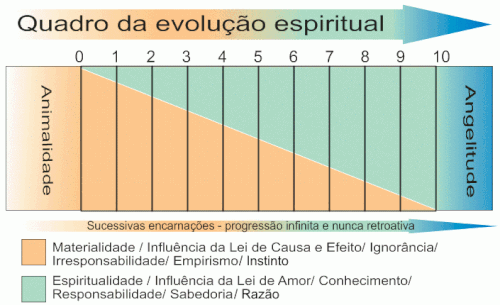
At its core, Spiritism describes a continuous cycle of birth, death, and rebirth. According to this doctrine, the spirit returns to material existence multiple times to undergo a process of evolution and moral improvement, guided by divine justice.
![Allan Kardec studied with Johann Heinrich Pestalozzi at Yverdon Castle.[1] Portrait from L'Illustration, 10 March 1869](/images/13/7f/137f1417091a4845e36ba413d83e89b0bb3f52da20b0508757555a70b82c7638.jpg)
Key Facts

- Founder: Established by Allan Kardec (Hippolyte Léon Denizard Rivail) in France.
- Core Belief: Reincarnation is the primary mechanism for spiritual growth and moral evolution.
- Foundational Texts: Based on the Spiritist Codification, including The Spirits' Book.
- Global Hub: Brazil currently holds the largest population of Spiritists worldwide.
- Nature: Combines scientific, philosophical, and religious elements without a priestly hierarchy.
The Origins of Spiritism
Early Observations and Table-Turning
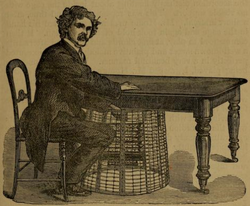
The movement grew alongside 19th-century spiritualism. Kardec became intrigued by paranormal claims, specifically table-turning—a type of seance where tables appeared to move and provide answers to questions without physical intervention. This led Kardec to investigate the possibility of communication between the living and the dead, as well as other phenomena like mediumship and "incorporation."
![Parisian salon with people practicing three variations of table-turning using a ring, a table, and a hat.[43] (L'Illustration, Histoire de la semaine, May 14, 1853).[43]](/images/80/91/809186da36d8cee588e0e2fe6b6b6002876094e5908fe806b899d43a20e3e8ab.jpg)
Defining the Doctrine
In 1857, Kardec coined the term "spiritism," defining it as a doctrine founded on the existence, manifestations, and teachings of spirits. He sought to create a framework that bridged the gap between the tangible universe and the transcendent realm.
The Spiritist Codification
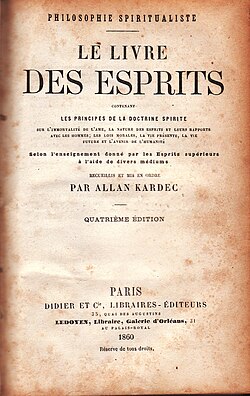
The theological and philosophical basis of the movement is contained within the Spiritist Codification, a series of five basic works published between 1857 and 1868:
- The Spirits' Book (1857)
- The Mediums' Book
- The Gospel According to Spiritism
- Heaven and Hell
- The Genesis
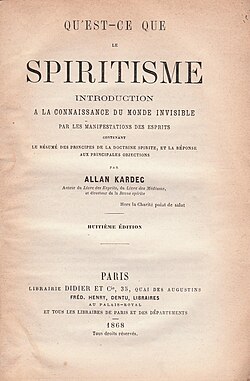
Kardec also produced complementary works, such as What is Spiritism? and the Spiritist Review, to further refine the doctrine's application to science and morality.
Core Principles and Beliefs
Foundational Tenets
Spiritism is centered on the belief in a single God and the possibility of useful communication with spirits through mediums (individuals capable of acting as intermediaries between the physical and spiritual worlds). The doctrine emphasizes that the spirit's journey is one of constant progress.
Secondary Characteristics
Unlike many traditional religions, Spiritism is characterized by several distinct organizational and philosophical traits:
- No Priestly Hierarchy: There is a total absence of a formal clergy or priesthood.
- Lack of Rituals: The doctrine does not utilize institutionalized rituals such as baptism or formal marriage ceremonies.
- Individual Responsibility: A belief in the continuity of individual responsibility throughout all spiritual existences.
- Terminology: Use of specific concepts such as the perispirit (the semi-material envelope that links the spirit to the physical body) and Spiritist centers (community hubs for study and practice).
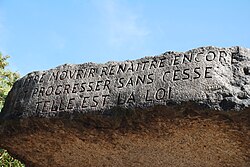
Spiritism, Science, and Religion
Relationship with Christianity
Kardec viewed his doctrine as deriving from a Christian perspective, specifically aligning with the morality found in the Sermon on the Mount. While many followers see Spiritism as a complementary path to Christian morality, some organizations, such as the Pan-American Spiritist Confederation, advocate for a more secular view, dissociating the doctrine from traditional Christianity to better align with modern science.

Scientific Approach
Kardecists often qualify Spiritism as a "spiritual science," claiming it uses a methodical approach to study the laws of the universe and the afterlife. This intersection has led to the creation of medical-spiritist associations, particularly in Cuba, where the practice is integrated with health perspectives.

Global Distribution and Demographics
| Region/Metric | Details/Statistics |
|---|---|
| Global Followers (2005) | Approximately 13 million |
| Brazil Followers (2010) | Approximately 3.8 million |
| International Reach | 36 member countries in the International Spiritist Council |
| Cuba | Second most Spiritist country by number of centers (approx. 600) |
The Brazilian Influence
Brazil has become the global center of Spiritism. The movement is particularly strong in state capitals such as Florianópolis and Porto Alegre. The Brazilian Spiritist Federation serves as a major organizational pillar for the community.

The movement in Brazil manifests in various ways, from large-scale festivals to educational classrooms for children and specialized hospitals, such as the André Luiz Spiritist Hospital.

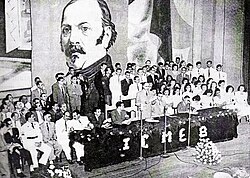



Other Regions
Beyond Brazil, Spiritism maintains a presence in Cuba, Spain, Romania, and Mexico. In Cuba, the movement saw a revival following the legalization of religion, leading to a high density of Spiritist centers.

Frequently Asked Questions
What is the difference between Spiritism and Spiritualism?
While often used interchangeably, Kardecist Spiritism is a specific codified doctrine focusing on reincarnation and moral evolution, whereas spiritualism is a broader term for the belief that spirits of the dead can communicate with the living.
Who was Allan Kardec?
Allan Kardec was the pen name of Hippolyte Léon Denizard Rivail, a French educator who codified the principles of Spiritism in the mid-19th century through a series of foundational books.
What is a perispirit?
The perispirit is a concept in Spiritist doctrine referring to the semi-material body or envelope that connects the immaterial spirit to the physical body.
Does Spiritism have a church hierarchy?
No, one of the defining characteristics of Spiritism is the total absence of a priestly hierarchy or institutionalized religious rituals.
How does reincarnation work in Spiritism?
Reincarnation is viewed as a necessary process for spiritual growth. Spirits return to material existence multiple times to learn lessons, atone for past mistakes, and evolve toward a higher state of consciousness.